


Securing absolute mechanical rigidity for industrial robotic joints is a critical gatekeeper for factory automation. High-speed multi-axis arms generate brutal kinetic forces that will instantly tear weak structural plastics apart during rapid movements. Specifying professional robot die cast components solves this structural failure risk completely, protecting your development budget.
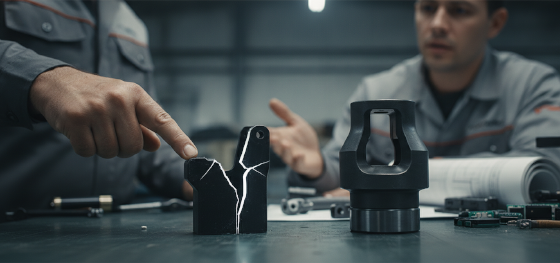
Rushing into mass production without verifying physical load limits is a dangerous financial gamble. Every single second your part spends cooling inside the press directly drives up your ongoing expenses. Deciding between different applications de moulage sous pression avec sagesse garantit que votre trésorerie en phase de démarrage reste totalement sécurisée tout en protégeant la durée de vie de vos produits.
Consolidating your entire hardware pipeline inside our advanced precision manufacturing facility eliminates logistical delays and vendor finger-pointing. Let's dissect how aluminum and magnesium alloys maximize robotic mobility, why precision secondary milling is mandatory for bearing fits, and how turnkey factories assemble complex automation cells.
contenu :
Structural Foundation: The Essential Role of Castings in Robotics
Weight vs. Strength: Optimizing Robotic Mobility with Alloys
Micro-Precision Fitment: Shaving Mated Features via CNC Post-Machining
Scalable Prototyping: Transitioning from R&D to Production Lines
FAQ : réponses honnêtes sur l'amortissement et les rebuts
Structural Foundation: The Essential Role of Castings in Robotics
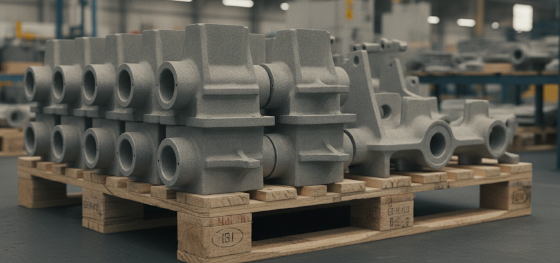
Why do professional automation systems require unyielding structural metal components instead of plastics?
Because heavy-duty robotic joints, servo motor housings, and mechanical skeletal parts must support heavy payloads and withstand continuous torque.
Carrying heavy manufacturing parts requires absolute dimensional stability. If your motor mounts flex even a fraction of an inch under torque, the entire robotic cell loses calibration, ruining your assembly line accuracy and shutting down production.
Sourcing reliable robot die cast brackets ensures your robotic joints remain perfectly aligned. High-pressure injection delivers the rugged, non-porous structural integrity needed to survive millions of rapid operational cycles safely.
Weight vs. Strength: Optimizing Robotic Mobility with Alloys
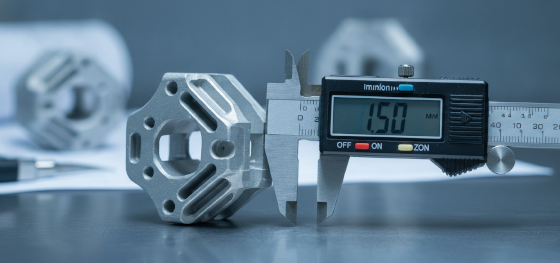
How do lightweight alloys help factory automation systems achieve faster cycle times?
Aluminum and magnesium alloys drop structural weight by nearly sixty percent, allowing robotic arms to move significantly faster with lower motor overhead.
Slashing dead weight is the ultimate secret to maximizing robotic arm agility. Custom lightweight castings provide the exact unyielding tensile strength needed to support high-speed movements without adding massive mass penalties.
Protecting your final assembly from wear requires selecting the perfect alloy. Highly fluid magnesium or aluminum alloys ensure the metal fills the mold completely, delivering robust structural components that handle high torque.
Micro-Precision Fitment: Shaving Mated Features via CNC Post-Machining
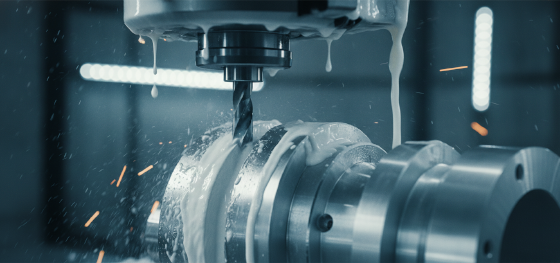
Why do robotic joint gears and bearing holes require high-precision secondary CNC machining?
Because raw metal injections naturally shrink during cooling, making 5-axis CNC finishing mandatory to achieve perfect, micro-level assembly tolerances.
Standard casting results in slightly rough parting lines and minor dimensional variations. We pair our advanced high-pressure injection lines directly with our internal usinage CNC 5 axes centers to post-machine critical bearing bores.
Planning for these secondary operations ensures your custom robot die cast assemblies align perfectly. We leave a microscopic layer of sacrificial metal on the mating faces, ensuring the cutters execute a flawless finish.
Scalable Prototyping: Transitioning from R&D to Production Lines
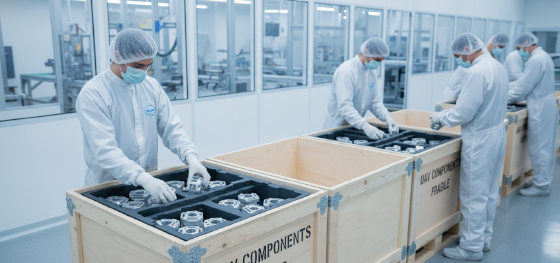
Comparing manufacturing methodologies based on your current engineering goals prevents massive budget overruns. The technical matrix below outlines how our advanced rapid tooling supports specific developmental milestones.
| Developmental Milestone | Best Sourcing Strategy | Avantage clé du prototypage |
|---|---|---|
| 1 à 50 unités (R&D) | Usinage CNC 5 axes | Zero mold debt, instant design modifications. |
| 50 to 500 Units (Beta) | Outillage rapide pour petits volumes | Bridges the gap with production-grade metals. |
| 1,000+ Units (Production) | Hardened Steel Mold Tooling | Lowest piece part price, automated rapid cycles. |
Sourcing low-volume runs is perfect for innovative robotics startups trying to launch new automation cells quickly. We maintain a highly flexible, fully audited facility, allowing us to run short batches of 100 to 5,000 pieces with highly competitive tooling and piece pricing.
Integrating similar lightweight structural requirements is crucial for other aerial vehicles. Developing custom die casting drone motor mounts and wing joints ensures your aerial hardware survives high-vibration environments safely.
Stop risking your heavy-payload automation cells on unverified, weak components. Send your complex CAD files to our engineering team today. We will run a complete, manual DFM flow analysis and deliver an extremely precise, guaranteed robot die cast quote.
FAQ : réponses honnêtes sur l'amortissement et les rebuts
Does the complexity of the internal gating system increase my robot die cast part cost?
Oui, les canaux d'alimentation complexes consomment plus de métal brut par injection. Nous concevons des chemins d'alimentation hautement optimisés pour minimiser les déchets de métal excédentaires, en maintenant vos pertes de matériau exceptionnellement faibles.
Puis-je couler du zinc et de l'aluminium dans le même moule en acier ?
Non. Parce que différents métaux rétrécissent et se contractent à des vitesses complètement différentes, verser de l'aluminium dans un moule conçu pour le zinc produira des pièces qui ne respecteront pas vos tolérances dimensionnelles.
Facturez-vous des frais supplémentaires pour les rapports d'essai de matériaux obligatoires ?
Fournir des certifications chimiques complètes (CoA) et des certificats de conformité RoHS avec chaque livraison est notre pratique standard, inclus entièrement gratuitement.
Combien de temps dure un moule en acier coûteux lorsqu'on coule de l'aluminium ?
Parce que l'aluminium fond à des températures élevées, l'**acier à outils H13** souffre de fatigue thermique, limitant généralement la durée de vie fiable du moule à environ 100 000 coulées.

