


Cooling accounts for up to seventy percent of the total cycle time in thermoplastic injection molding, making thermal management the primary factor governing production speed and part economics. Sourcing high-conductivity soft alloys allows tooling engineers to extract heat from molten polymers rapidly, slashing standard cooling phases dramatically. Slicing complex three-dimensional CAD geometries precisely ensures early-stage parts release cleanly from core cavities without warping or cosmetic sink marks. Sourcing these low-volume parts preserves crucial development cash flow, avoiding the massive capital expenditure associated with traditional hard steel molds. Selecting raw mold metals wisely protects your developmental budget from material premium markups.
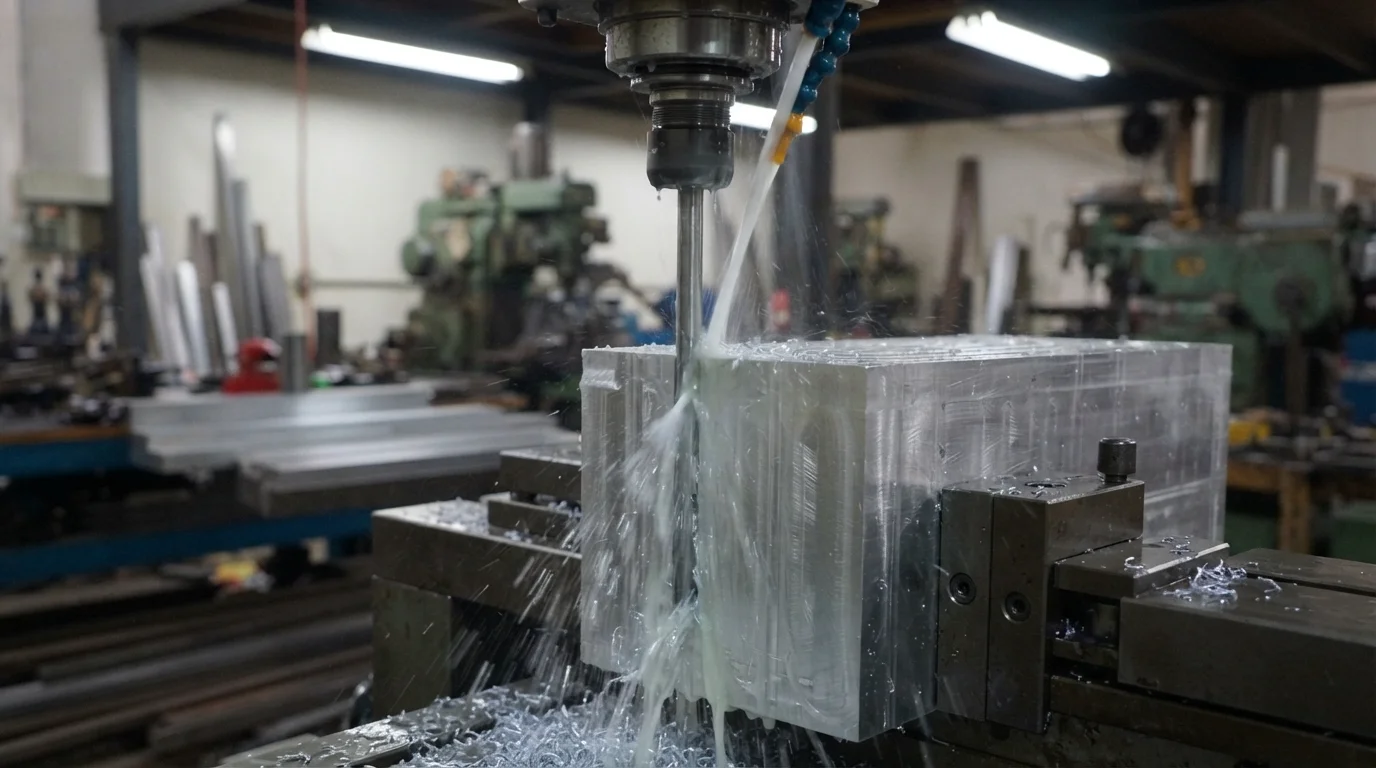
Table des matières
1. Unmatched Thermal Conductivity Advantage of Soft Alloys
2. Baffles, Bubblers, and Thermal Pin Design Guidelines
Unmatched Thermal Conductivity Advantage of Soft Alloys
Question: Why do aluminum molds cool faster than tool steel molds? Aluminum AL7075 exhibits thermal conductivity five times higher than standard steel, absorbing heat from molten polymers rapidly to reduce molding cycles.
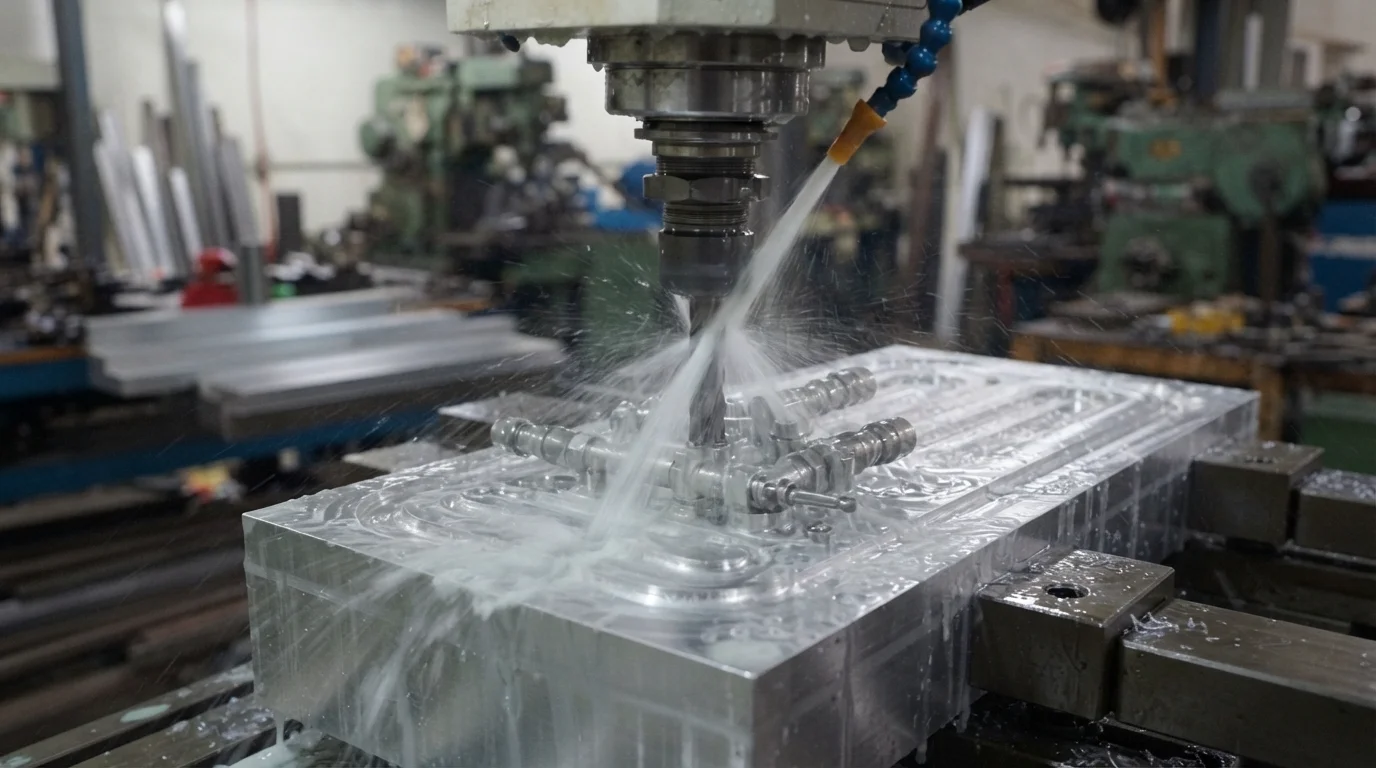
L'approvisionnement d'un dédié Service d'outillage rapide program enables mechatronics groups to bypass traditional high-volume mold expenses, producing thousands of functional plastic parts cheaply. Slicing CAD files precisely allows experienced toolmakers to analyze parting line shut-offs manually. Splicing raw CAD files precisely ensures that aluminum tooling cooling channels are routed close to critical cavity features. Symmetrical cooling line placement ensures heat transfers uniformly, protecting structural stability under dynamic injection pressures.
Aluminum’s superior thermal conductivity of 130 to 160 W/m·K allows heat to escape from molten plastics rapidly, shortening cooling cycles dramatically. Traditional Acier à outils molds, by contrast, possess a much lower heat transfer rate of 24 to 30 W/m·K, which holds heat longer and slows production cycle times. Shorter cooling cycles minimize localized internal stresses, preventing thin plastic walls from warping during part ejection. Sourcing these high-conductivity alloys ensures your developmental budget remains highly controlled during initial scaling.
La standardisation des jeux non critiques permet aux broches de fraisage à haute vitesse de dégager rapidement la matière brute, maximisant ainsi l'efficacité de coupe. L'approvisionnement en pièces fonctionnelles Service d'usinage CNC parts from extruded billets of raw aluminum represents an exceptional alternative before cutting mold blocks. Symmetrical component designs simplify holding fixtures, reducing initial setup labor hours dramatically. Sourcing high-quality billet metals protects your developmental budget from material premium markups.
Directives de conception pour déflecteurs, barboteurs et broches thermiques
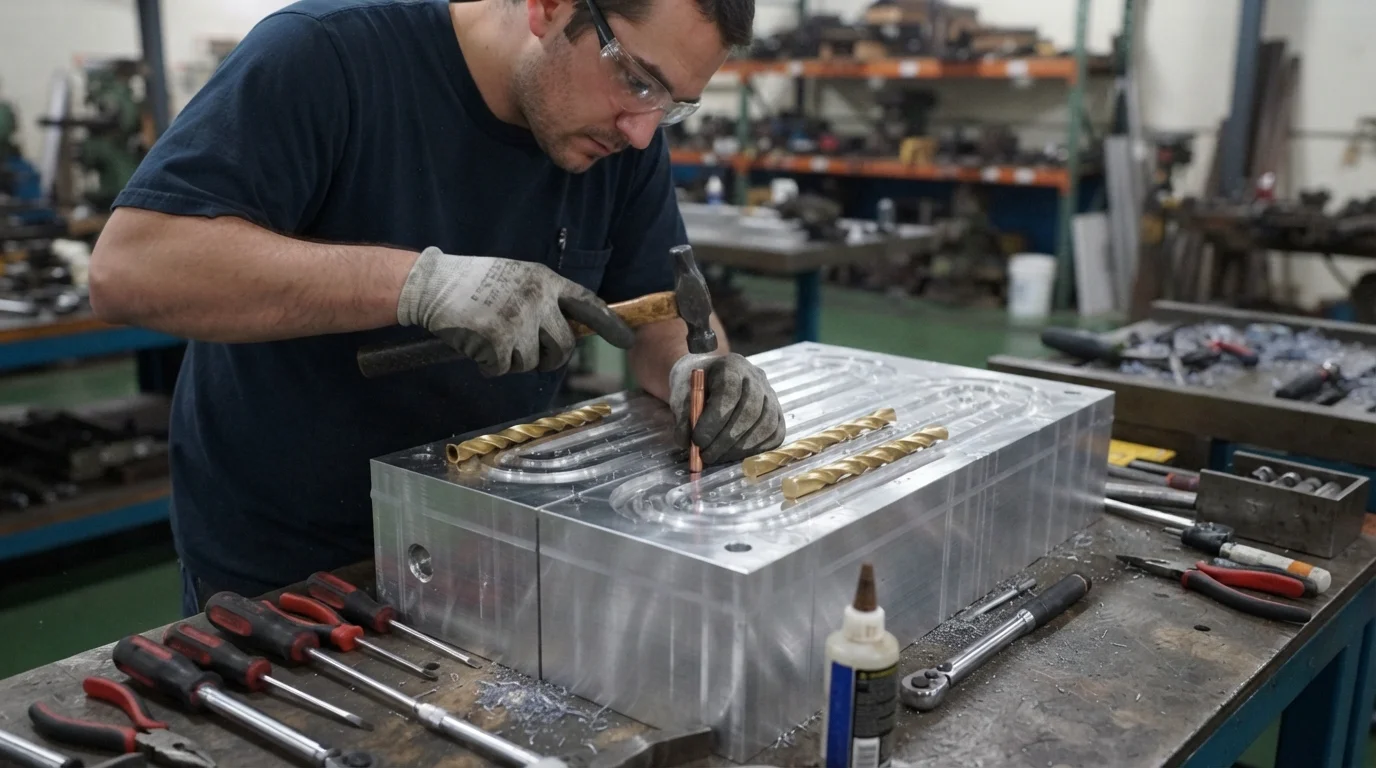
Question : Comment les sections profondes du noyau de moule sont-elles refroidies uniformément ? Les outilleurs intègrent des déflecteurs perpendiculaires, des barboteurs creux ou des broches thermiques en cuivre à haute conductivité dans les broches de noyau profondes pour canaliser le liquide de refroidissement vers les zones difficiles d'accès.
Les broches de noyau de moule profondes et les caractéristiques de cavité étroites sont souvent trop restreintes pour accueillir des canaux de refroidissement standard en aluminium en ligne droite. Le découpage précis des fichiers CAO permet aux outilleurs expérimentés d'analyser les lignes de joint, les angles de dépouille et les épaisseurs de paroi à l'aide d'un logiciel avancé de simulation d'écoulement de moule. L'approvisionnement en déflecteurs, barboteurs ou broches thermiques localisés fabriqués en pur Cuivre représente la méthode de premier choix pour dévier le flux de liquide de refroidissement vers ces zones isolées. L'approvisionnement précoce en validation dimensionnelle garantit que ces caractéristiques évidées maintiennent solidement les vis de formage de filetage critiques.
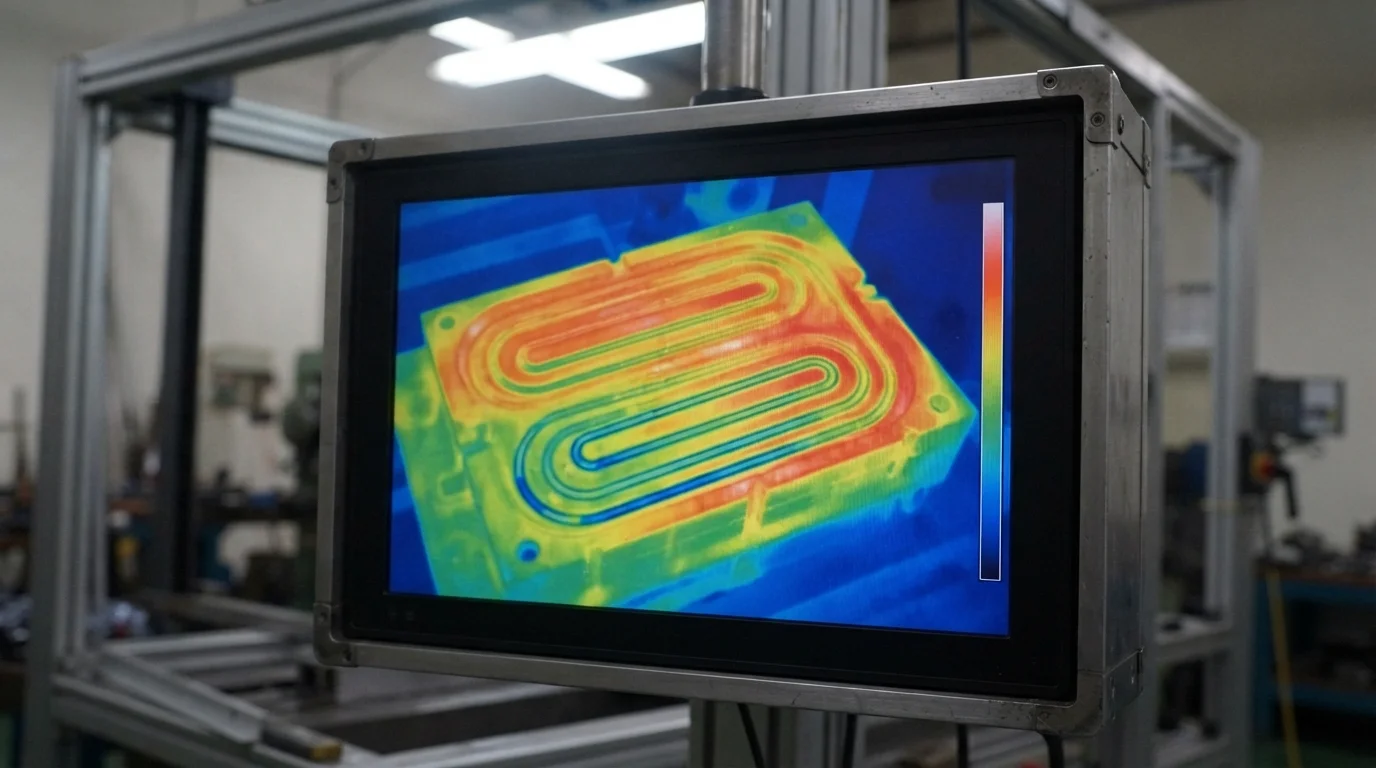
La sélection du bon accessoire de refroidissement implique d'équilibrer les propriétés physiques brutes avec les dépenses globales d'outillage. Ce tableau de comparaison technique met en évidence les méthodes de refroidissement de base utilisées pour optimiser la gestion thermique à l'intérieur des noyaux de moule :
| Dispositif de refroidissement | Construction mécanique | Meilleure caractéristique de moule | Principal avantage de transfert de chaleur |
|---|---|---|---|
| Déflecteur (lame torsadée) | Feuille métallique torsadée dans un trou percé | Broches de noyau circulaires profondes | Favorise un écoulement turbulent, assure une température homogène |
| Barboteur (tube double) | Tube concentrique dans un trou percé | Cavités étroites et profondes | Guide le liquide de refroidissement directement vers la pointe, retourne le long des parois extérieures |
| Broche thermique (cuivre) | Insert solide à haute conductivité | Petites broches incapables de contenir le fluide | Évacue la chaleur par contact physique à haute conductivité |
L'écoulement turbulent du liquide de refroidissement transfère la chaleur bien plus efficacement que l'écoulement laminaire, ce qui rend le contrôle de la vitesse du fluide essentiel pour des moules à haute efficacité. La normalisation des diamètres des canaux d'eau garantit que le milieu de refroidissement maintient un débit turbulent constant et à haute vitesse. La réalisation précoce d'études d'ingénierie vous aide à planifier stratégiquement ces tracés de lignes d'eau avant de couper le métal brut. Les concepteurs de moules analysent tôt les plans de joint pour garantir que les arrêts en aluminium tendre résistent à l'usure sous des pressions de serrage élevées.
Prévention du retrait différentiel et du gauchissement des pièces
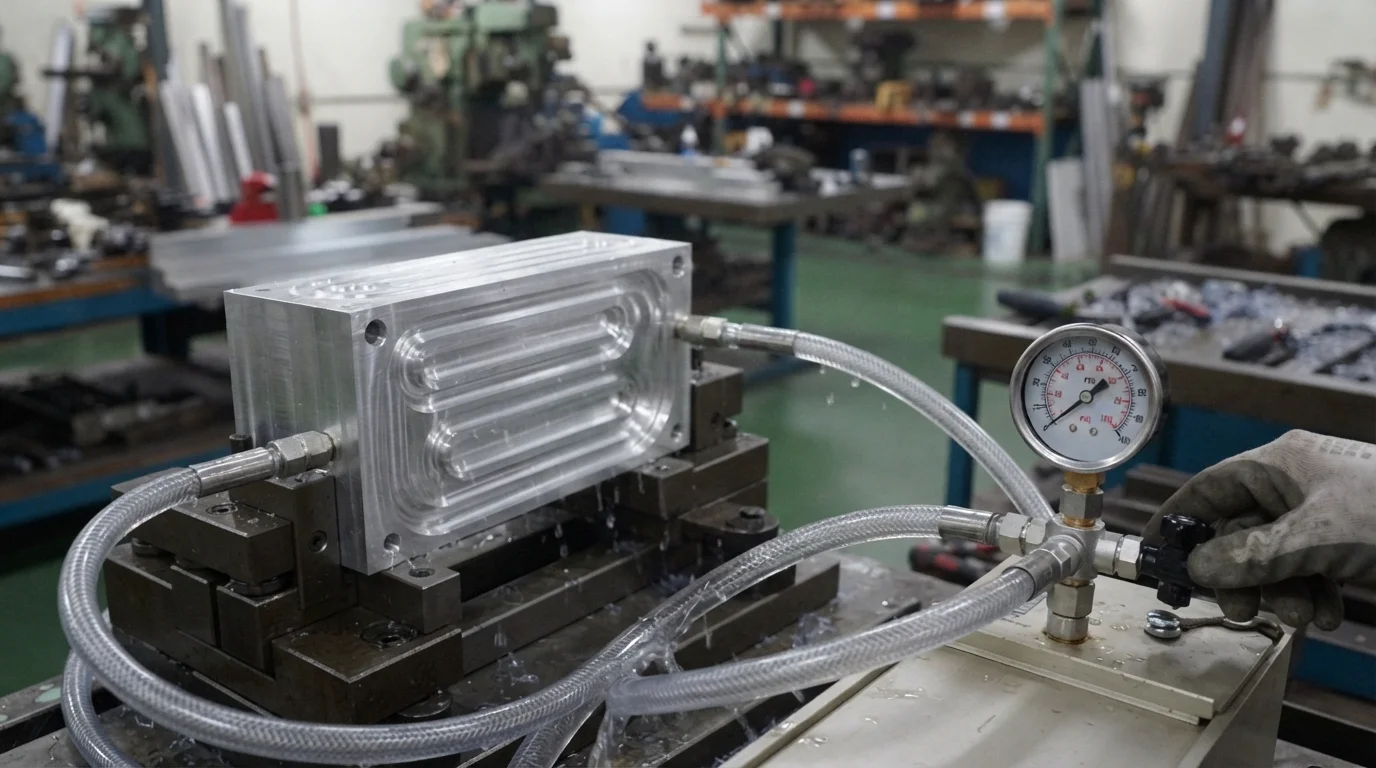
Question : Comment un refroidissement inégal provoque-t-il le gauchissement des pièces ? Les écarts de température entre différentes sections d'une pièce en plastique créent des contraintes internes élevées, entraînant un gauchissement après moulage et une dérive dimensionnelle.
Le maintien de vitesses de refroidissement uniformes prévient le retrait différentiel, garantissant que vos pièces moulées finales respectent des tolérances dimensionnelles serrées. L'approvisionnement de pièces fonctionnelles moulées à partir de plastiques techniques solides comme le verre chargé Nylon (PA) fournit un comportement matériel authentique sous charge dynamique. Les moules en acier pré-trempé traditionnels, P20 par contraste, possèdent un taux de transfert de chaleur beaucoup plus faible, nécessitant des temps de maintien et de compactage plus longs pour prévenir les marques de retrait. Comprendre comment les canaux de refroidissement de l'outillage en aluminium optimisent le transfert thermique prévient les marques d'aspect sur les surfaces extérieures critiques.
Jucheng Precision exploite une usine entièrement intégrée contenant à la fois des centres d'usinage multi-axes et des presses de moulage par injection de précision. Les ingénieurs de l'usine fournissent des revues analyses DFM gratuites 24h/24 examens pour optimiser les emplacements des points d'injection, les plans de joint et les profils de dépouille avant de couper le métal. L'obtention de nos examens DFM experts aide les groupes de produits à optimiser l'espacement des canaux de refroidissement, prévenant les points chauds dans les programmes médicaux, automobiles et d'électronique grand public complexes. L'approvisionnement de prototypes de haute qualité garantit que vos conceptions sont construites pour résister en toute sécurité à des forces dynamiques sévères.
S'associer à un spécialiste certifié Service de moulage par injection spécialiste garantit que votre matériel fini correspond à l'expérience logicielle premium. L'approvisionnement d'inserts de refroidissement conformes produits via notre Service d'impression 3D avancé permet aux développeurs de refroidir sans couture des cavités courbes complexes. L'obtention manuelle de vos devis garantit que des ingénieurs expérimentés analysent vos fichiers 3D STEP pour trouver des moyens supplémentaires de réduire les temps de cycle et les dépenses d'outillage. Les composants personnalisés subissent des contrôles métrologiques par coordonnées rigoureux pour confirmer la conformité dimensionnelle exacte.
Foire aux questions (FAQ)
Combien l'optimisation des canaux de refroidissement du moule réduit-elle les prix unitaires des pièces ?
Le temps de refroidissement représente cinquante à soixante-quinze pour cent de l'ensemble du cycle de moulage par injection, ce qui fait de l'extraction efficace de la chaleur le facteur principal de réduction des coûts unitaires. L'approvisionnement de noyaux de moule en aluminium à haute conductivité réduit considérablement les temps de maintien thermique, permettant aux presses de cycler beaucoup plus rapidement.
Que sont les canaux de refroidissement conformes dans les moules rapides ?
Les canaux de refroidissement conformes produits par impression 3D métal correspondent aux contours complexes des pièces en 3D à une distance de décalage constante, garantissant une extraction uniforme de la chaleur sur les géométries organiques. La normalisation des distances des lignes d'eau par rapport aux surfaces de cavité empêche les points chauds localisés, réduisant considérablement les temps de cycle de moulage.
Quel est l'écart de température maximal autorisé entre les lignes d'eau du moule ?
Le maintien d'un écart de température (Delta T) inférieur à 3°C à 5°C entre l'entrée et la sortie du liquide de refroidissement empêche les températures de moule inégales et le gauchissement des pièces. L'obtention précoce de revues de conception pour la fabricabilité (DFM) simplifie le routage des lignes d'eau, garantissant que le liquide de refroidissement maintient un flux turbulent dans toute la plaque de moule.

