


Custom Robot Parts: Precision Components for Industrial and Humanoid Robotics
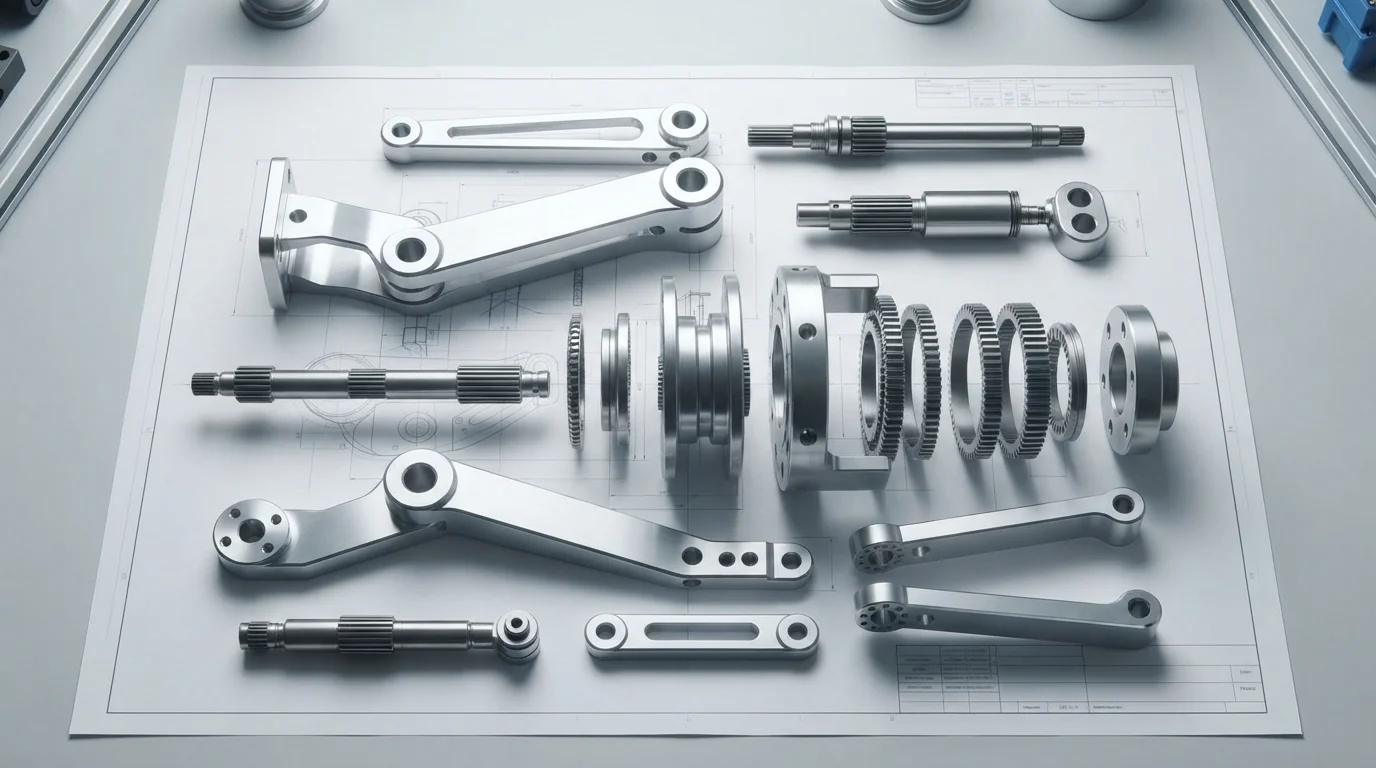
What are the essential physical parts of an industrial and humanoid robot? The physical architecture of a modern automation system comprises five foundational assemblies: high-rigidity structural arm links and chassis skeletons (Structural Links/Frames), joint actuators and harmonic gearboxes (Actuators & Gearboxes), perception sensor mounts and electronic housings (Sensor Mounts & Enclosures), bionic end-effectors and dexterous fingers (Grippers/End-Effectors), alongside protective exterior shells (Protective Covers). Sourcing high-precision custom robot parts determines whether an articulated multi-axis platform achieves micro-millimeter trajectory accuracy or suffers from terminal jitter under heavy payloads.
Deploying high-performance usinage CNC 5 axes combined with specialized l'outillage rapide ensures that lightweight AL7075-T6 aluminum arm linkages and self-lubricating Delrin (POM) gears maintain dimensional repeatability across high-speed dynamic movements. Let us analyze the engineering design and manufacturing criteria for each critical subsystem.
Structural Links, Arms, and Chassis Components for Dynamic Rigidity
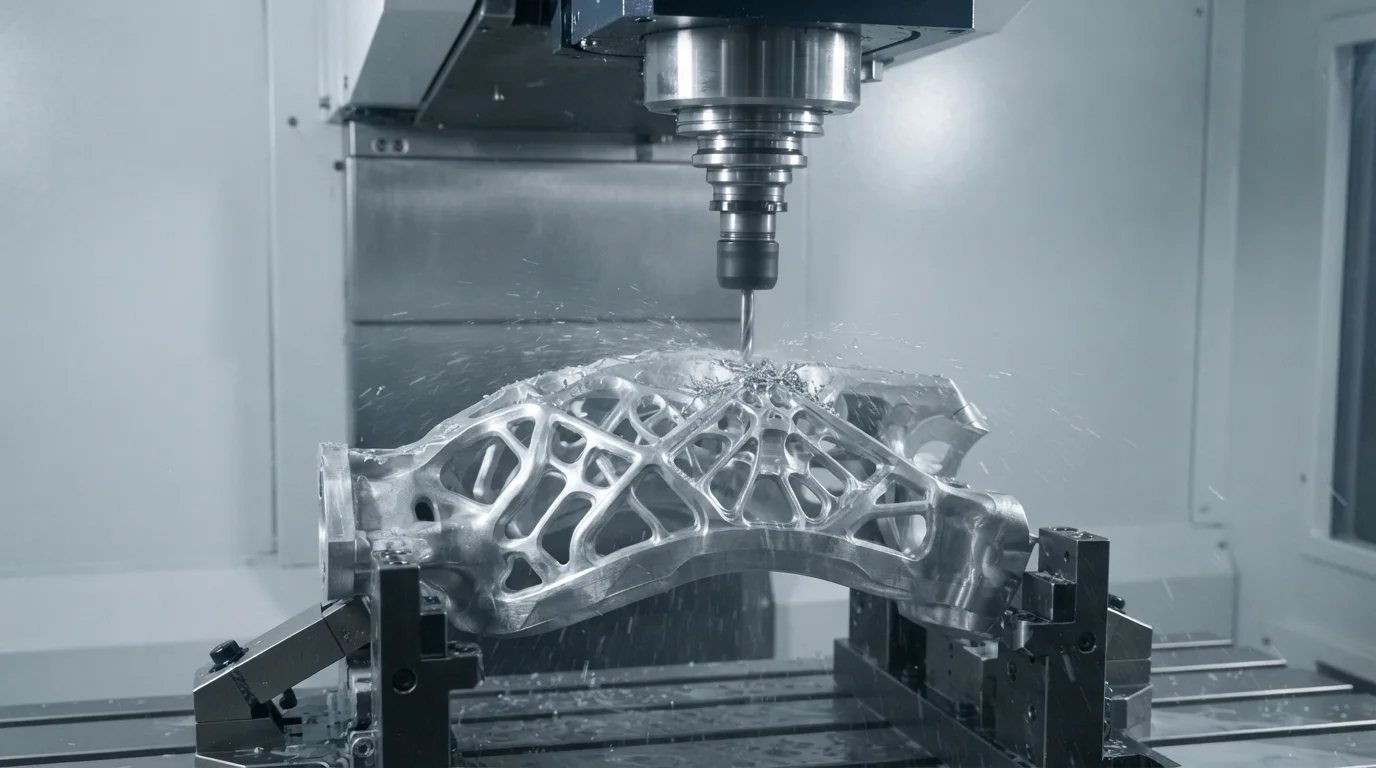
The load-bearing skeleton of an articulated robot must minimize rotational inertia while resisting intense bending moments during rapid start-stop acceleration curves. Using lightweight magnesium alloy (AZ91D) or hollow-pocketed aircraft aluminum, engineers create skeleton components with high natural resonant frequencies. This prevents vibration resonance from transferring down the kinematic chain to the end-of-arm tooling.
When programming toolpaths for structural linkages, manufacturing teams should balance mass reduction against structural deflection limits:
- Pocket Web Optimization: Machine internal weight-reduction pockets with 1.2 mm to 1.5 mm floor thicknesses to balance rigidity with minimal mass.
- Integrated Cable Channels: Carve smooth, continuous internal wiring raceways to protect high-density busbars from dynamic pinch points.
- Precision Dowel Holes: Ream dual locating pin bores to ISO H7 limits to guarantee repeatable angular alignment during field assembly.
High-Precision Actuator Housings and Planetary/Harmonic Gearboxes
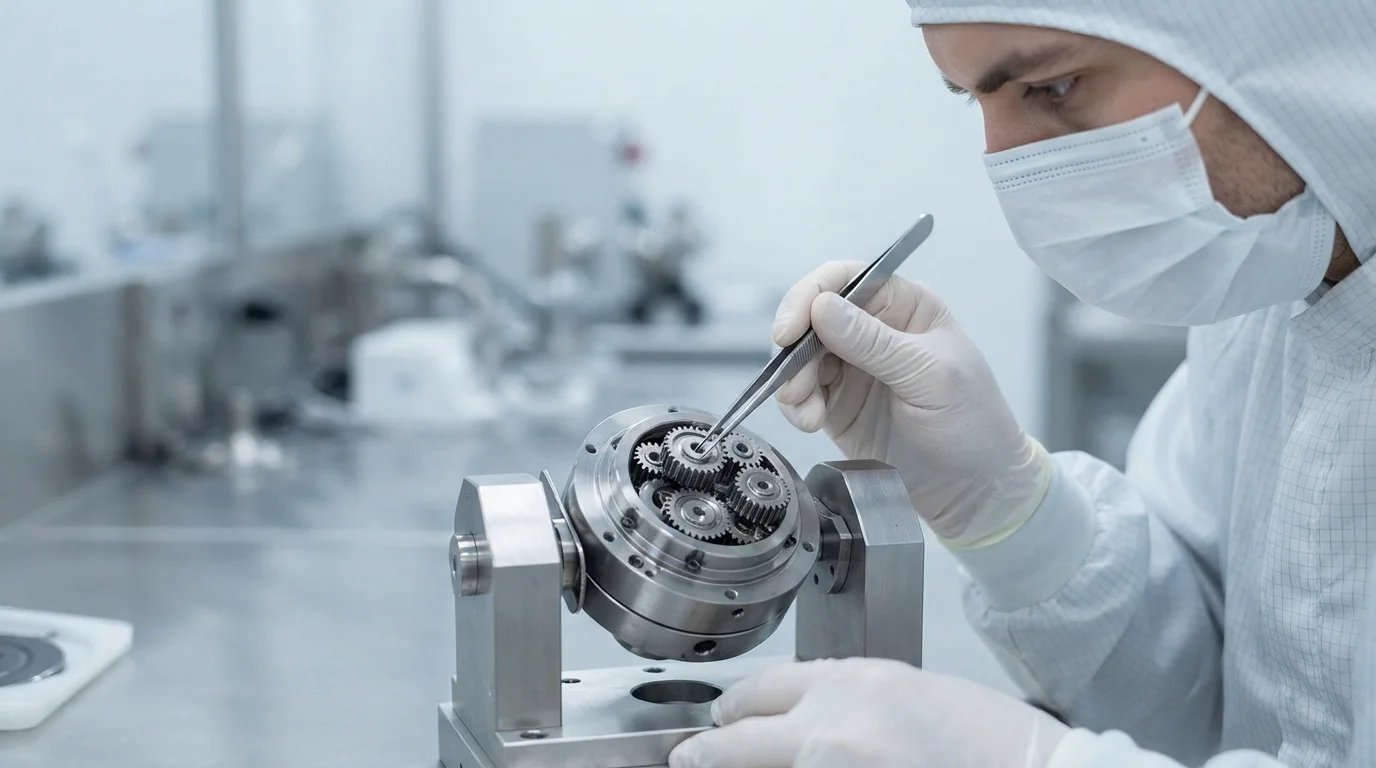
At the heart of every rotational joint lies a compact mechatronic actuator integrating a frameless torque motor, an optical encoder, and a zero-backlash harmonic drive or cycloidal reducer. Because these mechanisms operate within fractions of a millimeter, machining high-precision robot parts demands single-clamping operations on multi-axis turning centers to eliminate radial runout between bearing seats and stator mounts. Discussions on engineering hubs across Reddit and Facebook highlight that angular misalignment over 8 microns in a reducer case will rapidly destroy harmonic flexspline teeth.
Comparing manufacturing methods across different motion-control subsystems reveals distinct machining and tolerance requirements:
| Subsystem Component | Primary Material Selection | Critical Machining Requirement |
|---|---|---|
| Harmonic Drive Housings | AL7075-T6 / 42CrMo4 Alloy Steel | Bearing bore concentricity within ±0.005 mm (ISO H6 tolerance) |
| Sensor & Camera Mounts | 6061-T6 Aluminum / Carbon Fiber | Flatness within 0.02 mm to prevent optical parallax distortion |
| Dexterous Finger Links | PEEK / Overmolded TPU | Micro-pin slot alignment and high-friction tactile surface bonding |
Sensor Mounts, LiDAR Enclosures, and Camera Housings
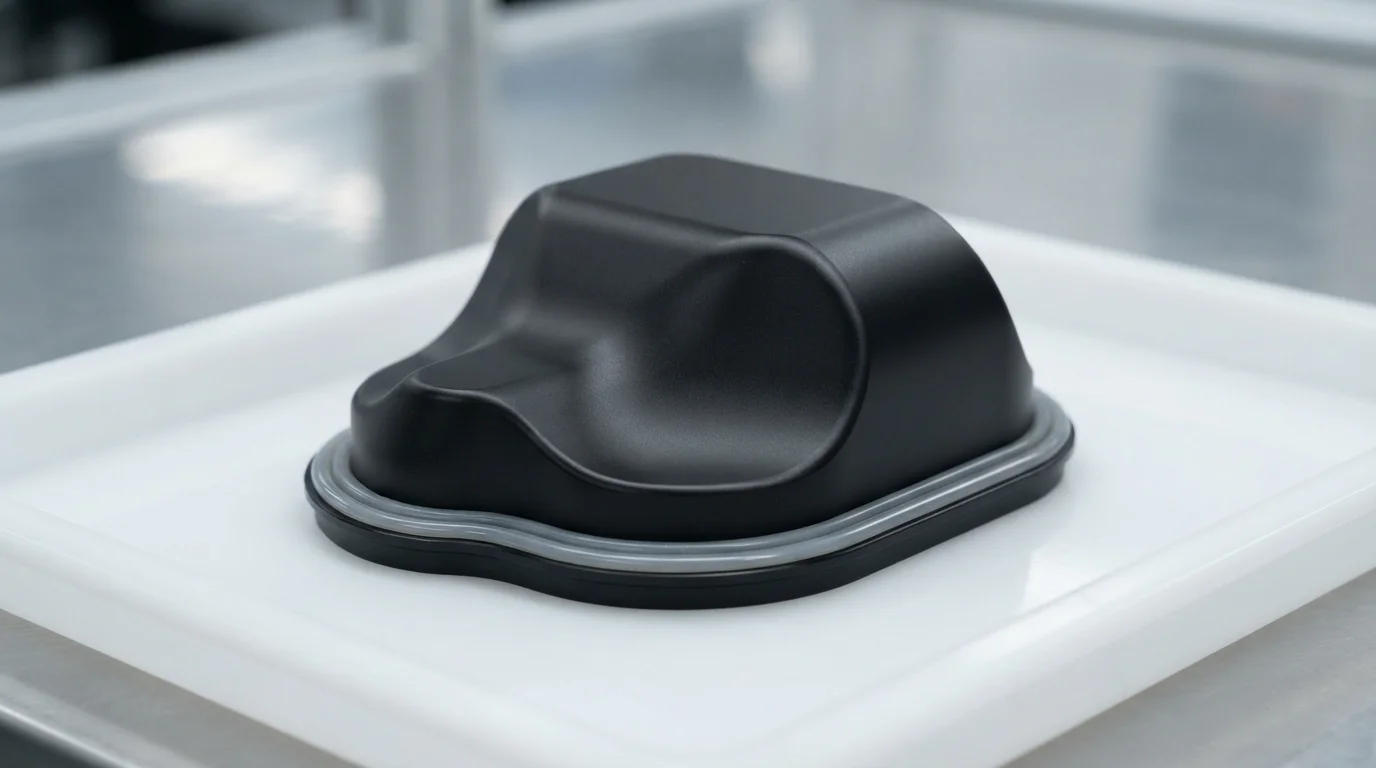
Autonomous navigation and robotic perception rely on solid-state LiDAR units, stereoscopic depth cameras, and tactile force-torque sensors mounted at the wrist or head. These optical enclosures must provide rigid structural alignment under severe vibration while dissipating heat generated by high-frame-rate processing units. Incorporating integrated heat-sink fins directly into CNC-machined aluminum sensor brackets ensures reliable processing performance during continuous factory mapping cycles.
Bionic End-Effectors, Gripper Fingers, and Soft-Touch Pads
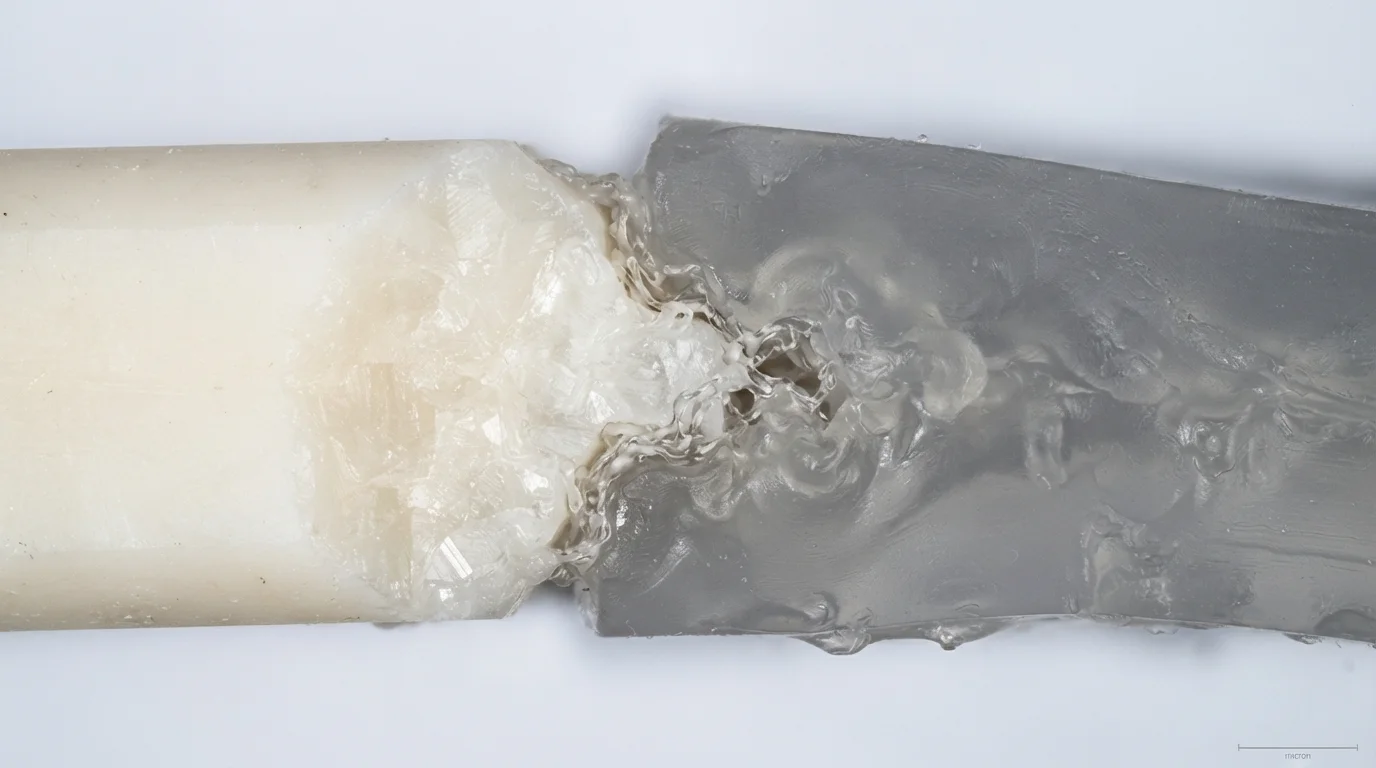
Modern robotic grippers transition away from bulky pneumatic cylinders toward multi-jointed bionic hands capable of handling fragile eggs or heavy metallic castings with adaptive force control. Manufacturing dexterous finger mechanisms requires combining rigid structural skeletons with flexible contact pads via multi-material processing:
- Rigid Structural Phalanges: Machine micro-scale links from self-lubricating engineering polymers like PEEK or Delrin to minimize joint friction without liquid grease.
- Tactile Overmolding: Cast soft TPU or liquid silicone rubber (Shore A 30–60) directly onto finger tips to maximize static grip friction and protect delicate objects.
- Miniature Cable Capstans: Turn micro-diameter wire pulleys to route high-tensile tendon cables that drive finger articulation.
Assembly Guidelines and Kinematic Precision Maintenance
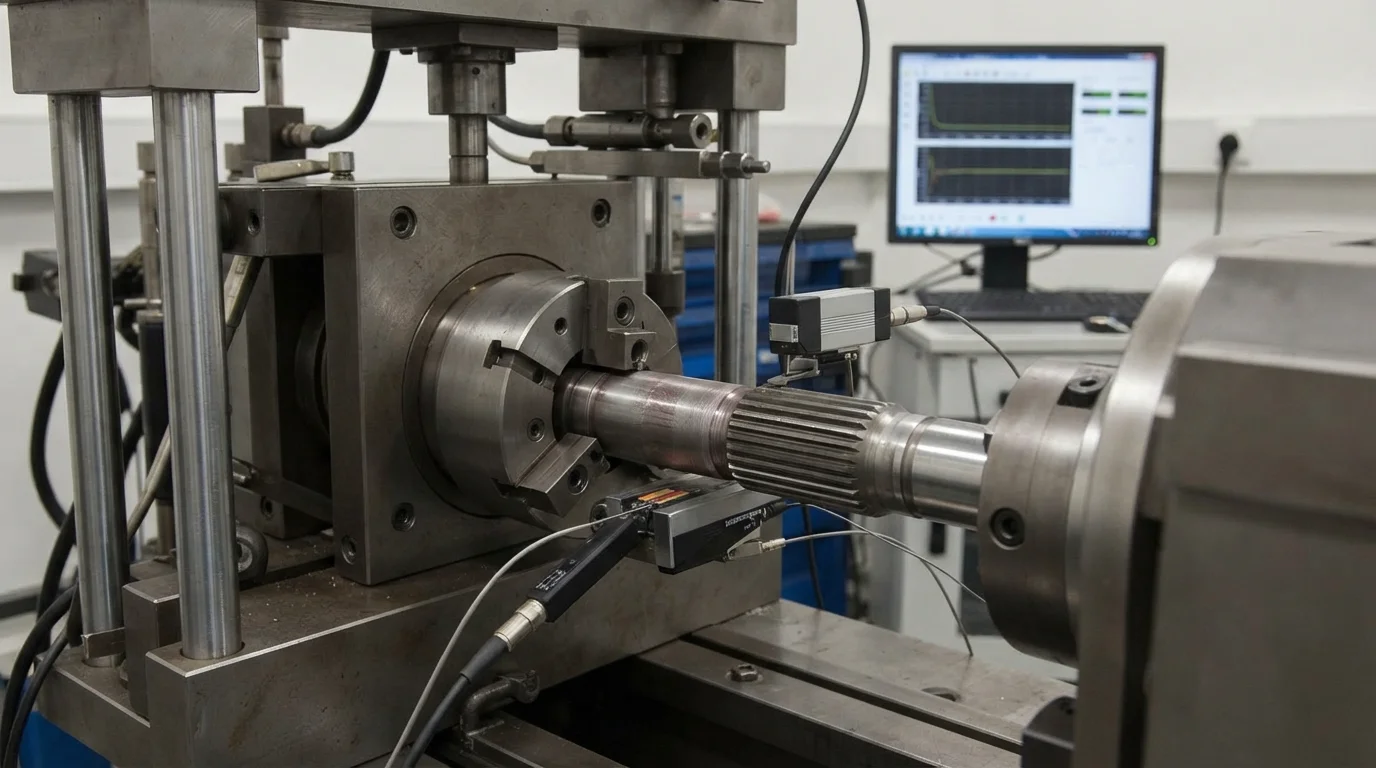
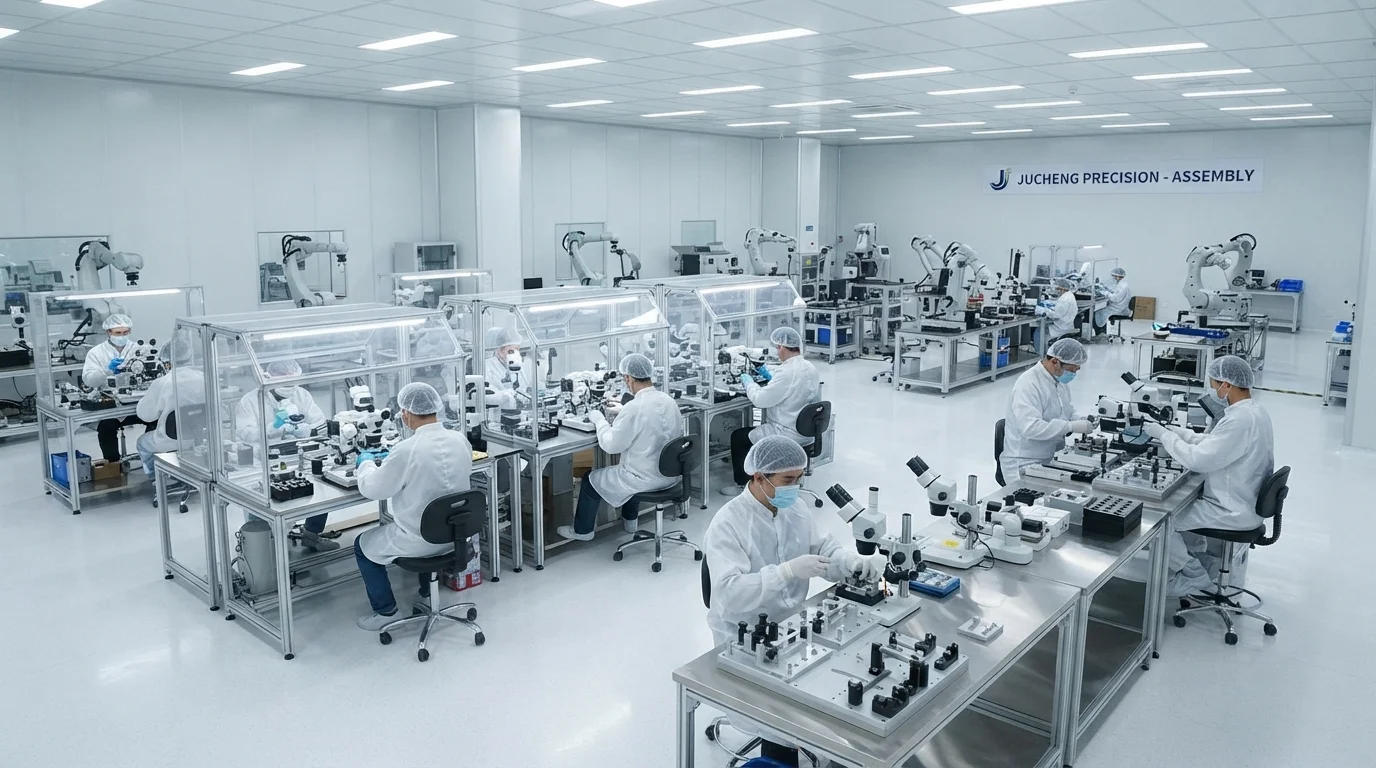
Ensuring the multi-year positioning repeatability of an assembled robotic arm requires disciplined cleanroom installation practices and routine metrology verification. Mating high-precision cycloidal drives onto aluminum link arms without torque-induced warpage demands strict fastening sequences.
Key assembly and maintenance protocols include:
- Thermal Joint Pressing: Warm aluminum bearing housings to 60°C–80°C before inserting sub-zero chilled bearings to avoid scoring precision bore walls.
- Cross-Pattern Bolt Torquing: Tighten harmonic drive mounting screws incrementally using digital torque drivers to maintain parallel interface contact.
- Periodic Kinematic Calibration: Audit end-effector repeatability using laser tracker interferometers every 2,000 operational hours to compensate for micro-mechanical settling.
Foire aux questions (FAQ)
1. What are the highest precision mechanical components inside a robot?
The bearing pockets and mounting flanges inside harmonic drive housings and planetary reducers are the most critical, requiring ±0.005 mm concentricity to prevent gear binding and kinematic backlash.
2. Why is aluminum 7075 preferred over 6061 for robotic arm linkages?
Aluminum 7075-T6 provides nearly double the yield strength (500 MPa vs. 275 MPa) of 6061, dramatically reducing elastic bending deflection and end-point vibration when an arm stops abruptly at high speed.
3. How are soft tactile pads bonded onto robotic gripper fingers?
They are fabricated via dual-shot overmolding or vacuum casting, where molten TPU or liquid silicone rubber chemically bonds to plasma-treated rigid polymer or metal skeletal cores.
4. Can 3D printing replace CNC milling for humanoid robot structural frames?
Metal 3D printing (DMLS) works well for complex organic brackets, but primary structural load-bearing links and bearing journals still require CNC machining to guarantee 100% material density and sub-micron fitment.
5. How do engineers prevent wire harness fatigue in multi-axis robot joints?
Engineers integrate hollow through-bore actuator designs in CAD, allowing flexible power and signal cables to pass along the neutral rotation axis without pinching.
6. How does Jucheng Precision verify precision robot part dimensions?
Jucheng Precision verifies every critical dimension using high-accuracy Zeiss CMM inspection probes, optical roundness testers, and First Article Inspection (FAI) reports in climate-controlled cleanrooms.
Why Choose JUCHENG for Your Robotics Sourcing
Achieving zero-backlash motion and micro-millimeter positioning repeatability requires a manufacturing partner with multi-axis precision machining and advanced quality verification. JUCHENG supports robotics innovators by delivering comprehensive analyses DFM gratuites 24h/24 reviews that evaluate bearing bore alignments, tool clearances, and structural pocketing ratios prior to cutting metal stock. Founded in Shenzhen in 2012 with an 8,000-square-meter facility in Dongguan, our factory houses 150+ advanced machines, including 25+ high-performance 5-axis Haas and Mazak milling centers [9.10].
Backed by ISO 9001, ISO 14001, ISO 13485, and IATF 16949 certifications, our engineering teams ensure that manufacturing custom robot parts achieves sub-micron bore concentricity, zero backlash alignment, full material traceability, and absolute batch consistency.
Ready to Manufacture Your Custom Precision Robot Parts?
Upload your 3D models today to receive instant feedback, competitive pricing, and professional DFM analysis from our seasoned engineering experts. Let JUCHENG bring your complex designs to life with unmatched speed and reliability!

