


La transition de pièces en plastique personnalisées des impressions 3D de première étape vers le moulage par injection à courte série nécessite une compréhension approfondie de la physique du démoulage, de la contraction thermique des polymères et des forces de serrage mécaniques. La mise en œuvre de règles claires directives de conception pour l'outillage rapide protège vos budgets de développement en évitant les rayures structurelles, les marques de retrait cosmétiques ou les bavures le long des lignes de joint. L'aluminium AL7075 et les aciers doux pré-trempés P20 offrent des vitesses d'usinage jusqu'à soixante-dix pour cent plus rapides que l'acier de production trempé H13, mais les métaux tendres exigent des concessions géométriques spécifiques pour prévenir les dommages prématurés de la cavité. Faire appel à des examens DFM experts dès le début garantit que vos fichiers CAO 3D se traduisent proprement en inserts de moule robustes et rentables.
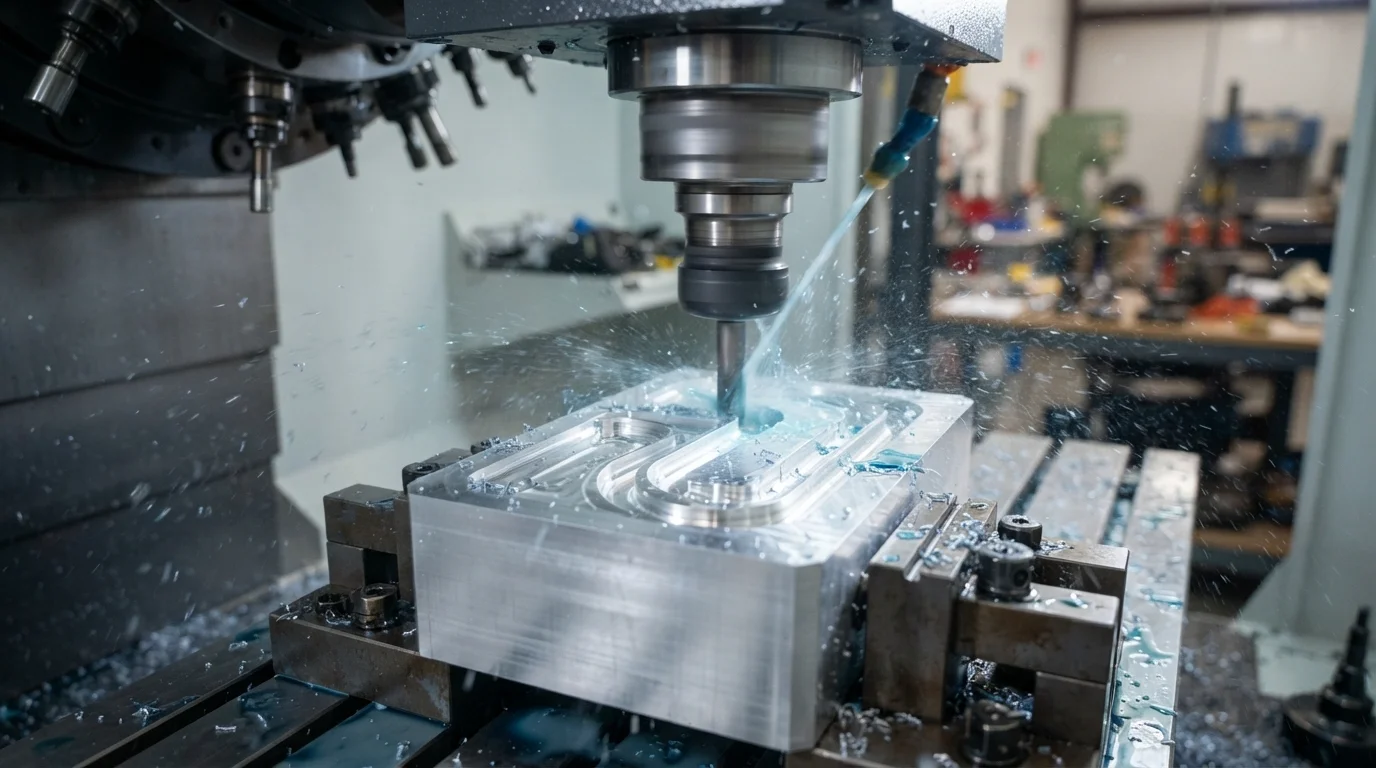
La sélection de méthodes de fabrication temporaires appropriées équilibre les propriétés des matières premières avec des délais d'exécution rapides lors des tests de première étape. Le découpage précis de géométries CAO 3D complexes permet aux outilleurs expérimentés d'analyser les lignes de joint, les angles de dépouille et les épaisseurs de paroi à l'aide d'un logiciel avancé de simulation de flux de moule. Faire appel à un partenaire disposant de capacités internes étendues pour vos copies garantit que vous recevez des conseils honnêtes et économiques pour votre programme matériel spécifique. Explorons les règles géométriques essentielles, la dynamique de retrait des matériaux et les conceptions de caractéristiques qui garantissent le succès du moulage en faible volume.
Table des matières
2. Règles géométriques essentielles : parois, dépouilles et nervures
3. Gestion des caractéristiques complexes : contre-dépouilles, inserts et canaux d'injection
4. Taux de retrait des matériaux et attentes en matière de tolérance
5. Développez votre production avec l'installation d'injection de Jucheng Precision
Pourquoi l'outillage rapide nécessite des règles de conception différentes de celles des moules durs
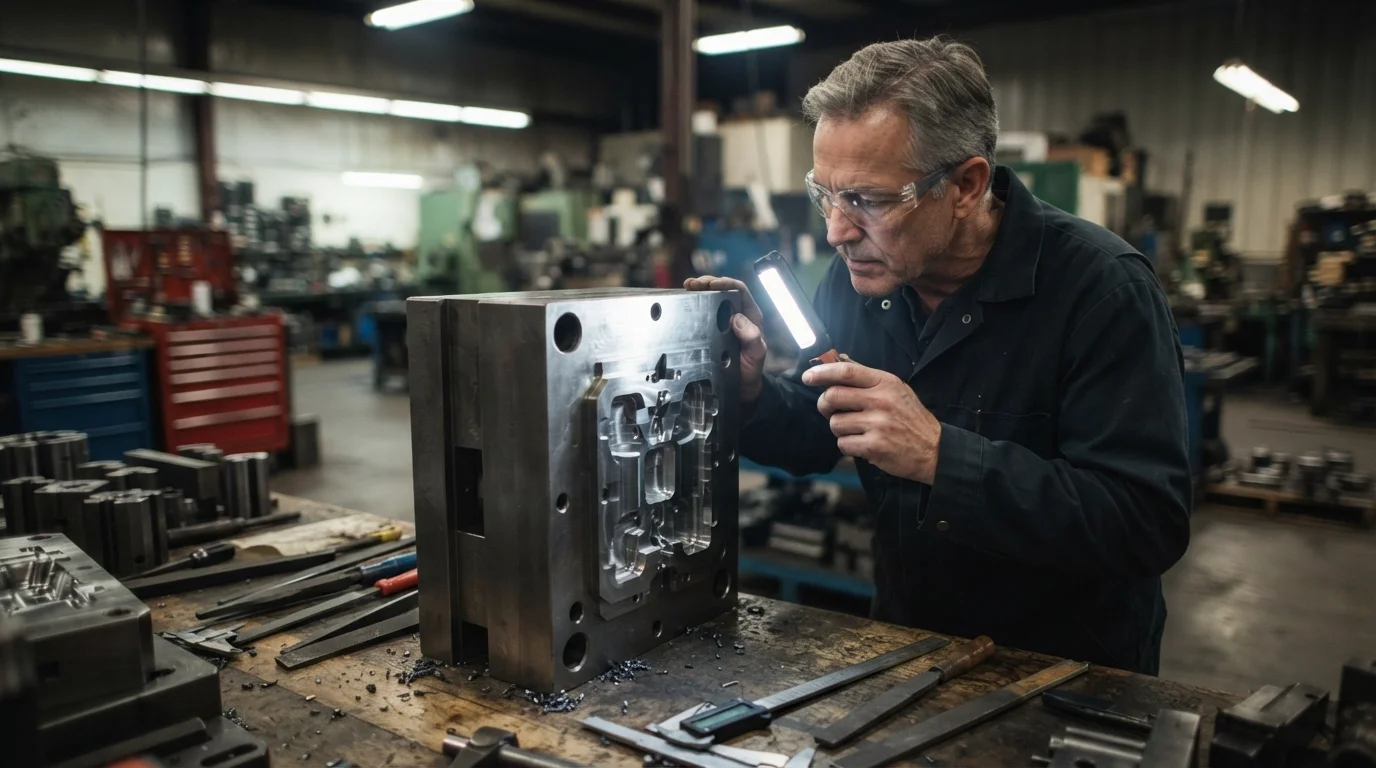
Question : Pourquoi les moules souples nécessitent-ils des directives DFM différentes de celles des moules en acier de production ? Les cavités en aluminium et en acier doux ont une dureté de surface inférieure à celle de l'acier trempé H13, ce qui les rend plus sensibles au micro-grippage et à l'érosion des canaux d'injection sous des pressions de serrage élevées.
La sélection de métaux tendres pour les noyaux de moule réduit considérablement les dépenses d'investissement initiales de l'outillage et réduit les délais d'usinage à 10 à 15 jours ouvrables. Faire appel à un partenaire dédié Service d'outillage rapide dédié en AL7075-T6 Aluminium ou pré-trempé Acier à outils comme P20) livre de véritables composants moulés par injection à partir de résines de qualité production en quelques semaines. Les cavités en métal tendre dissipent la chaleur rapidement, raccourcissant les cycles de refroidissement et augmentant les vitesses de production. Les faces de fermeture souples, cependant, ont des indices de dureté Brinell inférieurs à ceux de l'acier trempé, ce qui les rend susceptibles d'être écrasées si les forces de serrage ou les angles de dépouille sont mal configurés.
Le respect de directives de conception spécialisées pour l'outillage rapide garantit que vos noyaux de moule souples survivent à des dizaines de milliers de cycles sans subir de dérive dimensionnelle. Les outilleurs analysent soigneusement les fermetures de ligne de joint pour empêcher le plastique fondu de s'échapper sous des pressions d'injection élevées. L'épissage précis des fichiers CAO bruts permet aux outilleurs expérimentés d'analyser manuellement les fermetures de ligne de joint. Faire appel à ces moules souples permet aux développeurs de produits de valider les propriétés réelles des matériaux de production avant de s'engager dans l'acier trempé.
Règles géométriques essentielles : parois, dépouilles et nervures
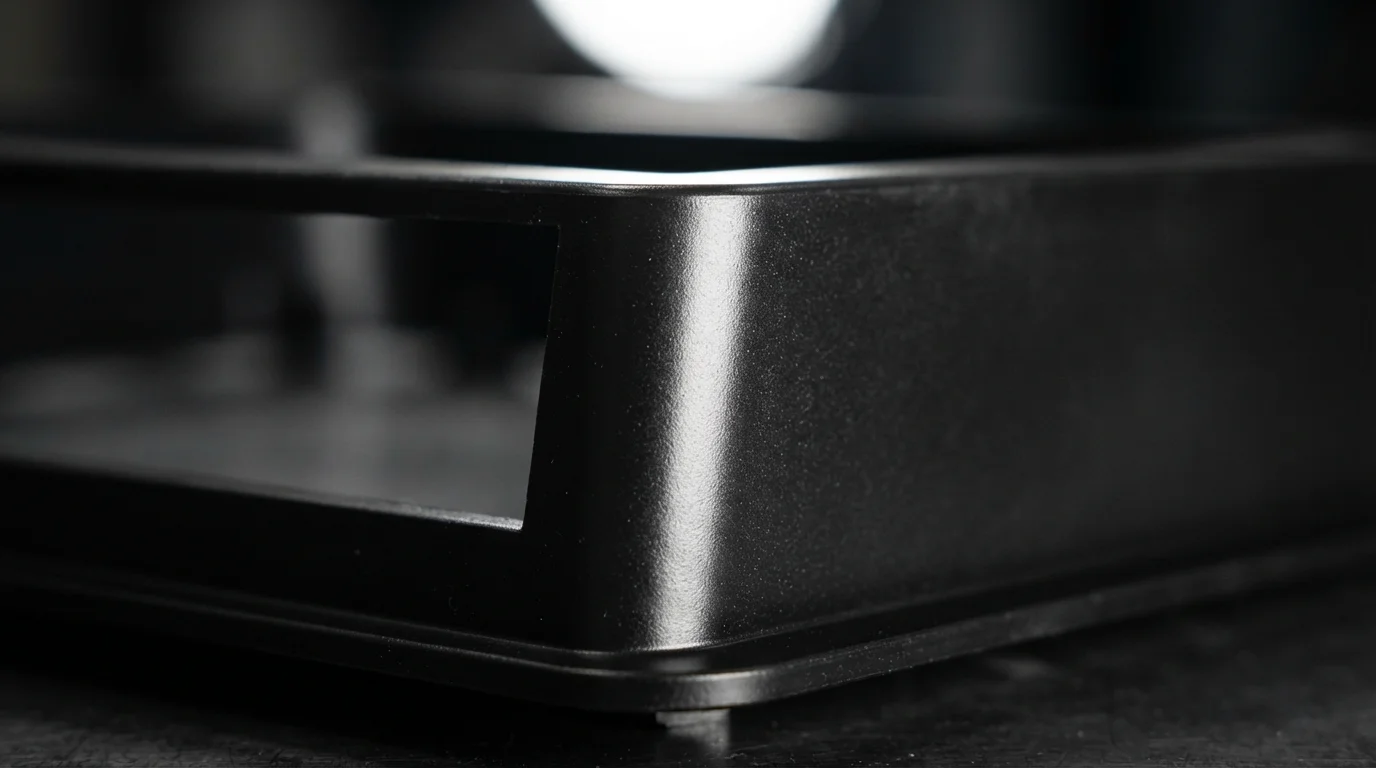
Question : Quelle est la règle d'or pour l'épaisseur de paroi dans le moulage par injection rapide ? Le maintien d'une épaisseur de paroi uniforme entre 1,5 mm et 3,0 mm empêche le retrait localisé du polymère et le gauchissement de la pièce après moulage.
Intégrant généreusement angles de dépouille appropriés pour l'outillage rapide d'au moins 1,5 à 2,0 degrés sur toutes les caractéristiques verticales permet aux pièces en plastique moulé de se libérer proprement des cavités de noyau souple. Les parois sans dépouille traînent contre le métal du noyau sous des pressions de retrait élevées du polymère, créant des marques de frottement visibles et des fissures de contrainte profondes. Maintenir une épaisseur de paroi pour le moulage par injection rapide uniforme dans les projets est tout aussi vital, empêchant des taux de refroidissement différentiels qui conduisent à un gauchissement après moulage. Une validation dimensionnelle précoce garantit que les caractéristiques imbriquées s'alignent parfaitement sous des charges dynamiques physiques.
Optimisation des nervures et bossages conception moulage rapide caractéristiques garantit que la résistance structurelle est obtenue sans induire de marques de retrait cosmétiques sur les faces visibles opposées. Les nervures de renforcement doivent être conçues avec une épaisseur de 50 à 60 pour cent de la paroi nominale pour prévenir les vides thermiques localisés pendant le refroidissement. Les bossages doivent être évidés et ancrés avec de fines goussets pour maintenir une épaisseur de paroi uniforme à travers la racine de la caractéristique. Suivre ces directives de conception pour l'outillage rapide garantit que vos pièces en plastique sortent du moule avec des finitions de surface planes et impeccables.
Gestion des caractéristiques complexes : contre-dépouilles, inserts et points d'injection
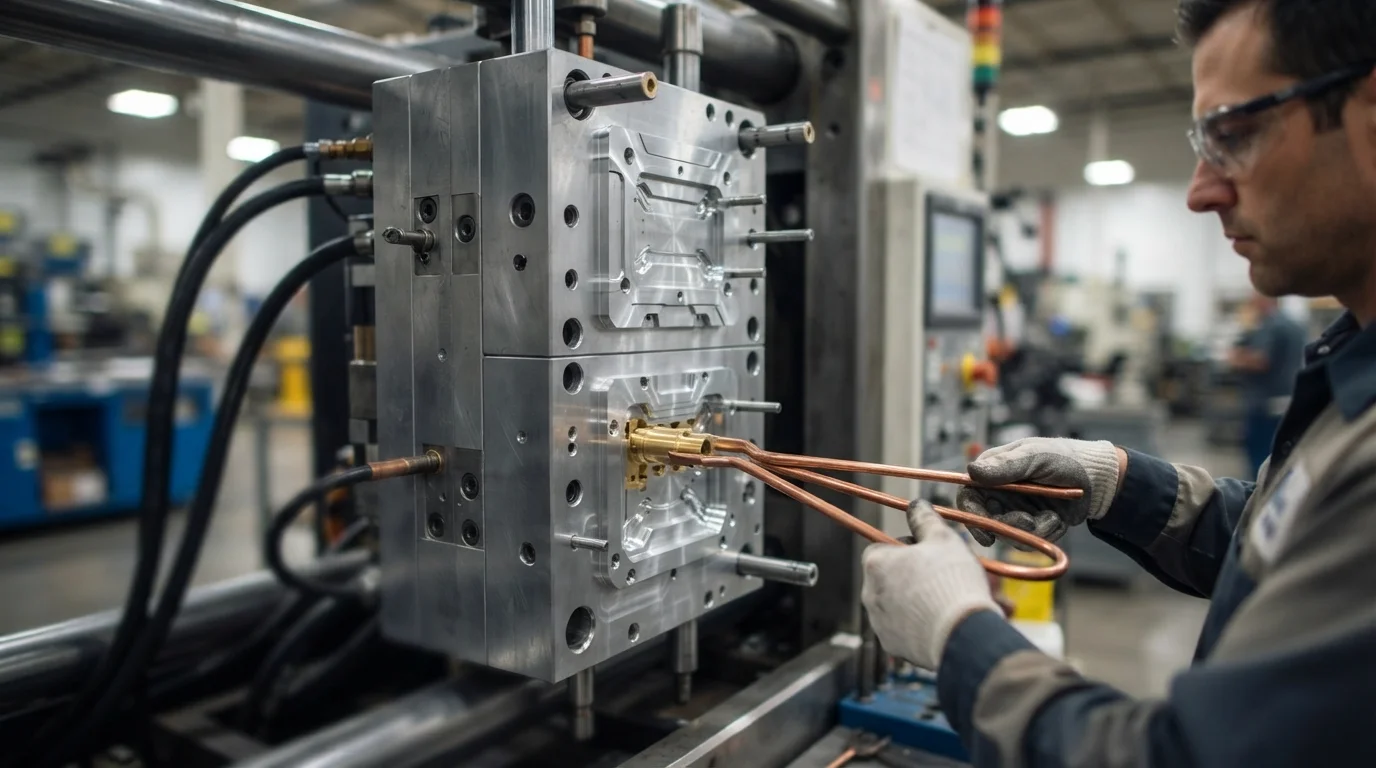
Question : Comment les contre-dépouilles complexes peuvent-elles être moulées de manière abordable dans l'outillage de courte série ? Remplacer les coulisseaux hydrauliques automatiques coûteux par des inserts de noyau manuels chargés à la main réduit considérablement les coûts de construction du moule initial.
Concevoir des contre-dépouilles dans l'outillage rapide fichiers CAO complexes est le moyen le plus efficace d'éliminer les coulisseaux mécaniques et de réduire les heures de fabrication du moule. Lorsque les trous latéraux externes ou les clips internes ne peuvent pas être éliminés, l'utilisation de techniques d'inserts chargés à la main pour le moulage par injection fournit une solution économique. Les opérateurs placent manuellement des pièces de noyau en laiton ou en acier dans la cavité du moule ouverte avant chaque cycle d'injection, les éjectant avec la pièce pour un retrait manuel. Contourner les coulisseaux hydrauliques automatiques économise des milliers de dollars en dépenses d'investissement initiales d'outillage pour les séries à faible volume.
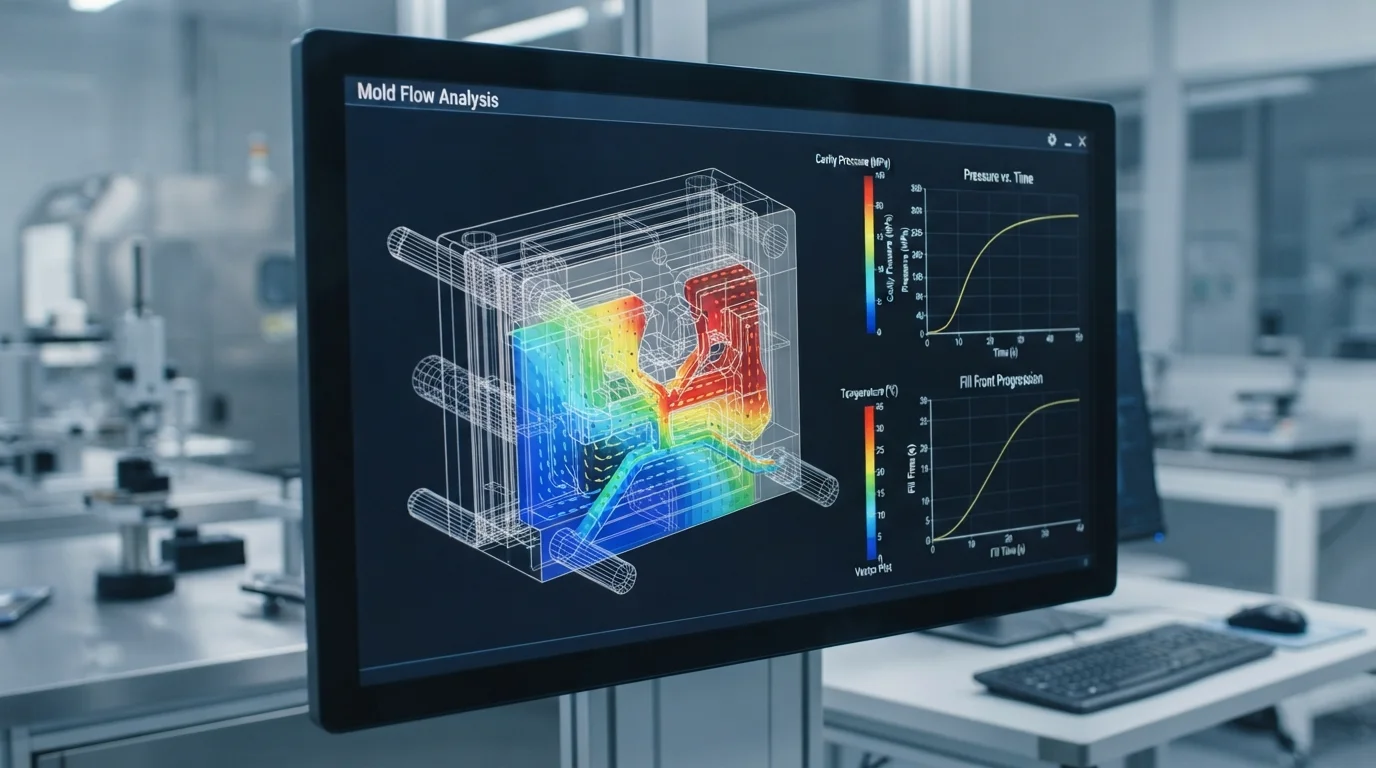
Placement stratégique des points d'injection dans l'outillage rapide garantit que le plastique fondu entre dans la cavité en douceur sans créer de bavures cosmétiques ou de lignes de soudure faibles. Positionnez les points d'injection sur les faces inférieures non cosmétiques ou les jonctions de nervures internes afin que les marques de détourage des points d'injection restent cachées. Les simulations de flux de moule aident les ingénieurs à équilibrer les longueurs de canaux et les tailles de points d'injection, assurant un remplissage uniforme du polymère dans tous les coins de la cavité. L'application de ces principes dans le cadre des directives de conception pour l'outillage rapide prolonge la durée de vie du noyau et préserve l'esthétique des pièces.
Material Shrinkage Rates and Tolerance Expectations
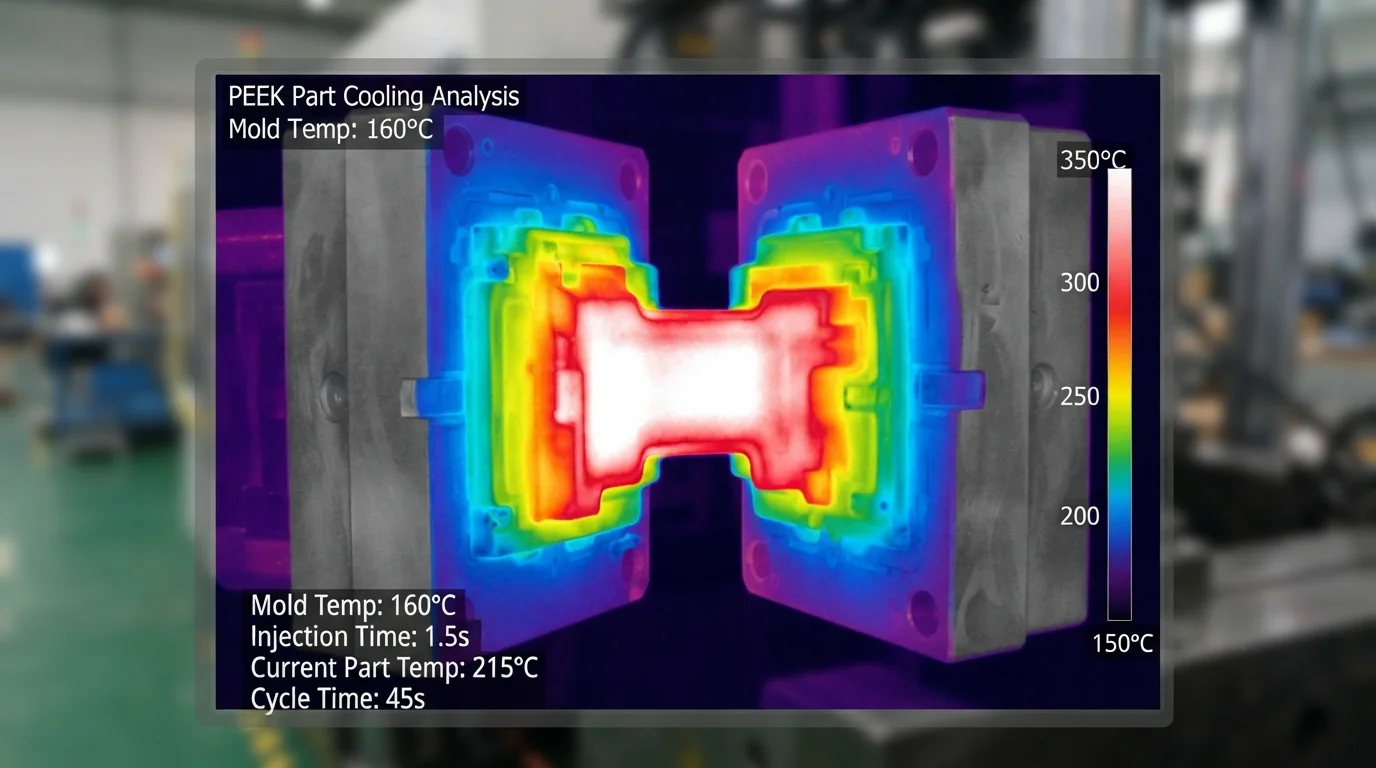
Question: How is polymer shrinkage factored into rapid mold design? Mold makers scale up 3D CAD cavity dimensions based on the specific resin’s volumetric shrinkage rate (0.4% to 2.5%) before CNC milling core blocks.
Calculating the specific taux de retrait en moulage par injection of your target resin is mandatory before milling core and cavity metal. Amorphous polymers like ABS ou Polycarbonate (PC) shrink predictably between 0.4% and 0.7%, whereas semi-crystalline resins like Nylon (PA) ou polypropylène (PP) shrink up to 2.5%. Adhering to realistic rapid tooling tolerances of ±0.10 mm to ±0.15 mm accounts for this material contraction without forcing expensive secondary machining operations. Sourcing accurate resin datasheets prevents dimensional discrepancies on critical mating features.
Evaluating material physical properties helps engineers select the right alloy for core blocks, ensuring dimensions remain stable over thousands of cycles. This technical comparison table outlines shrinkage and baseline tolerances across common molding resins:
| Type de résine | Structure du polymère | Taux de retrait volumétrique | Typical Rapid Tooling Tolerance |
|---|---|---|---|
| ABS (impact moyen) | Amorphe | 0,4 % à 0,7 % | ±0.10 mm |
| Polycarbonate (PC) | Amorphe | 0,5 % à 0,8 % | ±0.12 mm |
| Nylon 6 (PA6-GF30) | Semi-cristallin (chargé de verre) | 0,3 % à 0,6 % | ±0.10 mm |
| polypropylène (PP) | Semi-cristallin | 1,5 % à 2,5 % | ±0.20 mm |
Élargissez votre production avec l'installation d'injection de précision Jucheng
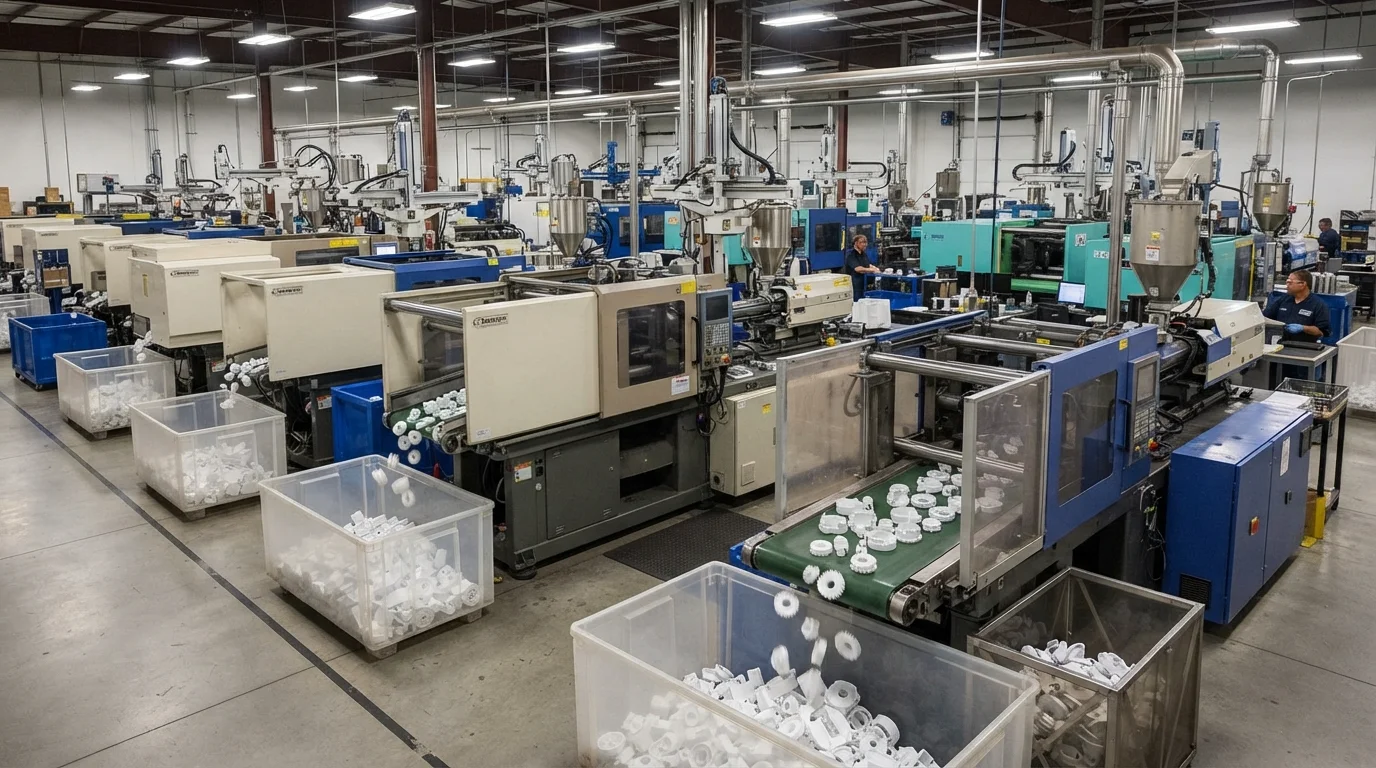
Question: How does Jucheng Precision support low-volume rapid molding programs? Sourcing in-house tool design and 35+ precision injection molding presses under ISO 13485 and IATF 16949 certifications guarantees seamless scaling from prototypes to mass production.
Executing a thorough dfm for rapid tooling analysis before cutting metal is the most effective way to guarantee molding success. Jucheng Precision supports mechatronics startups by delivering comprehensive analyses DFM gratuites 24h/24 revues complètes qui analysent les angles de dépouille, l'uniformité des parois, les emplacements des points d'injection et les facteurs de retrait. L'approvisionnement en Service d'usinage CNC ou Moulage sous vide models allows engineering groups to validate designs before committing to aluminum or soft steel molds. Having thirty-five high-precision molding presses under ISO 13485 and IATF 16949 certified quality management systems ensures your parts meet exact international specifications.
S'associer à un spécialiste certifié Service de moulage par injection specialist ensures your finished hardware matches the premium software experience. Following these design guidelines for rapid tooling protects your developmental budgets while accelerating time-to-market. Sourcing your quotes manually ensures experienced engineers analyze your 3D STEP files to find additional ways of saving money on low-volume molding. Sourcing high-quality prototypes from a single-roof facility guarantees seamless transitions from early concept mockups to full series production.
Foire aux questions (FAQ)
À quelle vitesse les moules rapides personnalisés en aluminium peuvent-ils être usinés ?
Les moules rapides en aluminium doux ou en acier P20 sont généralement usinés sur des fraiseuses CNC multi-axes en 10 à 15 jours ouvrables. En contournant les processus lents d'électroérosion par étincelage (EDM), les fabricants peuvent livrer des échantillons moulés fonctionnels et de qualité production en quelques semaines plutôt qu'en quelques mois.
Quelles sont les exigences minimales de dépouille pour les pièces en plastique texturées ?
Standard draft angles of 1.5 to 2.0 degrees are recommended for smooth aluminum mold release, but textured surfaces demand up to 3.0 degrees. Sourcing early DFM reviews ensures vertical ribs and bosses incorporate adequate draft before cutting metal.
Pourquoi choisir des inserts chargés à la main plutôt que des coulisseaux automatiques dans les moules rapides ?
Le remplacement des actions latérales hydrauliques complexes par des inserts de noyau chargés à la main réduit considérablement les coûts initiaux de construction du moule. Les inserts chargés à la main sont placés manuellement dans la cavité avant chaque cycle, ce qui les rend idéaux pour les courtes séries de 100 à 5 000 pièces.

