


Where CNC creates the most value
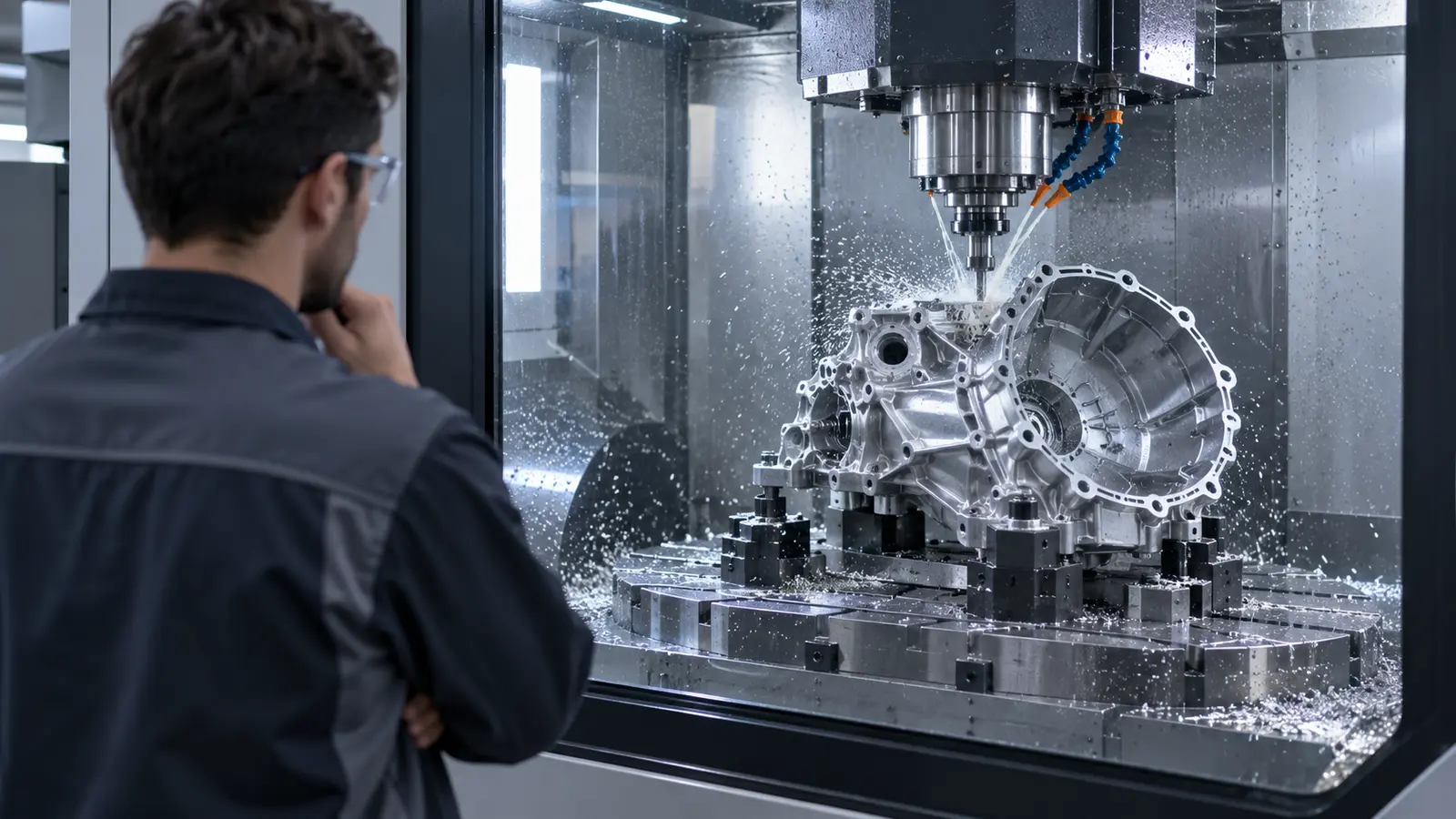
CNC machining is a subtractive process: a cutting tool follows programmed paths to produce features from a solid workpiece. For automotive engineering, that direct route matters because the first useful part can be made without waiting for production tooling. A revised hole pattern, mounting face, or sealing land can be changed in the CAD file and reviewed in the next manufacturing cycle.
That flexibility makes automotive rapid prototyping more than a visual exercise. A machined sample can expose misalignment, fastener access problems, interference, and thermal or mechanical behavior while the design is still being developed.
CNC is especially attractive when the quantity is limited, the geometry contains several datum-controlled features, or the requested material must behave like the intended part material. It becomes less attractive when the geometry is thin-walled and highly repetitive at large volume, where a dedicated forming or molding process may reduce the unit cost.
Automotive parts that commonly suit machining
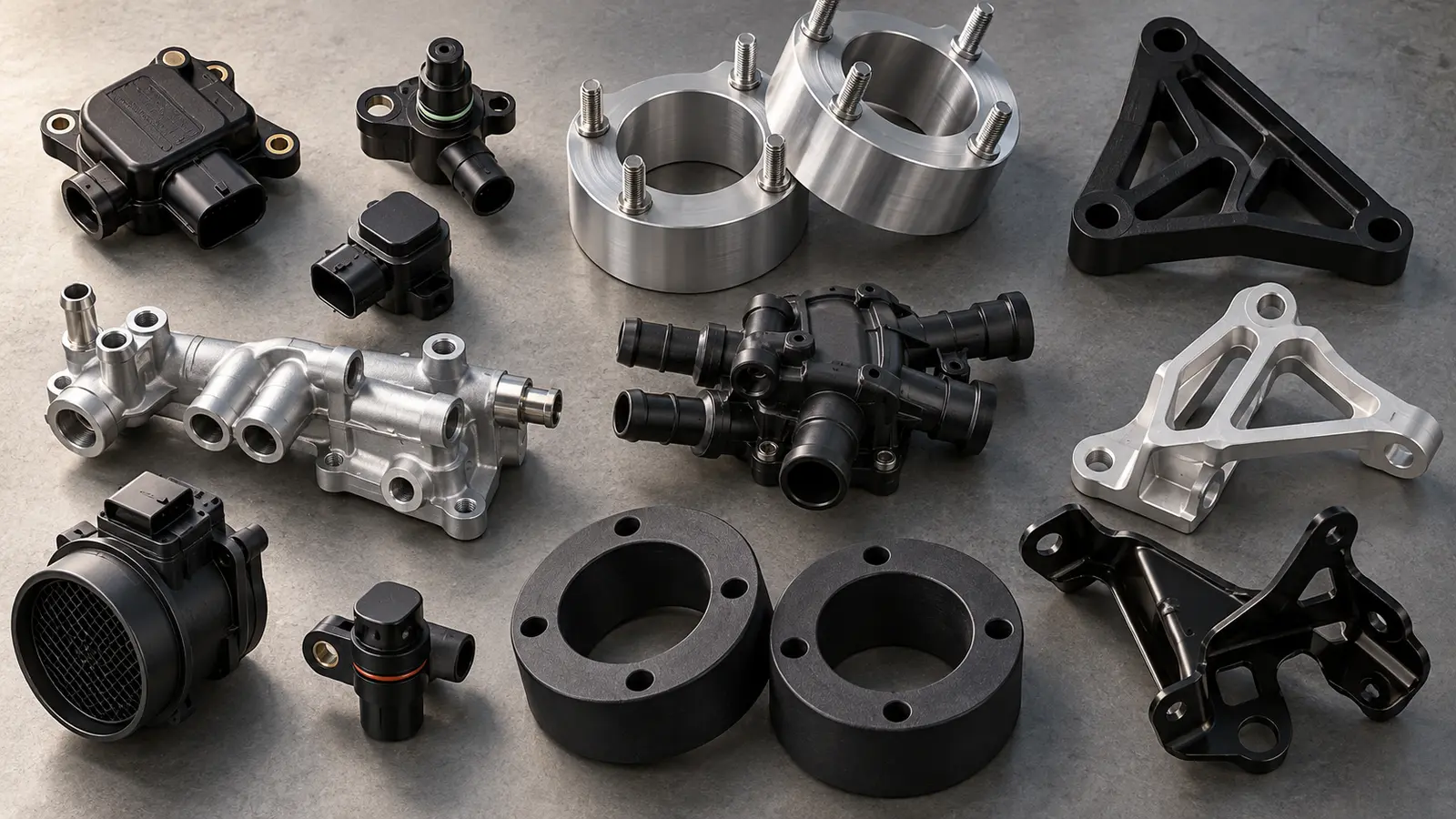
There is no single list of “CNC parts” because the same vehicle program may use different processes at different stages. The following groups are practical starting points for an engineering review.
| Part group | Why CNC can fit | Typical review focus |
|---|---|---|
| Brackets and mounts | Accurate holes, datums, and rigid interfaces | Hole position, flatness, edge distance, fastener access |
| Housings and covers | Complex pockets, bosses, and sealing surfaces | Wall thickness, tool access, gasket land, heat path |
| Shafts, sleeves, and bushings | Concentric turned features and repeatable fits | Diameter, runout, thread, bearing or seal fit |
| Prototype fixtures | Fast revision and reliable location features | Datum strategy, clamping, wear surfaces, repeat use |
| Low-volume functional parts | No dedicated high-volume tooling required | Quantity, inspection plan, finish, assembly sequence |
Part names alone are not enough to choose a process. A thin aluminum cover, for example, may be machined for an early functional build, fabricated from sheet metal for a quick enclosure, or die cast after the interface and volume are stable.
For a broader manufacturing route, review the main CNC machining service together with the part drawing. The service choice should follow the geometry and evidence required, not simply the keyword used to describe the component.
Material selection follows the test
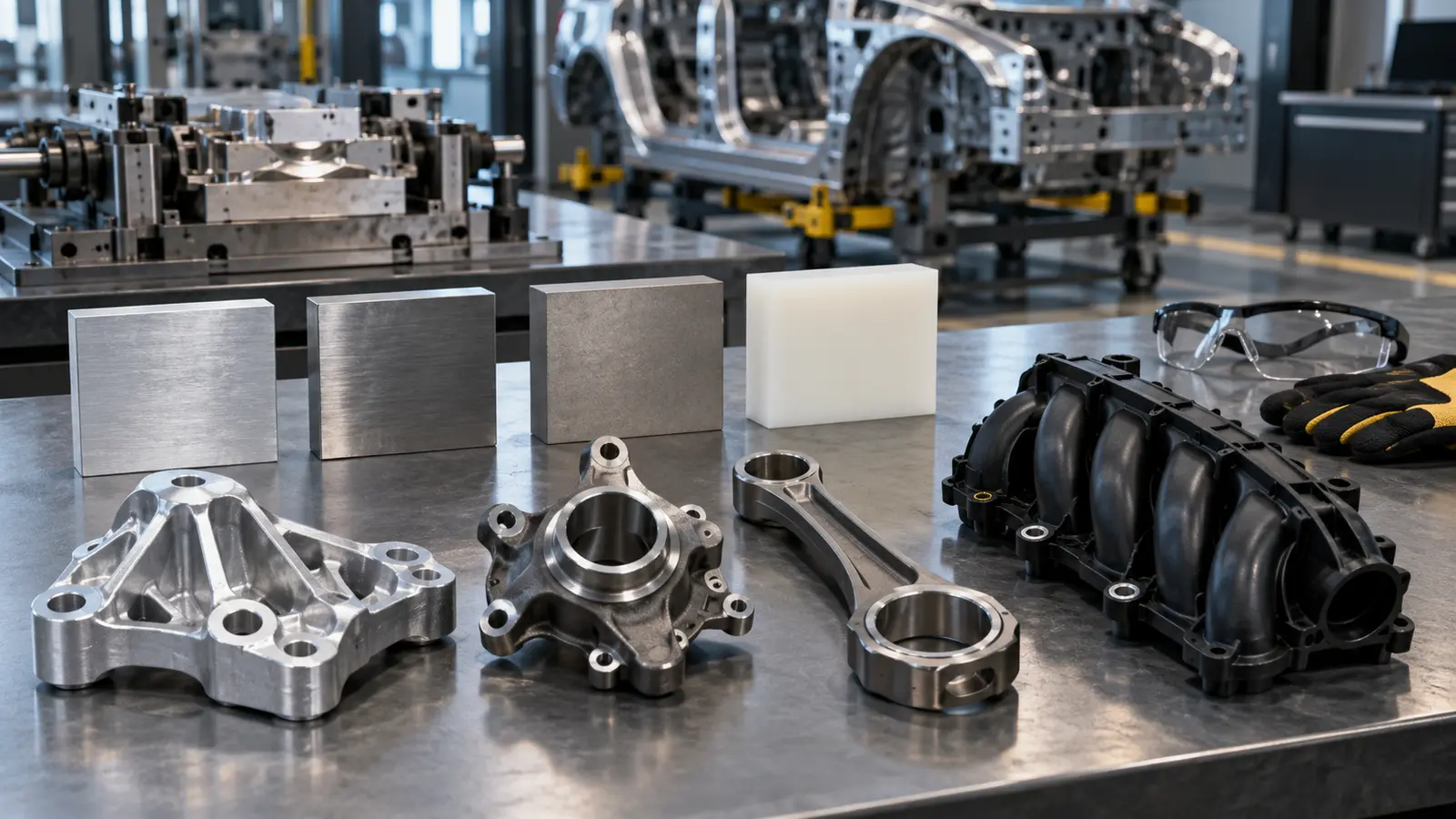
Automotive part material should be selected from the test requirement backward. Aluminum is often considered for lightweight housings, brackets, heat-spreading structures, and appearance prototypes. Stainless steel and alloy steels may be more appropriate when wear, stiffness, corrosion resistance, or repeated loading dominates. Engineering plastics can be useful for insulating components, guides, covers, and early-fit studies.
The key distinction is between a prototype that represents geometry and one that represents service behavior. A plastic printed model may answer an interference question, while a machined aluminum part may better represent stiffness and thermal conduction. A production-intent molded polymer may still be necessary for a final validation question involving shrinkage, fiber orientation, or molded texture.
| Engineering question | Material decision | Manufacturing implication |
|---|---|---|
| Will the part carry load? | Prioritize strength, stiffness, and fatigue behavior | Consider billet machining or production-representative material |
| Will heat move through the part? | Prioritize thermal conductivity and interface flatness | Control the mating surface and finishing sequence |
| Will the part contact chemicals or moisture? | Prioritize corrosion and chemical resistance | Review alloy, coating, masking, and inspection requirements |
| Is the question mainly fit? | A suitable machinable substitute may be acceptable | Focus on datums, holes, clearances, and assembly feedback |
Material certificates, lot identification, and finish requirements should be specified before quotation when they affect validation or traceability. This prevents a visually correct part from being mistaken for a fully representative production sample.
Tolerances should follow the interface
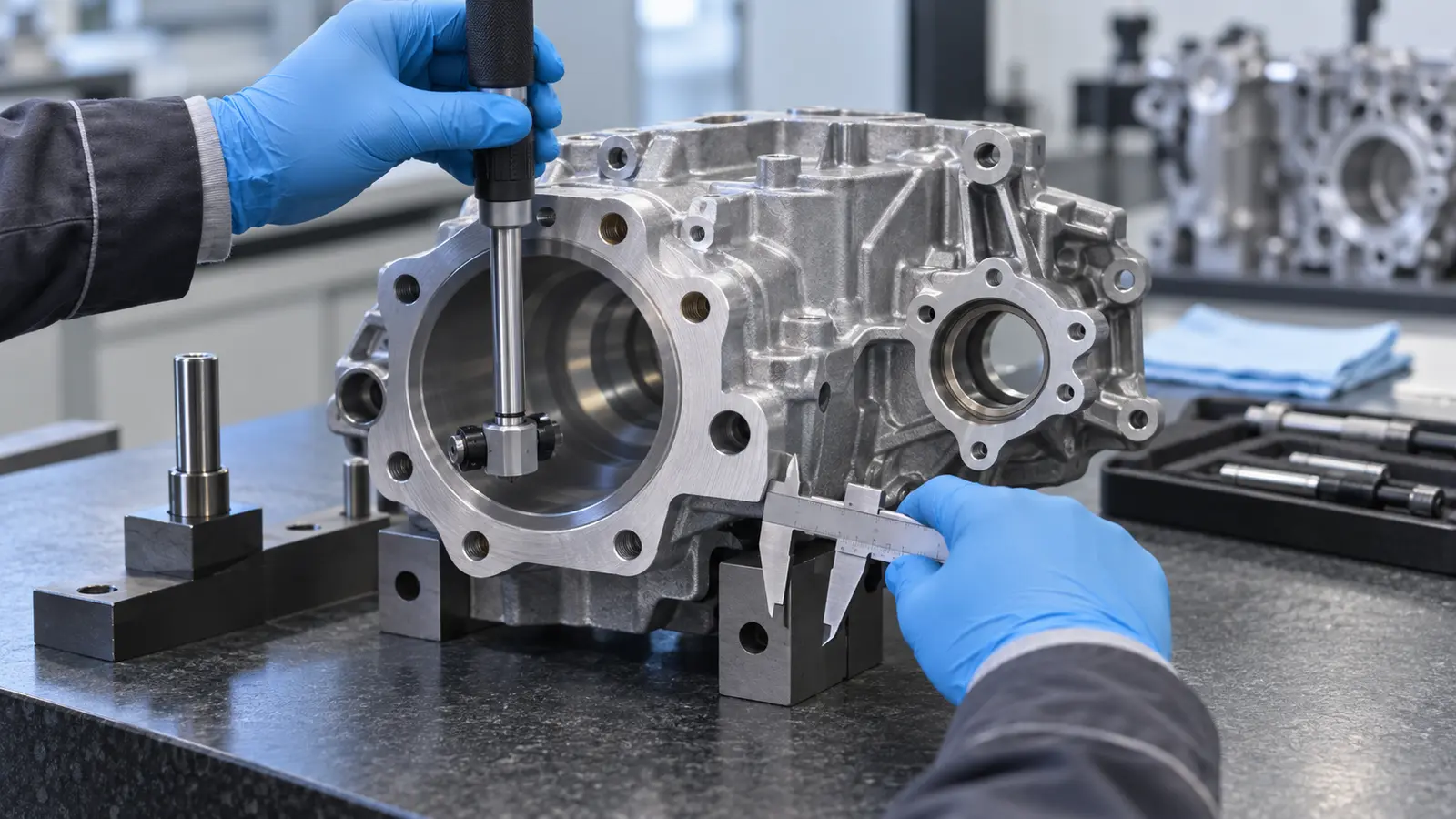
A common mistake is to apply a tight tolerance to every dimension. That approach increases inspection and machining effort without necessarily improving vehicle performance. A more useful method is to identify critical-to-quality features first: locating holes, bearing seats, sealing faces, connector interfaces, and surfaces that establish the assembly datum scheme.
General dimensions can use a practical tolerance standard, while critical features receive individual limits and a defined measurement method. The drawing should also state geometric controls where size alone cannot describe the requirement, such as position, profile, perpendicularity, or flatness.
Machining strategy matters as much as the nominal tolerance. A part may need multiple setups, soft jaws, a rotary axis, or 3-axis and 5-axis CNC milling depending on how many faces contain functional features. Fewer setups can reduce datum transfer and improve consistency, but the final choice should be based on geometry, access, batch size, and inspection needs.
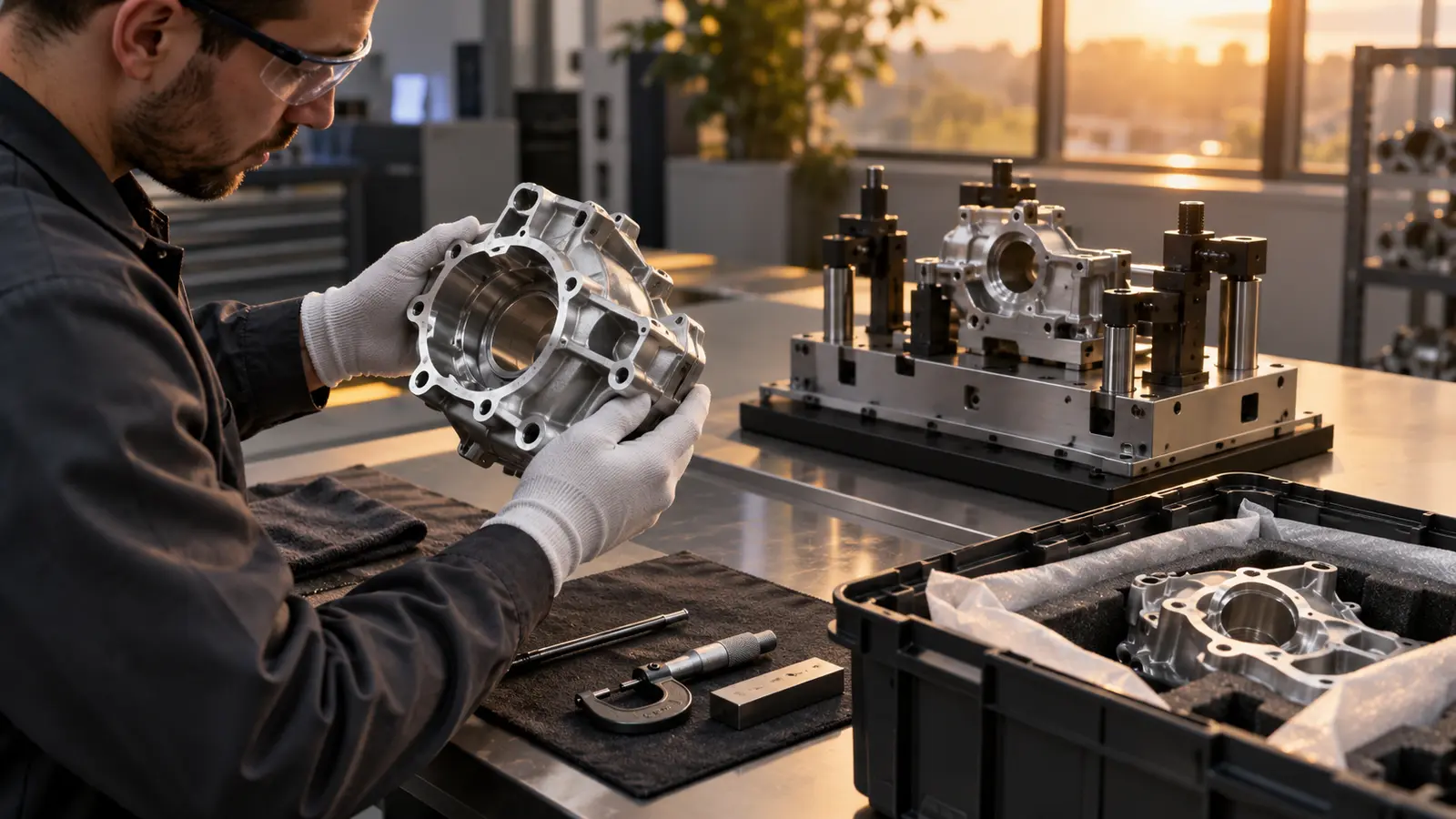
Inspection planning should be agreed before production starts. A drawing, 3D model, critical-feature list, and requested report format give the manufacturer a clear basis for first-article review. Without that information, a supplier may measure easy-to-reach dimensions while missing the features that determine whether the part actually assembles.
When to combine CNC with other processes
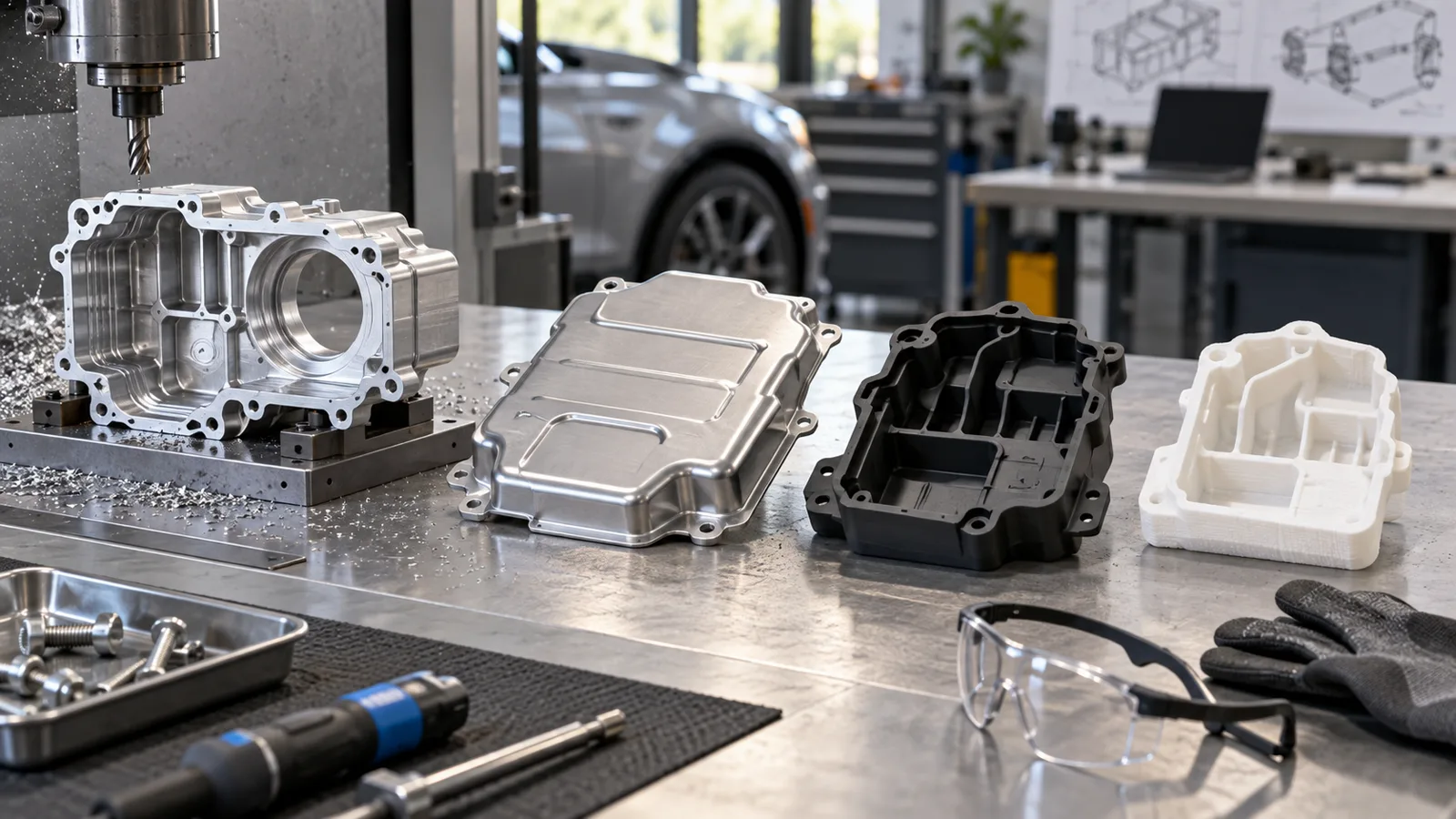
CNC machining does not have to compete with every other process. In a vehicle development program, it often acts as one step in a process chain. A 3D-printed concept can confirm packaging, CNC can verify a load-bearing interface, vacuum casting can supply several appearance or fit parts, and rapid tooling can produce molded samples closer to the intended production process.
Castings can also be machined after the near-net shape is produced. This hybrid route uses the casting process for bulk geometry and CNC for datums, bores, sealing lands, and other critical surfaces. It is useful when the design has moved beyond a simple billet prototype but still needs controlled finishing before assembly.
Surface treatment should be considered as part of the route rather than an afterthought. Anodizing, passivation, bead blasting, polishing, plating, or powder coating can change appearance, corrosion behavior, dimensions, and masking requirements. If the finish is functional, the drawing should identify the substrate, treated areas, untreated contact zones, and acceptance criteria.
For assemblies, the manufacturing route should include the parts that locate and retain one another. A perfectly machined bracket can still fail in practice if the mating sheet metal, fastener, insert, or molded housing is not reviewed at the same time.
What to include in a quotation request
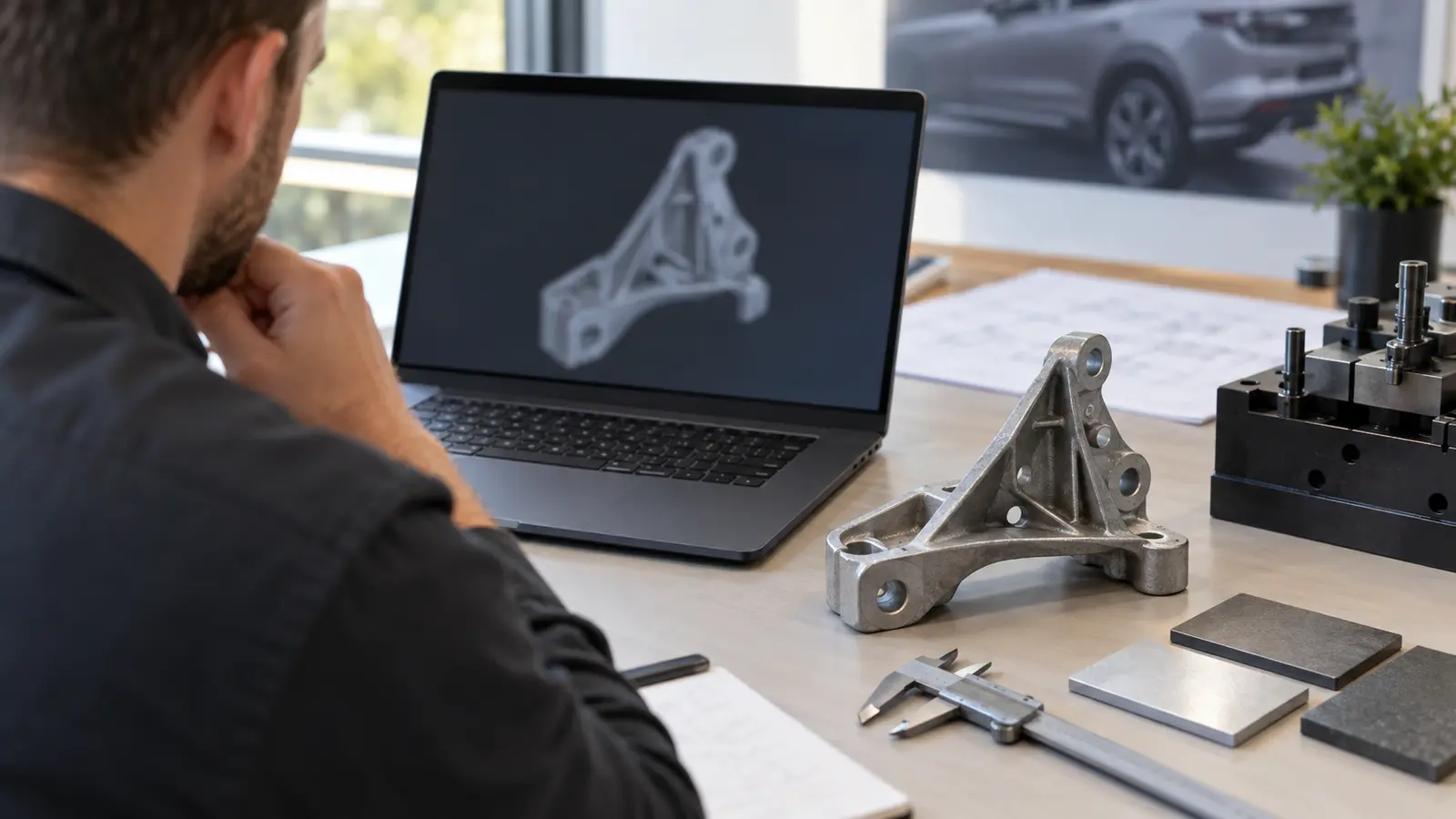
A useful RFQ gives the manufacturer enough context to recommend a process rather than simply price a file. Include the latest 3D CAD model, 2D drawing, material or approved alternatives, quantity by phase, required finish, critical dimensions, inspection expectations, and the intended test or assembly use.
- Define the part stage: concept, functional prototype, validation build, service part, or low-volume production.
- Mark critical features: identify datums, fits, sealing surfaces, threads, and interfaces that cannot drift.
- State the material logic: distinguish a visual substitute from a production-representative material.
- Describe finish and inspection: specify appearance, corrosion, masking, measurement, and reporting needs.
- Ask for manufacturability feedback: request comments on tool access, setups, thin walls, burr control, and cost drivers.
These inputs also make it easier to compare CNC with sheet metal, injection molding, die casting, and additive manufacturing on the same engineering basis. A strong quote should explain the assumptions behind price, lead time, inspection, and any recommended design change.
Frequently Asked Questions
What automotive parts are best suited to CNC machining?
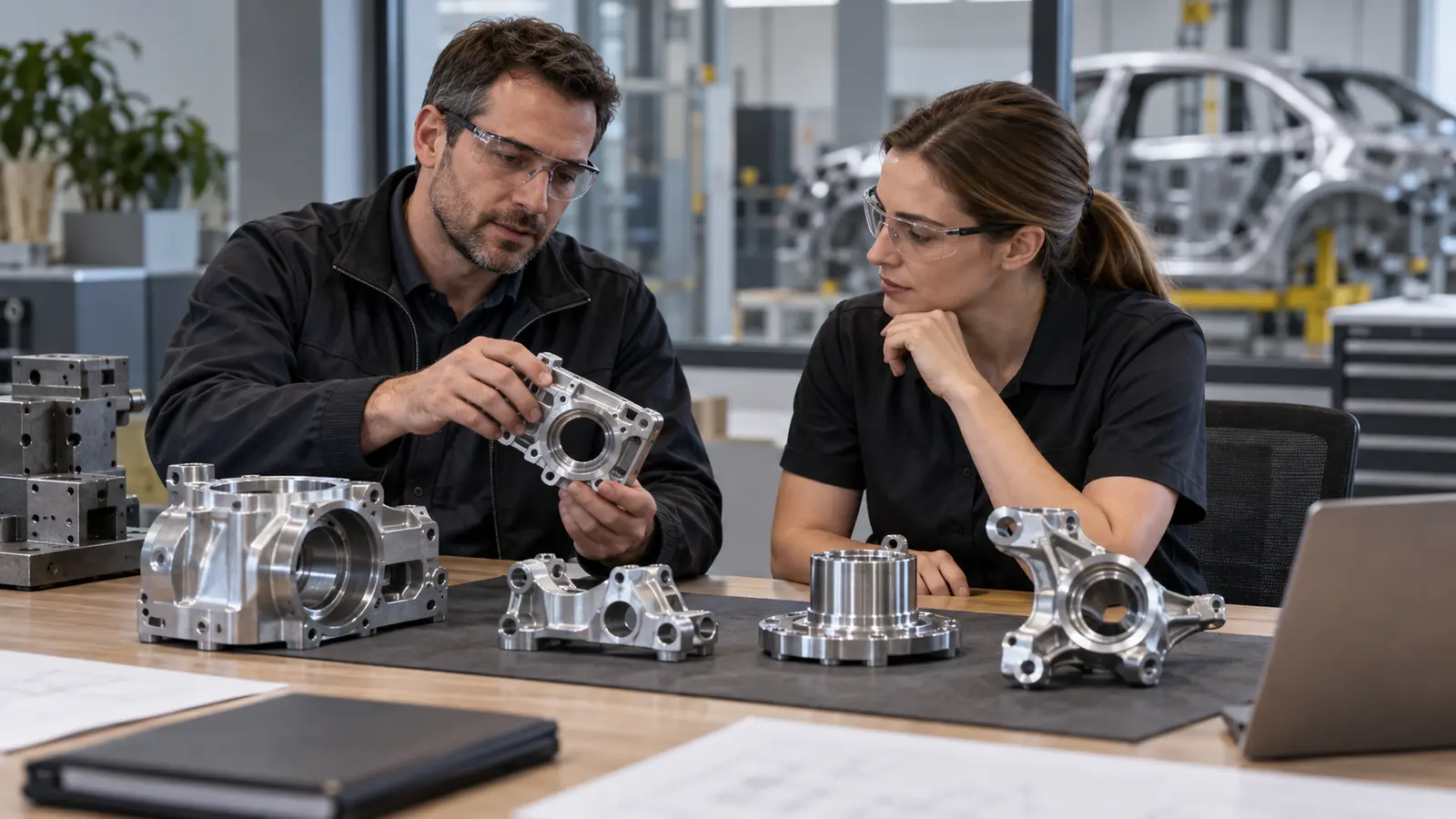
Brackets, mounts, housings, shafts, sleeves, fixtures, and low-volume functional components are common candidates. CNC is particularly useful when the part has critical interfaces, complex pockets, a limited quantity, or a need for quick design changes.
Is CNC machining suitable for automotive prototypes?
Yes. CNC machining can produce accurate metal or plastic prototypes for fit, function, assembly, thermal, and mechanical evaluation. The material and finish should be selected according to the specific question the prototype must answer.
Should automotive CNC parts use production materials?
They should use production-representative material when the test depends on strength, stiffness, thermal behavior, corrosion resistance, or fatigue. For an early packaging or clearance study, a suitable machinable substitute may be sufficient.
When is injection molding better than CNC machining?
Injection molding is usually more attractive when a plastic part design is stable and the expected volume justifies tooling. CNC remains useful for early iterations, low-volume builds, rigid inserts, fixtures, and features that need direct machining.
What information should be sent for automotive CNC machining?
Send the CAD model, drawing, material, quantity, finish, critical dimensions, inspection requirements, and intended application. Explaining whether the part is for fit checking, functional testing, or production helps the manufacturer choose the right process and controls.
Make the process decision with the test plan in view
The right automotive CNC machined parts are not defined only by their shape. They are defined by the evidence the vehicle team needs next: a clean fit check, a realistic load path, a controlled interface, a small validation batch, or a bridge toward another process. When the part requirement, material, tolerances, finish, and inspection plan are reviewed together, CNC becomes a practical tool for reducing development risk rather than just another way to make a component.
Jucheng Precision can review automotive part drawings across CNC machining, prototyping, sheet metal, molding, casting, additive manufacturing, and post-processing routes. The best starting point is a clear model, the required quantity, and the test that the part must pass.

