


Designing optical sensors, automotive headlamp covers, or smart device light guides requires exceptional light transmission and precise refractive index control. When product developers inspect early transparent samples, the choice between additive fabrication and bridge molding dictates whether the finished component shines crystal-clear or remains stubbornly clouded. Evaluating clear plastic parts 3D printing vs injection molding uncovers the optical penalties of resin fogging and proves why high-gloss metal tools are mandatory for true transparency.
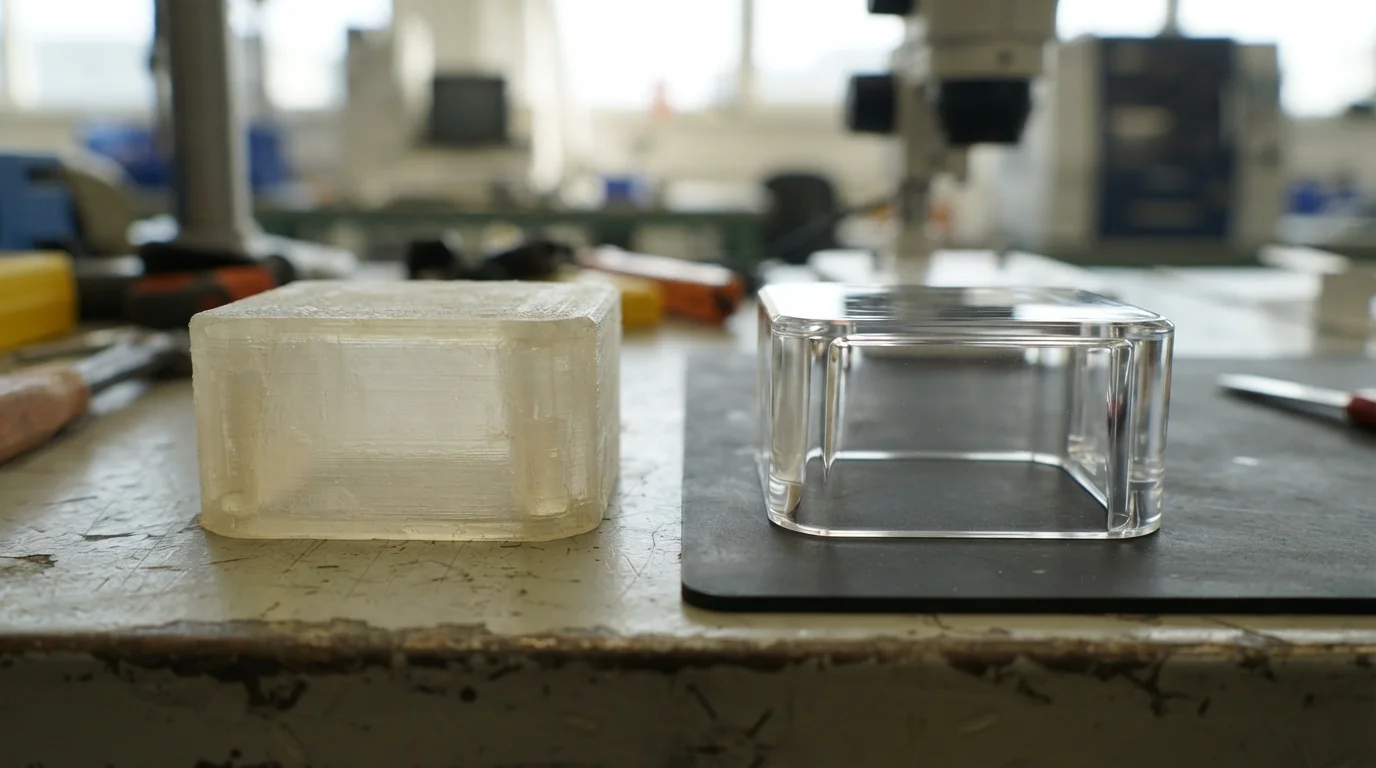
Table des matières
1. The Foggy Reality of 3D Printed Transparent Resins and Refraction Limits
2. Molding Optical-Grade PC and PMMA with High-Precision Mold Polish
The Foggy Reality of 3D Printed Transparent Resins and Refraction Limits
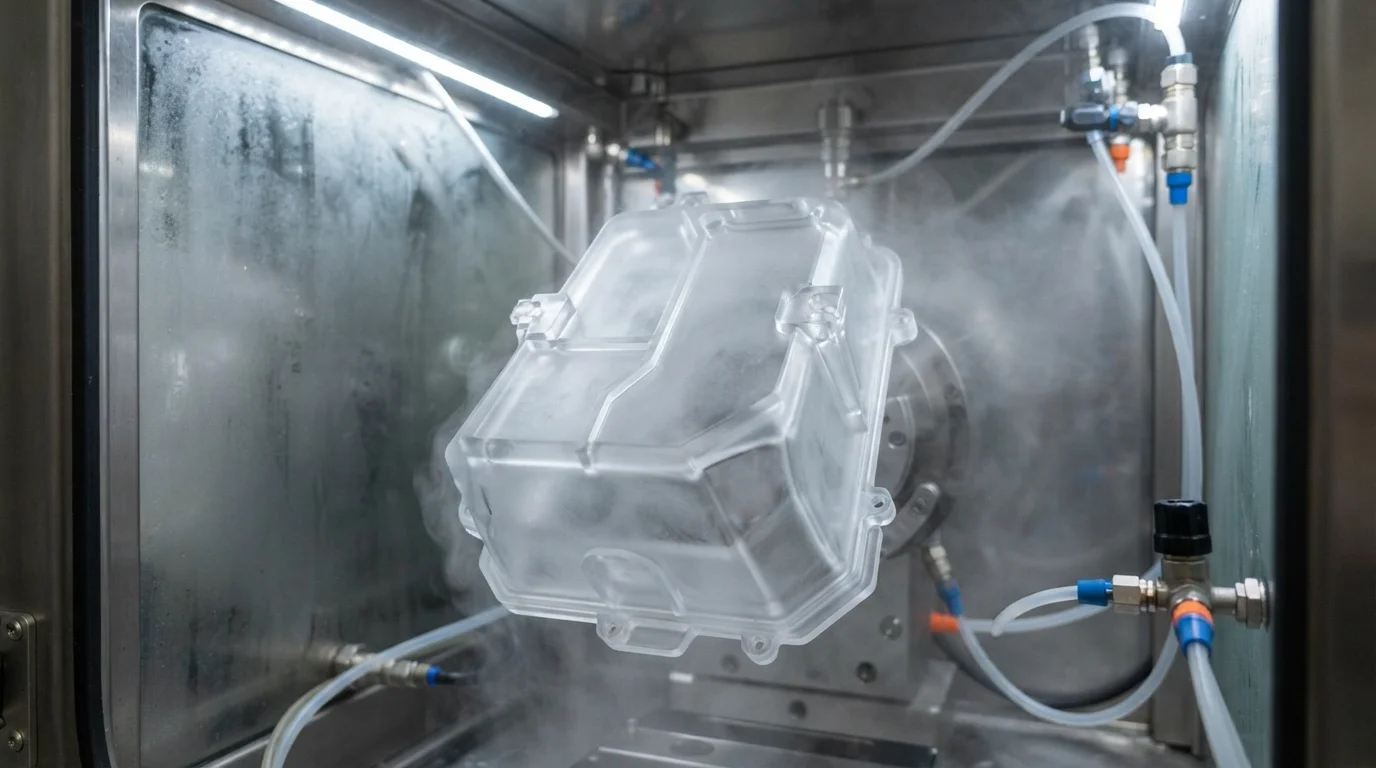
Question: Why do stereolithography (SLA) transparent prints consistently exhibit internal haze and light scattering rather than pure optical clarity? Layer stacking boundaries and microscopic printing voxels refract light rays unpredictably, preventing clean beam passage.
Even after applying manual sanding, clear coats, or chemical vapor smoothing, printed clear resins suffer from an inherent yellowish tint and internal micro-void scattering. While this level of transparency is acceptable for early conceptual light testing, it fails entirely for functional lenses or consumer-facing indicator windows. Shifting production to a dedicated Service d'outillage rapide allows manufacturers to inject true optical-grade thermoplastics against mirror-polished metal cavities.
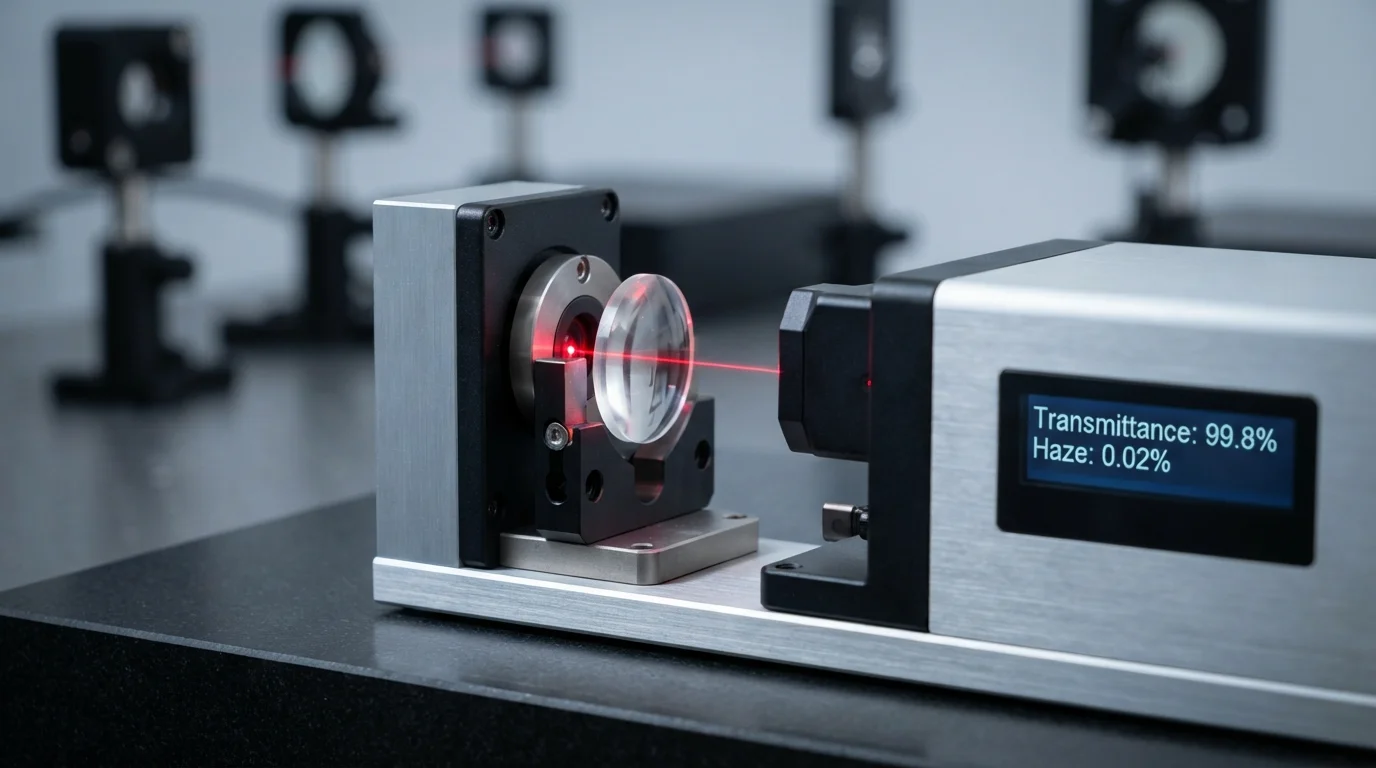
Comparing optical performance metrics across transparent manufacturing methods involves tracking specific clarity parameters:
| Optical Attribute | Post-Processed Transparent 3D Print | Rapid Injection Molded Optic |
|---|---|---|
| Light Transmittance Rate | Moderate (80% to 85% with haze) | Supérieure (pureté optique de 90% à 92%) |
| Uniformité de réfraction | Déformé par les lignes de couches de voxels | Densité moléculaire interne impeccable |
| Résistance au jaunissement UV | Sujet à une décoloration solaire rapide | Stabilité à long terme avec des stabilisateurs UV |
Moulage de PC et PMMA de qualité optique avec polissage de moule de haute précision
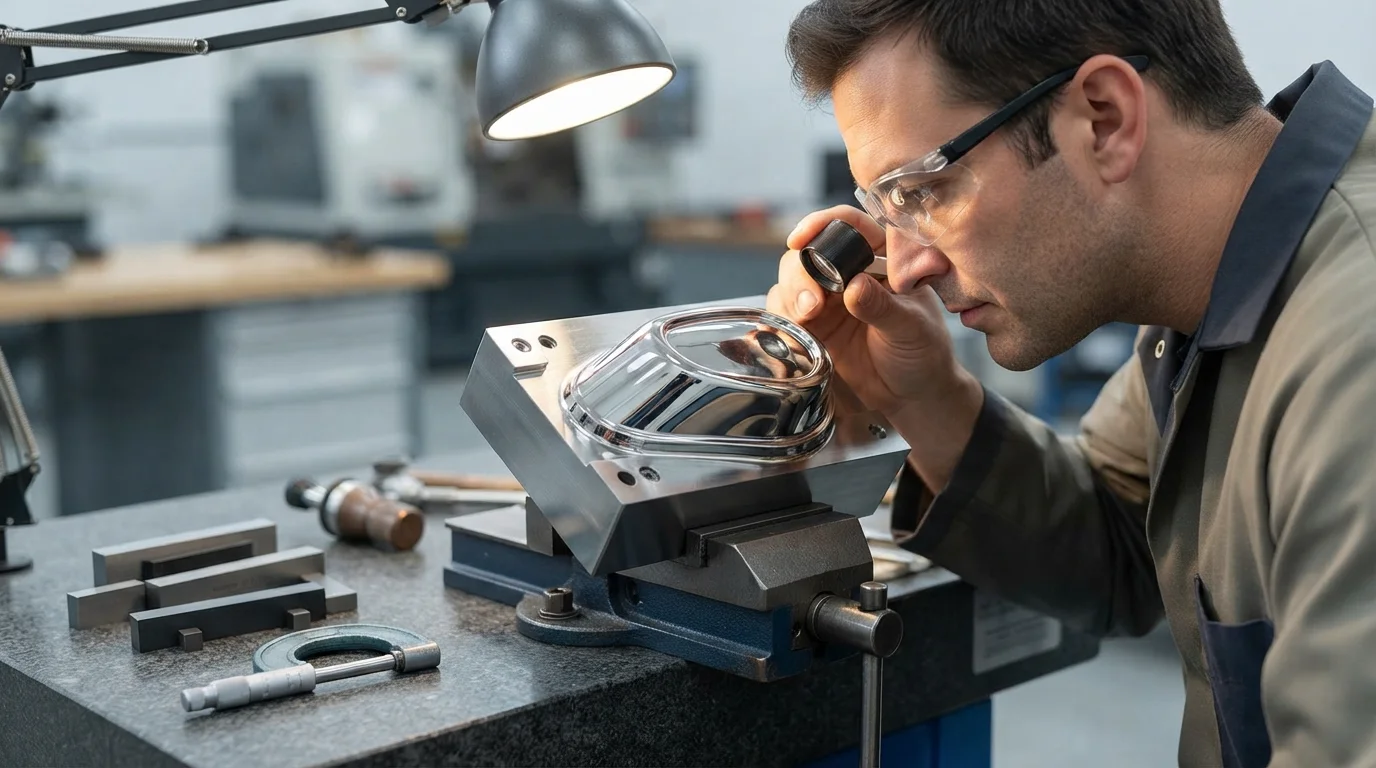
Question : Comment les inserts d'outillage rapides en aluminium ou en acier atteignent-ils les finitions miroir impeccables nécessaires pour les lentilles optiques moulées par injection ? Les outilleurs experts effectuent un rodage manuel rigoureux et un polissage au diamant pour atteindre les normes miroir SPI-A2 directement dans la cavité du moule.
Lorsque le PC ou PMMA de qualité optique en fusion Polycarbonate (PC) ou PMMA (Acrylique) est injecté contre un noyau en aluminium poli miroir ou en acier P20, la surface de la résine reproduit instantanément la texture métallique micro-lisse au contact. L'utilisation d'un Service de moulage par injection assure un contrôle adéquat de la température de fusion pour éliminer les lignes d'écoulement internes ou les stries argentées.
L'optimisation de la production de composants transparents et l'élimination des défauts optiques impliquent le suivi de directives spécifiques en atelier :
- Séchage strict de la résine—Élimination de toutes les traces d'humidité avant l'injection pour prévenir les bulles de vapeur internes et le trouble
- Polissage avancé SPI-A2—Buffing mold cavities to mirror smoothness so injected lenses transmit light without scatter
- Optimized gate design—Placing injection gates along non-optical borders to prevent gate blemishing across clear viewports
Vapor Polishing Techniques for Crystal-Clear Auto Lenses
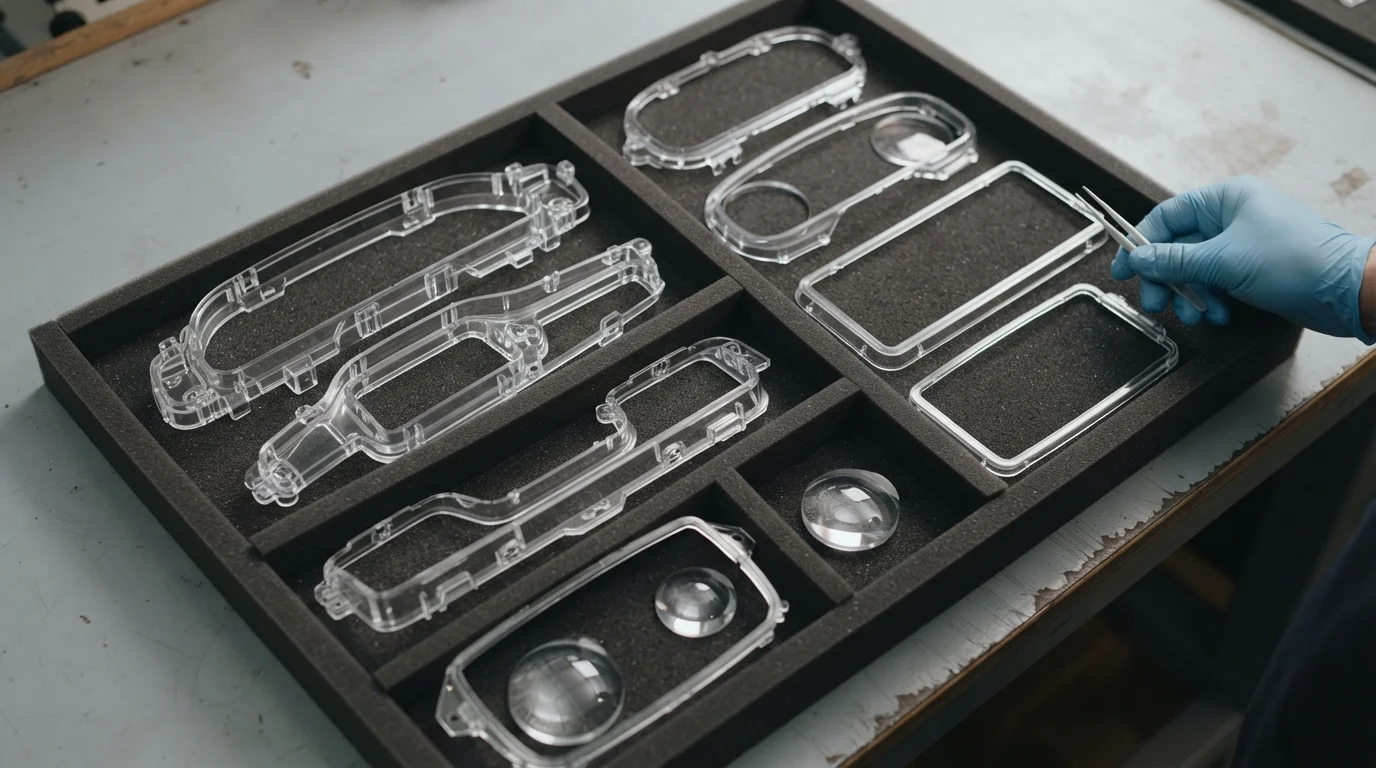
Jucheng Precision soutient les développeurs de matériel en fournissant des analyses DFM gratuites 24h/24 reviews that evaluate optical wall thicknesses, draft angles, and gating strategies prior to tool cutting. Operating with 150+ advanced CNC machines alongside 35+ specialized injection molding workstations, our ISO 9001 certified facilities ensure exceptional manufacturing standards across every batch.
Key operational advantages of our optical manufacturing framework include:
- Expert optical polishing—Des outilleurs qualifiés livrent des normes SPI de finition miroir requises pour des lentilles cristallines
- Advanced vapor smoothing—Secondary chemical vapor treatments melt surface micro-scratches into absolute glass-like clarity
- Aucune contrainte de quantité minimale de commande—Aucune politique de MOQ ne permet un alignement exact des stocks avec des séries de production pilotes personnalisées
Ready to manufacture crystal-clear optical components? Let Jucheng’s transparent molding specialists optimize your optical lenses.
Foire aux questions (FAQ)
Why do transparent 3D printed parts appear hazy and scatter light?
Layer stacking boundaries and microscopic printing voxels refract light rays unpredictably, creating internal haze and scattering that prevents true optical clarity.
How do injection molded clear parts achieve superior optical transmittance?
Injecting optical-grade polycarbonate or PMMA against mirror-polished SPI-A2 metal mold cavities allows the polymer to replicate glass-like smoothness instantly upon extraction.
How does Jucheng Precision support optical component manufacturing?
Jucheng Precision provides 24-hour free DFM reviews, mirror-finish mold polishing, and precision injection molding to deliver crystal-clear optical lenses and light guides.

