


Allocating financial capital efficiently during new product introduction requires a clear understanding of long-term unit economics rather than just initial setup figures. While additive manufacturing laboratories boast zero upfront tooling investment, scaling production quantities quickly reveals an aggressive upward pricing slope driven by machine build hours and material consumption. Performing a rigorous cost comparison 3D printing vs rapid tooling helps product managers identify the exact break-even inflection point where cutting a modular metal insert becomes dramatically more economical.
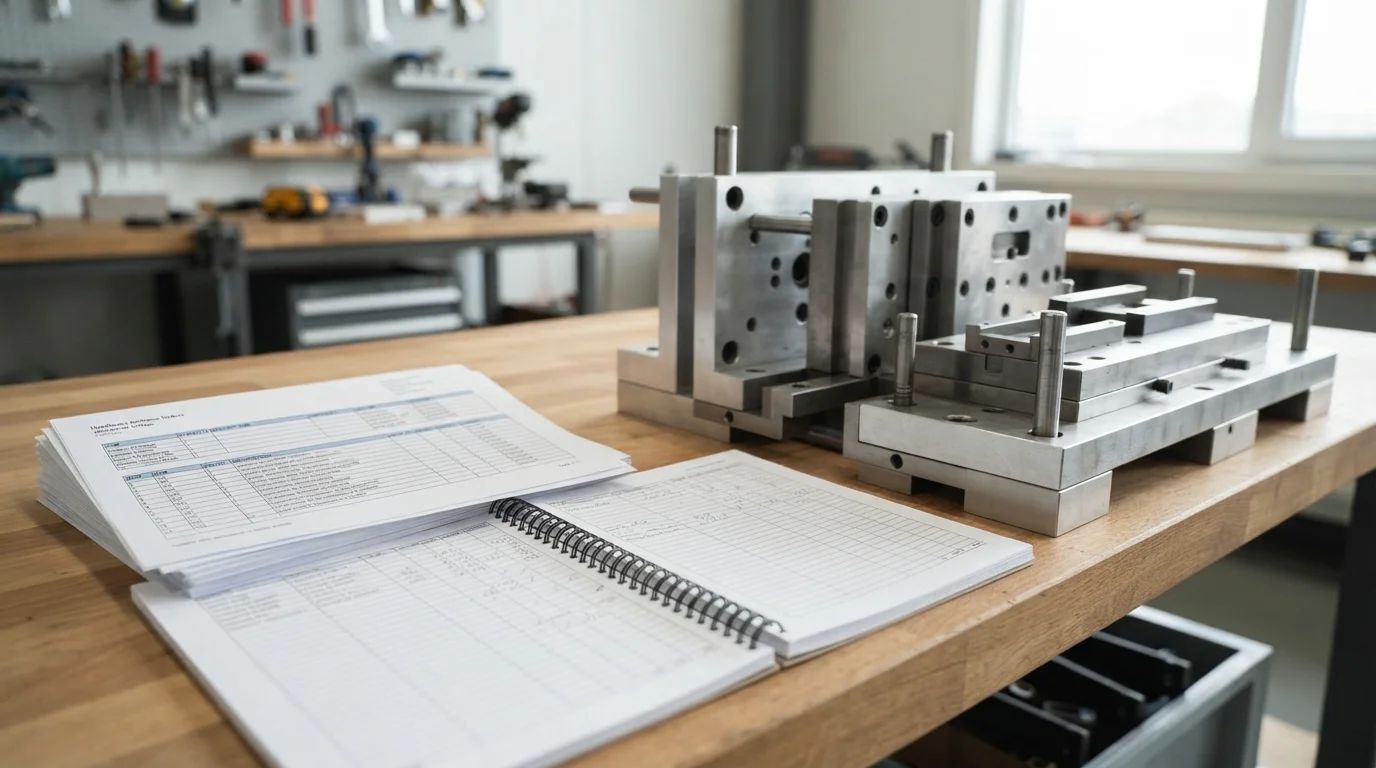
Balancing initial capital expenditure within l'outillage rapide vs l'impression 3D evaluations requires examining how raw material pricing models diverge. Utilizing standardized modular tooling frames lets manufacturers slash non-recurring engineering costs while enjoying bulk thermoplastic pellet pricing. Let us dissect the financial mechanics of upfront investment versus high-volume piece-part savings.
Table des matières
1. Upfront Investment: Zero Tooling versus Soft Mold Costs
2. Piece-Part Economics: Resin Curing Time versus Bulk Pellet Pricing
3. The Break-Even Curve: Visualizing When Molding Becomes Cheaper
Upfront Investment: Zero Tooling versus Soft Mold Costs

Question: Why do early-stage hardware startups naturally gravitate toward additive manufacturing despite higher unit expenses? Initial non-recurring engineering outlays sit at zero because builds initiate directly from digital CAD models without requiring custom metal cavities.
This lack of upfront capital commitment makes 3D printing unbeatable for single-digit concept prototyping. However, as market validation progresses and project volumes expand toward hundreds of beta units, relying entirely on printer queues locks a venture into stagnant per-piece expenses. Sourcing a flexible Service d'outillage rapide introduces an initial tooling outlay but drastically compresses marginal production costs.
Evaluating initial financial exposure across fabrication methods involves tracking specific budget priorities:
| Financial Attribute | Advanced 3D Printing | Modular Rapid Tooling (MUD) |
|---|---|---|
| Dépense initiale d'outillage NRE | Zéro ($0 configuration CAO) | Modérée (inserts en aluminium/acier doux) |
| Évolution marginale des coûts | Linéaire (Chaque unité coûte le même prix) | Diminue rapidement avec le volume |
| Charge de travail de post-traitement | Extrêmement élevée (ponçage manuel/supports) | Minimale (éjection automatique par presse) |
Économie des pièces : temps de durcissement de la résine par rapport au prix des granulés en vrac
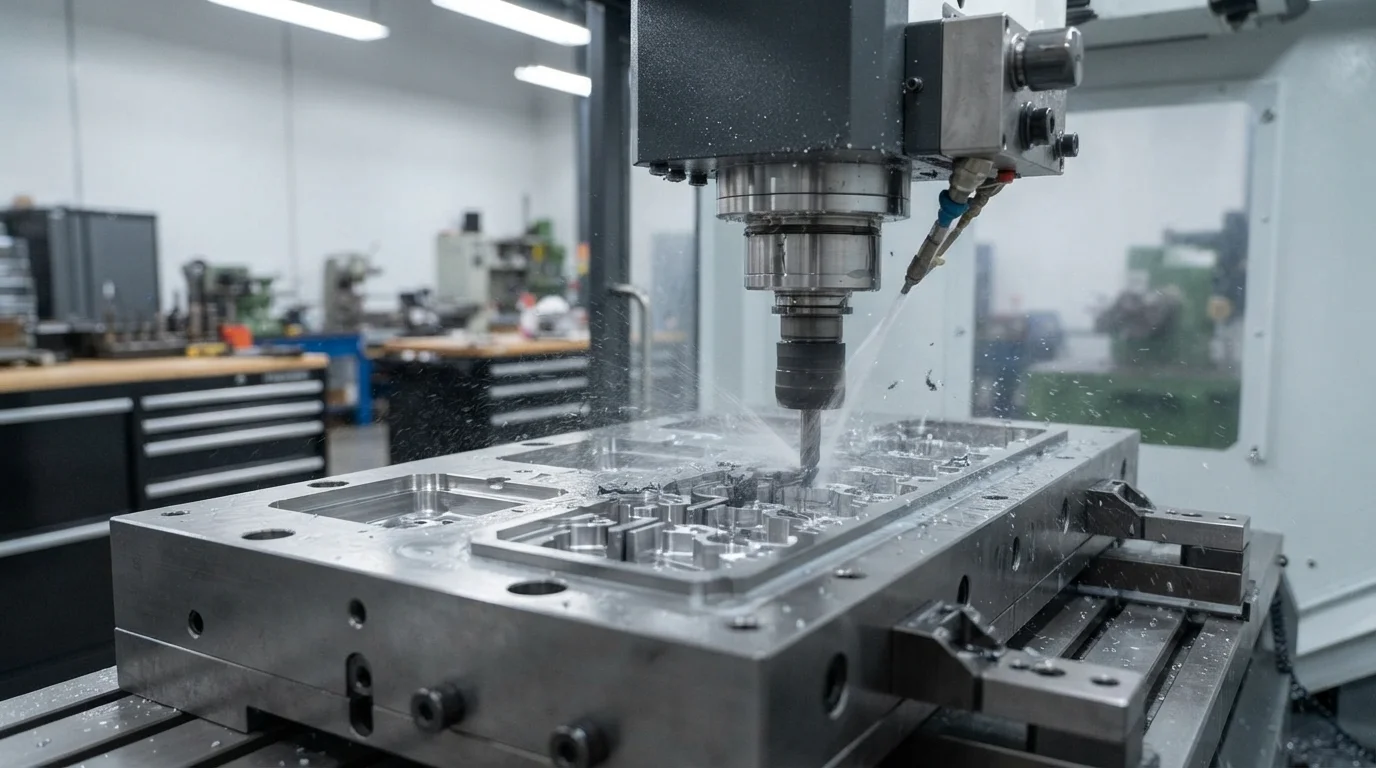
Question : Comment les structures de prix des matières premières entraînent-elles les différences de coût unitaire marquées entre l'impression et le moulage ? Les photopolymères imprimables sont vendus dans des flacons spécialisés haut de gamme, tandis que les mouleurs par injection achètent des thermoplastiques techniques de commodité en granulés de résine en vrac à une fraction du coût.
Au-delà des dépenses en matériaux, l'économie d'utilisation des machines favorise largement le moulage. Une presse industrielle à haute tonnage éjecte des pièces structurelles complexes toutes les trente à soixante secondes, tandis qu'un laser additif doit tracer chaque couche transversale séquentiellement pendant des heures. L'utilisation d'un Service de moulage par injection spécialisé capitalise sur cette vitesse, tandis qu'un Service de prototypage agile aide à vérifier les budgets initiaux avant la mise à l'échelle.
Contrôler les dépenses par pièce et optimiser les coûts marginaux de fabrication implique de surveiller des directives financières spécifiques :
- Économies de résine en vrac—L'achat de granulés de qualité technique ABS ou Polycarbonate (PC) en gros réduit considérablement les frais de matériau unitaires
- Gains d'efficacité de main-d'œuvre—L'extraction automatisée de la presse remplace le retrait manuel coûteux des supports et les opérations de ponçage de surface
- Économies sur les cadres modulaires—L'utilisation de cadres maîtres MUD standardisés réduit de moitié les coûts d'usinage des inserts en aluminium
La courbe de seuil de rentabilité : visualiser quand le moulage devient moins cher

Jucheng Precision soutient les développeurs de matériel en fournissant des analyses DFM gratuites 24h/24 des avis incluant des projections détaillées volume-coût, aidant les équipes à identifier leur point d'équilibre financier exact avant la découpe de l'outillage. Avec plus de 150 machines CNC avancées et plus de 35 postes de moulage par injection spécialisés, nos installations certifiées ISO 9001 garantissent une efficacité maximale du capital.
Les principaux avantages opérationnels de notre cadre de fabrication optimisé en termes de coûts comprennent :
- Prévision budgétaire transparente—Des devis détaillés qui décrivent les seuils de rentabilité exacts pour la géométrie spécifique de votre pièce
- Options d'outillage MUD modulaire—Réduction des investissements initiaux en outillage de transition grâce à la compatibilité standardisée des cadres maîtres
- Aucune contrainte de quantité minimale de commande—Aucune politique de MOQ ne permet un alignement exact des stocks avec des séries de production pilotes personnalisées
Prêt à optimiser votre budget de production ? Laissez les experts en fabrication de Jucheng calculer votre courbe de seuil de rentabilité exacte dès aujourd'hui.
Foire aux questions (FAQ)

Why is 3D printing more cost-effective for single-digit prototype builds?
3D printing requires zero upfront non-recurring engineering tooling outlays because builds initiate directly from digital CAD models without cutting custom metal mold cavities.
At what production quantity does rapid modular tooling become cheaper than printing?
When quantities exceed 50 to 100 units, the cumulative savings from bulk thermoplastic pellet pricing and rapid automated press cycling quickly offset the initial cost of cutting modular soft metal inserts.
How does Jucheng Precision help optimize project capital expenditures?
Jucheng Precision provides 24-hour free DFM reviews, flexible modular MUD rapid tooling options, and high-efficiency injection molding to minimize your overall manufacturing budget.

