


Designing premium, lightweight hardware chassis or high-strength bracket configurations requires balancing raw alloy bills against final assembly performance. Calculating the exact aluminum sheet metal cost is a critical milestone in custom sheet metal fabrication, directly determining whether your product launch remains highly cost-effective or exceeds your targeted budget. This versatile non-ferrous alloy offers a unique blend of low physical density and outstanding corrosion resistance, making it highly preferred for modern electronics.

Suffer from unexpected material premiums and bloated finishing bills on your short-run hardware designs? When drawings are modeled without analyzing physical material densities or laser cutting speed differences, it forces product teams to pay high material surcharges. Proactively optimizing your alloy selections and standardizing your surface prep is the best way to secure your product margins.
Let's explore the raw material price differences between aluminum and steel, analyze how superior machinability reduces actual press-shop labor, and review the additional costs of protective electro-chemical anodizing.
Aluminum vs. Steel Raw Material Price Differences
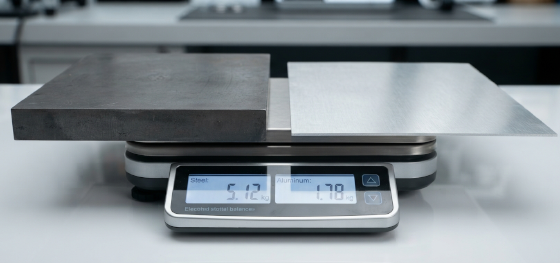
Why is raw aluminum significantly more expensive than standard carbon steel?
Aluminum requires immense electrical energy to refine from bauxite ore, resulting in raw ingot prices that are typically three to four times higher than carbon steel.
When evaluating raw plate bills, designers must factor in the global London Metal Exchange (LME) price indexes. While standard cold-rolled steel is highly economical, raw aluminum carries a noticeable material premium. However, looking strictly at the per-kilogram price is a major engineering mistake, as aluminum is roughly one-third the density of steel.
This low density means you get three times more material volume per kilogram compared to steel or à haute dureté. For lightweight portable devices and aerospace brackets, this weight reduction directly slashes your international transit and shipping expenses, easily offsetting the initial raw material premium on high-volume shipments.
Machinability: Why Aluminum is Cheaper to Cut and Bend

How does aluminum's high ductility reduce actual CNC processing costs?
Aluminum is highly soft and formable, allowing fiber lasers to cut profiles up to twice as fast as stainless steel and reducing tool wear on press brakes.
While the raw material carries a premium, processing aluminum is remarkably efficient on the shop floor. Utilizing high-speed fiber laser cutting systems allows us to slice through aluminum plates at outstanding speeds. Because the metal is soft, it requires significantly less laser power and oxygen assist gas compared to tough alloys, reducing the hourly machine runtime fee.
Forming aluminum also requires much lower press brake tonnages. The material folds cleanly with minimal mechanical resistance, preventing premature wear on our tool steel punches and V-dies. This superior formability minimizes setup calibration labor, allowing benders to execute continuous folds in a single pass with highly consistent angles.
The Hidden Cost of Anodizing and Protective Finishes
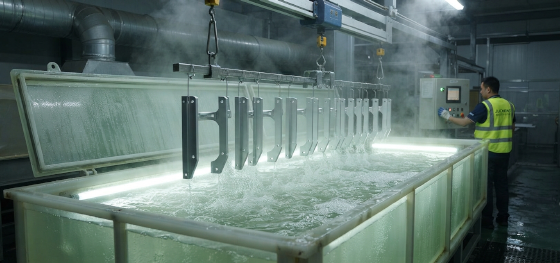
What additional surface treatment costs must be factored into aluminum fabrications?
Applying protective coatings like anodizing or chemical conversion film adds physical processing stages, which increases the final finished part price.
Raw aluminum straight out of the press brake is vulnerable to superficial handling scratches and fingerprint oils. To protect the cosmetic surface and build an oxide wear barrier, executing electro-chemical anodisation is highly recommended. This process submerged the metal into acid baths to grow an integrated oxide layer, which can be dyed in custom colors.
However, anodizing is a highly specialized chemical process that carries its own setup and tooling costs. For low-volume prototyping, these chemical bath runs represent a significant percentage of the total aluminum sheet metal cost. To minimize expenses, we recommend utilizing cost-effective clear chemical conversion coatings (such as Alodine) for internal structural parts, reserving premium color anodizing strictly for visible exterior panels.
| Choix du matériau | Raw Material Cost (LME) | Processing Setup Labor | Typical Surface Finishing Cost |
|---|---|---|---|
| Lightweight Aluminum (e.g., 5052-H32) | High (Approx. 2.40 USD per kg) | Low (Fast, easy forming & cutting) | Moderate (Anodizing / Chromate Conversion) |
| Acier au carbone (ex. SPCC) | Low (Approx. 0.90 USD per kg) | Moderate (Standard stamping & bending) | Low (Electrostatic powder coating) |
| Austenitic Stainless (e.g., SUS304) | Very High (Approx. 3.20 USD per kg) | High (Hard, rapid work-hardening) | High (Bead-blasting / Chemical Passivation) |
Affordable Aluminum Fabrication at Jucheng Precision

How does Jucheng Precision minimize fabrication expenses on custom aluminum enclosures?
We operate high-power fiber lasers, automated press brakes, and integrated finishing lines under one roof, bypassing fragmented supplier markups.
Why pay premium prices for scattered processing? At Jucheng Precision, we manage cutting, bending, and anodizing under one roof, keeping your overall coût de fabrication de tôlerie remarkably low. Our automated press brakes and high-speed lasers execute complex, multi-bend sequences in a single setup, ensuring that your parts are cut, formed, and finished with extreme consistency.
Nous traitons une large gamme de matériaux, y compris l'aluminium léger, l'acier inoxydable à haute limite d'élasticité et l'acier au carbone facilement formable lors des cycles de fabrication de tôlerie de haute précision. Notre service technique fournit une analyse DFM gratuite sous 24 heures pour vérifier vos modèles CAO, en contrôlant les tolérances et les jeux de charnières avant la production. Soutenus par notre politique sans MOQ et notre garantie de livraison rapide, nous gérons votre projet depuis la découpe initiale du motif plat jusqu'au revêtement en poudre final de haute durabilité et à l'assemblage.
FAQ: Critical Questions About Aluminum Sheet Metal Cost

Our engineering team has compiled professional solutions to the most common quality challenges faced during aluminum fabrication runs:
Why is aluminum sheet metal so expensive to manufacture?
The total cost is driven by high raw material ingot pricing and the specialized secondary finishing (like chemical anodizing) required to protect the soft surface. Sourcing directly from an integrated, high-capacity manufacturer like Jucheng Precision helps bypass distributor markups and protects your project from localized supply chain volatility.Which aluminum grade is the most cost-effective for custom brackets?
For custom brackets and enclosures, 5052-H32 is the undisputed industry workhorse. It features outstanding ductility, high fatigue strength, and excellent corrosion resistance, allowing for tight, reliable bends without cracking. It is significantly cheaper and easier to fold than high-strength machined grades like 6061-T6.Does Jucheng Precision charge extra tooling fees for standard aluminum bending?
Absolument pas. Jucheng Precision dispose d'une vaste bibliothèque interne de poinçons et de matrices en V standard de haute qualité pour différentes épaisseurs et rayons. Si vos conceptions utilisent des dimensions industrielles standard, nous pouvons plier vos supports et boîtiers personnalisés immédiatement, vous permettant d'éviter complètement tout outillage personnalisé ou frais de moule NRE.How does Jucheng Precision prevent surface defects from affecting the aluminum sheet metal cost?
We protect the soft, delicate surfaces of raw aluminum sheets by executing CNC bending with specialized urethane die inserts or applying high-density protective vinyl masking films. This prevents direct metal-on-metal friction between the steel tooling and the sheet, delivering clean, scratch-free decorative faceplates ready for immediate anodizing or final assembly.

