


Medical grade silicone is not one universal formulation with one set of permitted uses. It describes a category of silicone materials marketed for medical applications, whose suitability depends on the specific grade, intended contact, finished-part processing and supporting evidence. The label alone does not establish that a molded seal or overmolded interface is suitable for every device.
For a designer choosing a gasket, grip or flexible interface, begin with the function and exposure. A material that feels comfortable in a hand may not retain a seal after prolonged compression. A harder grade may resist deformation yet increase assembly force. The right choice balances these competing requirements rather than selecting the highest value on a datasheet.
Four Different Parts, Four Different Material Questions
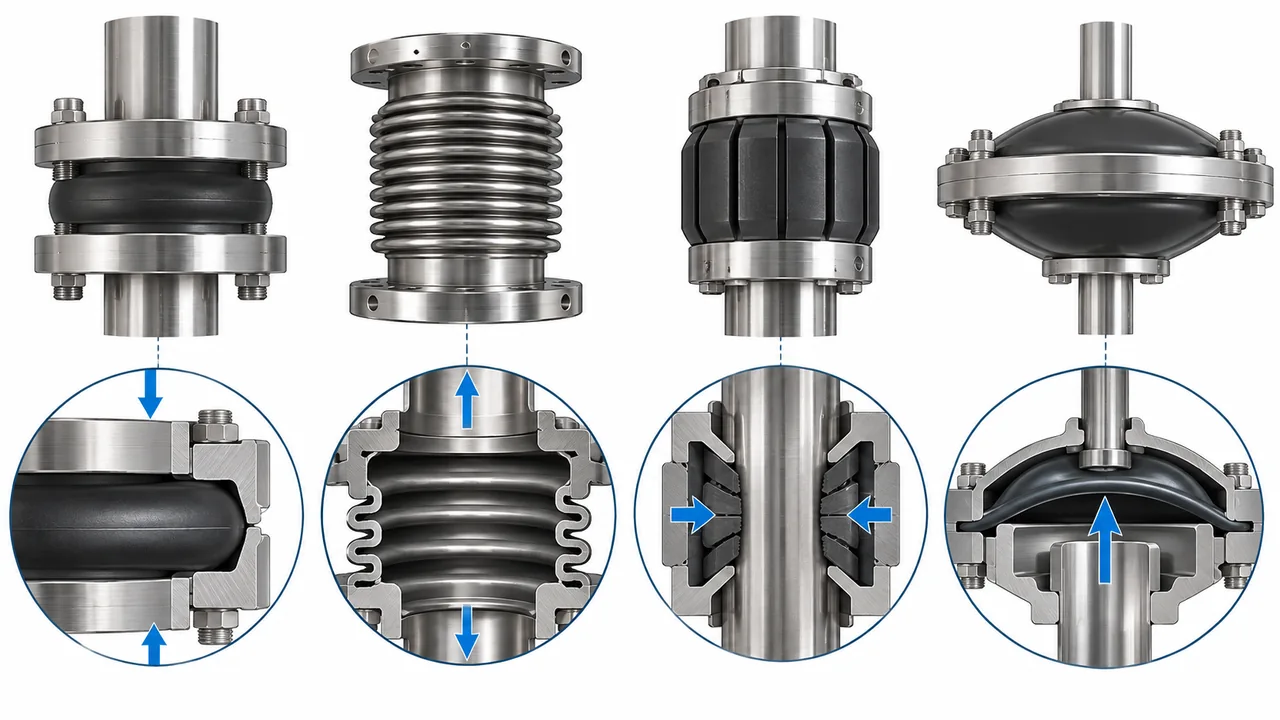
Start with what the silicone component must accomplish. A static seal needs stable contact under compression. A flexible diaphragm needs repeatable movement. A soft grip needs the intended feel and resistance to handling. A molded interface around a rigid insert needs reliable geometry and an appropriate retention strategy.
| Component function | Property to investigate | Finished-part concern |
|---|---|---|
| Static gasket | Compression behavior and recovery | Seal force after storage and relevant exposure |
| Moving diaphragm | Flexibility, tear resistance and cyclic behavior | Damage at the flexing region |
| Hand-contact grip | Hardness, surface feel and cleaning compatibility | Grip performance when wet or repeatedly handled |
| Soft interface on a rigid insert | Material behavior and attachment method | Separation or distortion around the insert |
Use the matériaux pour dispositifs médicaux parent page to place silicone within the broader material decision. This article concentrates on the properties and evidence that differentiate silicone grades, not a general overview of all medical polymers.
Hardness Is Useful, but It Is Not a Seal Specification
Hardness helps describe indentation resistance under a defined method. It does not describe every aspect of a gasket’s contact force, compression set or resistance to tearing. Two formulations with similar hardness can behave differently in the finished geometry.
Specify the test method and discuss the relevant thickness and sample condition. A measurement on a thin molded lip is not automatically comparable with the material supplier’s standard specimen. Use hardness as one part of the specification rather than a substitute for functional evaluation.
Match the Grade to Contact and Exposure
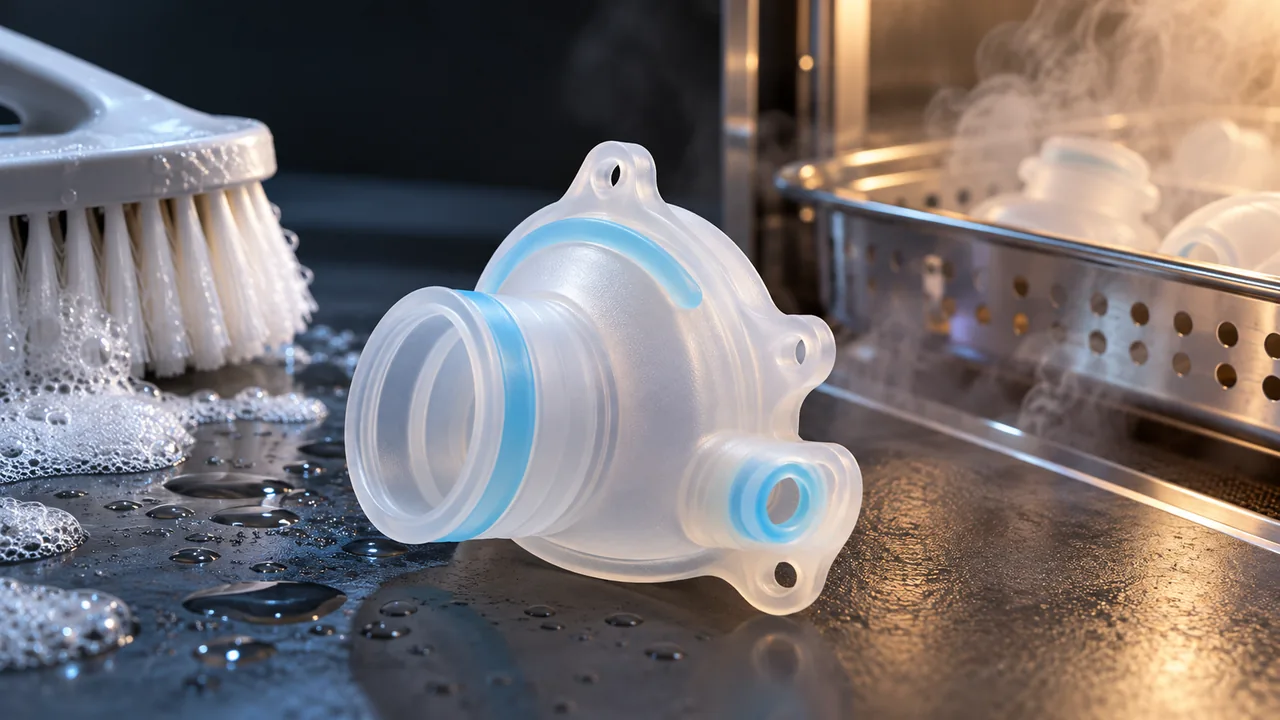
Describe the nature and duration of contact, including whether contact is direct or indirect. Separate a component handled by an operator from one contacting patient tissue or a fluid pathway. These distinctions shape the evaluation and should be provided to qualified biological-evaluation specialists.
Record cleaning, disinfection and sterilization assumptions. Exposure to a process may affect a seal, an interface or the additives in a formulation. Evaluate the exact grade in the relevant finished state; do not infer compatibility simply because silicone is commonly associated with demanding applications.
Trelleborg’s medical materials information presents medical silicone within a wider materials portfolio. The practical lesson is to identify the selected formulation and its evidence, not to treat the broad family designation as a complete purchase specification.
Ask what a supplier’s documentation actually establishes. A material test report may concern specified samples and endpoints; it is not blanket approval of your complete device. Changes to pigments, processing aids, cure or downstream handling can introduce questions that the original material-level report did not answer.
LSR and HCR Lead to Different Manufacturing Conversations
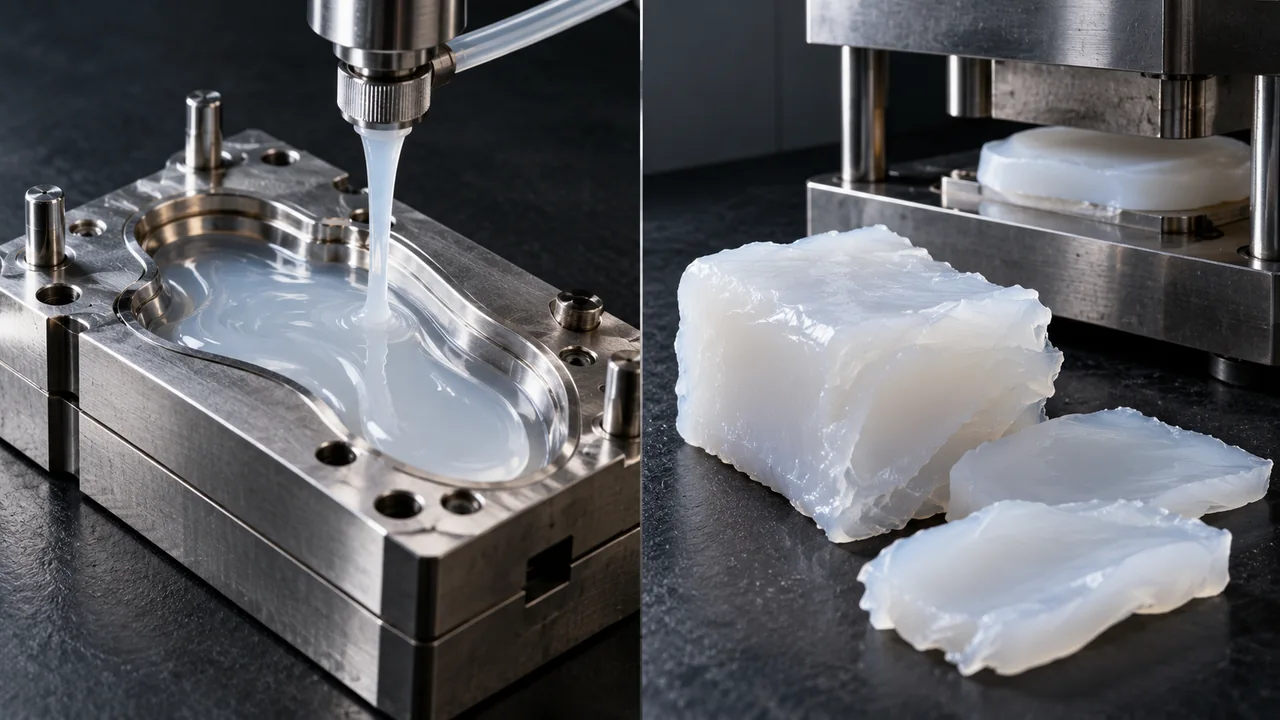
Liquid silicone rubber, or LSR, and high-consistency rubber, or HCR, are material forms associated with different processing approaches. The choice should account for component geometry, production quantity, tooling and the available formulation, not a belief that one route is inherently medical and another is not.
Discuss how the proposed route controls mixing, curing, flash and dimensional repeatability. A thin sealing lip may place demanding requirements on parting lines and handling. A flexible diaphragm may need a release strategy that avoids stretching the critical region while it is still vulnerable.
The existing LSR material page can support a material-specific discussion. Confirm the project grade and manufacturing capability separately; a material page is not evidence that every formulation or microgeometry is available.
Avoid designing around nominal shrinkage alone. Tool geometry, processing and the finished-part state all influence dimensions. Agree how trial samples will be measured and how the tool will be adjusted if functional fit differs from the initial model.
Build Retention Into the Interface
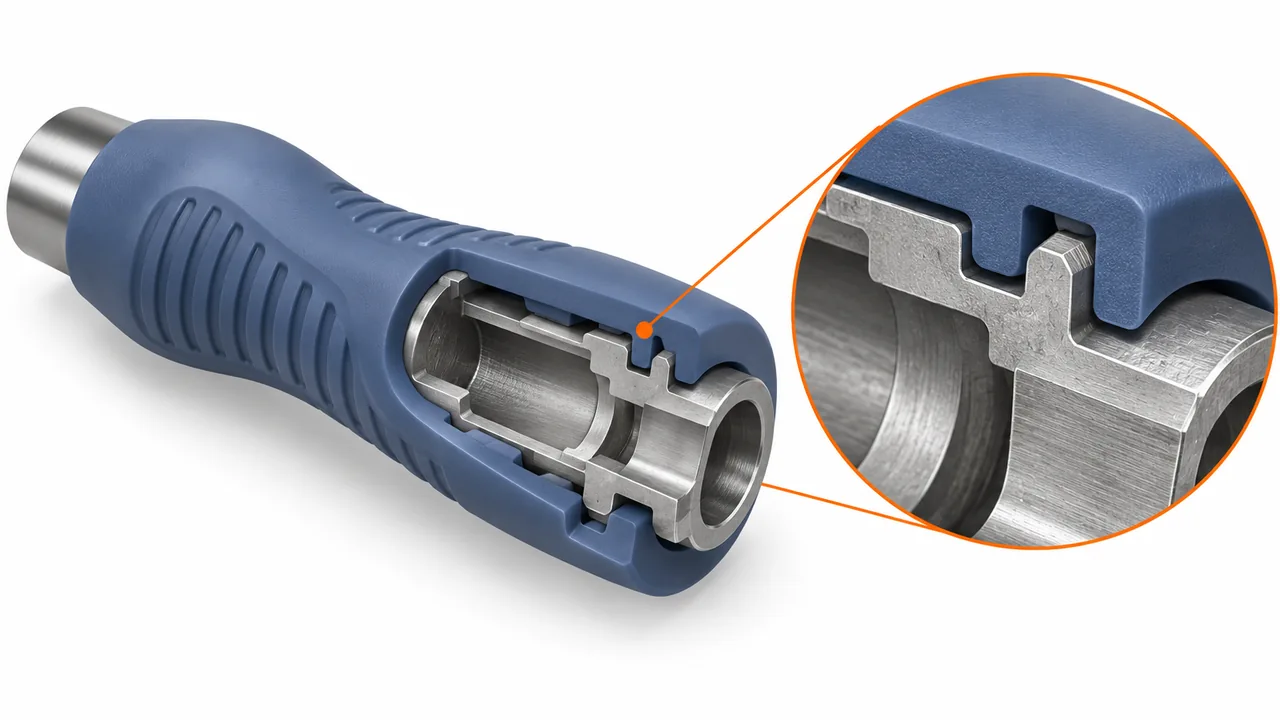
A silicone overmold does not automatically bond to every rigid substrate. Adhesion depends on the formulation, substrate, surface and processing route. Where bonding is not established, mechanical retention may be a deliberate design solution, provided the resulting geometry and stresses are acceptable.
Review transitions around inserts. A thin neck or abrupt change can concentrate strain during assembly or use. Small radii that are easy to overlook in CAD can become sites of tearing when a grip is pulled or a flexible membrane is stretched.
Consider whether the interface can trap cleaning fluid or create an inaccessible crevice. A mechanically retained design that solves pull-off resistance may introduce another problem if the device requires repeated cleaning. Evaluate the joint’s complete function, not only its attachment strength.
The relevant LSR molding guide discusses processing in more depth. Keep the present material decision focused on grade requirements, finished performance and which evidence is needed to support selection.
Test the Behavior the Datasheet Cannot Predict Alone
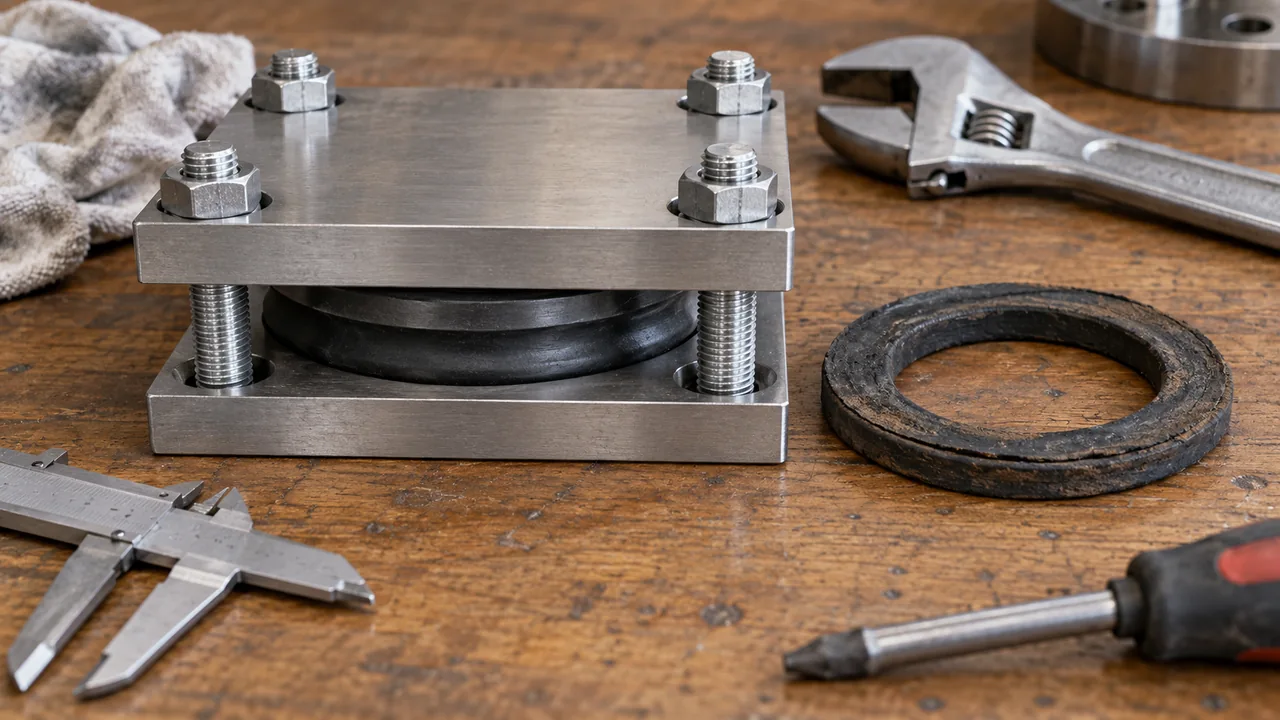
A representative gasket evaluation should reproduce the mating surfaces and relevant compression, not merely test a loose silicone coupon. A grip evaluation should include the actual rigid interface, expected pulling direction and exposure state. A diaphragm evaluation should reproduce its restraint and motion.
Define what constitutes unacceptable change. Examples include a leak beyond the agreed limit, excessive assembly force, a tear at a critical region or loss of retention. These are development endpoints that need device-specific criteria; the examples are not universal limits or published Jucheng test results.
Plan comparison samples deliberately. If the team compares several grades, keep geometry and processing assumptions sufficiently controlled to understand the difference. Changing hardness, cure and wall thickness simultaneously may produce a favorable result without revealing why.
Retain material identity and lot information throughout development. When a preferred sample is selected by feel, ensure that its exact grade and manufacturing history are known. Otherwise, the team may approve a physical sample that procurement cannot reproduce reliably.
Specify the Material Without Overclaiming It
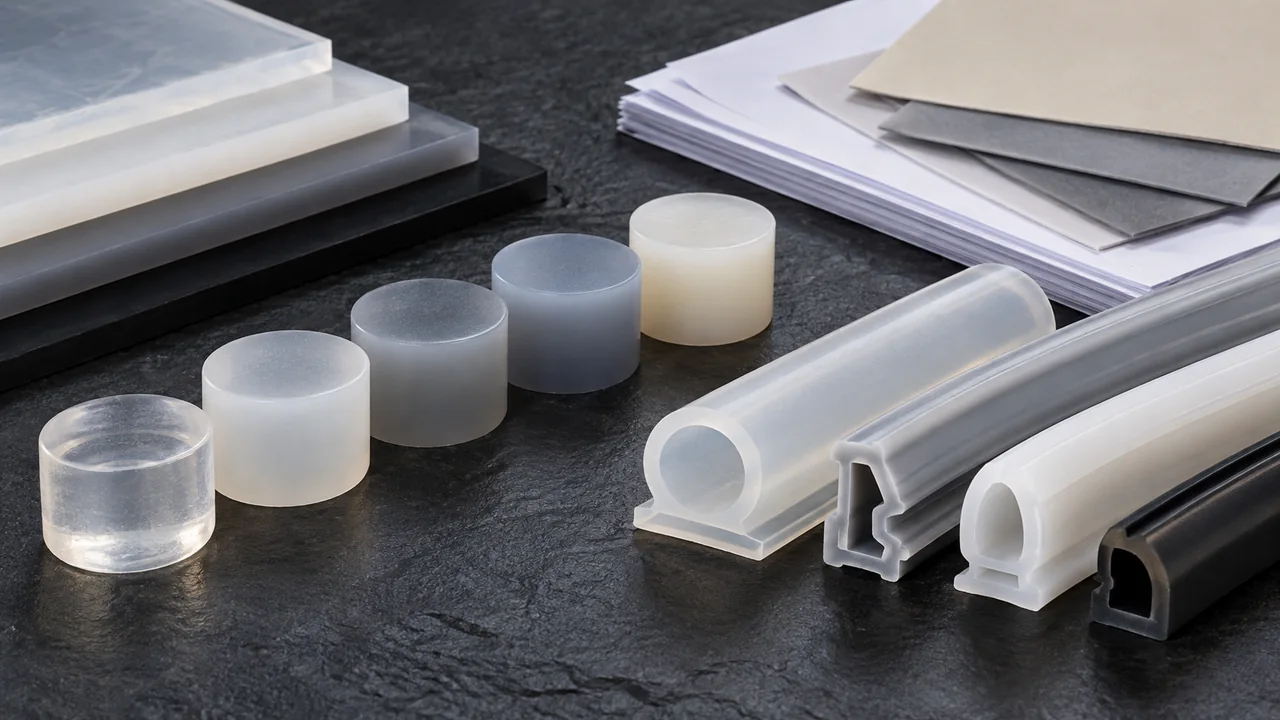
The release package should identify the formulation, permitted color or additives, relevant properties, contact assumptions and required documentation. Define the manufacturing and inspection conditions that affect those properties, along with the change-notification requirements.
For a Jucheng inquiry, include the component’s role, mating geometry, intended quantity and exposure sequence. Confirm available manufacturing routes and any specialist testing responsibilities. Part manufacture can support a medical development program without implying that every silicone component is approved for patient contact.
Does a Softer Grade Always Seal Better?
No. Softer material can accommodate some variation, but it may deform, extrude or produce insufficient stable contact in a particular geometry. Evaluate compression, mating surfaces and long-term behavior as a system rather than choosing softness alone.
Can Medical Grade Silicone Replace Any Medical Plastic?
No. Flexibility can be valuable for seals and interfaces, but rigid support, dimensional control and other functions may require a different material. Select the family and grade from the part’s requirements rather than the appeal of the medical label.
Which Document Should Procurement Request First?
Request the exact grade identification and current supplier documentation relevant to the intended function and contact. Then establish which finished-part evaluations are still needed. A generic certificate detached from the formulation and use conditions is insufficient.

