


Medical device CAPA – corrective and preventive action – is a structured way to determine why a quality problem occurred, change the relevant system or process, and verify that the action was effective. For a component supplier, it begins with accurate facts about the affected part and lots. For the device owner, it must connect those facts to product impact and the broader quality system. Replacing a rejected batch is containment, not automatically a completed CAPA.
The example below is hypothetical. It illustrates the logic without claiming a real Jucheng customer event, an approved device, or a specific regulatory outcome. The responsible organization should define CAPA thresholds and requirements for its product and jurisdiction with qualified quality and regulatory personnel.
The Case: A Housing Bore Drifts After Setup Change

A CNC-machined metal housing has a bore that positions a sensor module. Three incoming lots pass routine checks; the fourth shows several borderline or out-of-tolerance bore locations. The supplier offers to sort the current lot and run a new batch. That may protect the next assembly, but it does not yet explain what changed or whether the previous three lots were truly unaffected.
First, preserve the physical evidence. Keep representative conforming and nonconforming parts, the drawing revision, measurement method, setup records, program revision, tool condition and operator observations. Confirm the result using an agreed datum setup before concluding that the machine process alone is responsible. A mislocated measurement fixture could create a false trend, while a real setup change could affect more parts than the first sample suggests.
The existing medical device failure analysis article concentrates on examining failed physical evidence. CAPA uses that analysis, but goes further: it selects and implements a change, then checks whether the problem stops recurring without creating a new one.
Contain the Population Before Naming a Cause

Determine when the last known acceptable condition was observed and which work orders, shifts, tools or lots may be affected. Segregate unfinished parts and finished inventory. Check whether any affected units were shipped. The exact containment decision belongs to the organizations responsible for the component and finished device, but the supplier must provide a traceable picture of its manufacturing population.
A convenient boundary such as “this week’s lots” is not enough if the relevant setup started earlier. Use evidence: machine logs, fixture issue dates, program approvals, inspection results and material or subcontractor records. If data are missing, state the uncertainty instead of reporting a false precision.
| Immediate question | Evidence to establish | Decision it supports |
|---|---|---|
| What is the defect? | Approved requirement and confirmed measurement | Is it a real nonconformance? |
| When did it begin? | Last known good setup and process history | Which lots need containment? |
| Where are the parts? | Work in progress, stock and shipment trace | Who needs notification? |
| Can they be used? | Technical and device-level assessment | Rework, concession, scrap or hold |
Containment is often urgent. That urgency should not force the team to declare a root cause prematurely. An honest interim report can say what is held, what is being measured and what remains unknown.
Prove the Cause With a Counterfactual

Suppose the team suspects a fixture locating pin. Ask what evidence would distinguish that theory from tool wear, program revision, measurement error or material distortion. Compare parts made before and after the pin change, inspect the pin and its seating, and verify the measurement setup independently. A plausible story is not the same as a tested explanation.
Separate the immediate cause from the systemic cause. A damaged pin may explain the bore shift; a missing fixture inspection after maintenance may explain why the condition persisted. Replacing the pin without changing the maintenance or setup control might produce another rejected lot later. Conversely, writing a new procedure without correcting the damaged fixture leaves the current process unstable.
Do not present a fishbone diagram as evidence merely because every category has an entry. Use it to organize hypotheses, then test them against parts and records. The cause chosen for corrective action should be supported strongly enough to predict what will change when the action is implemented.
Choose an Action That Changes the Process
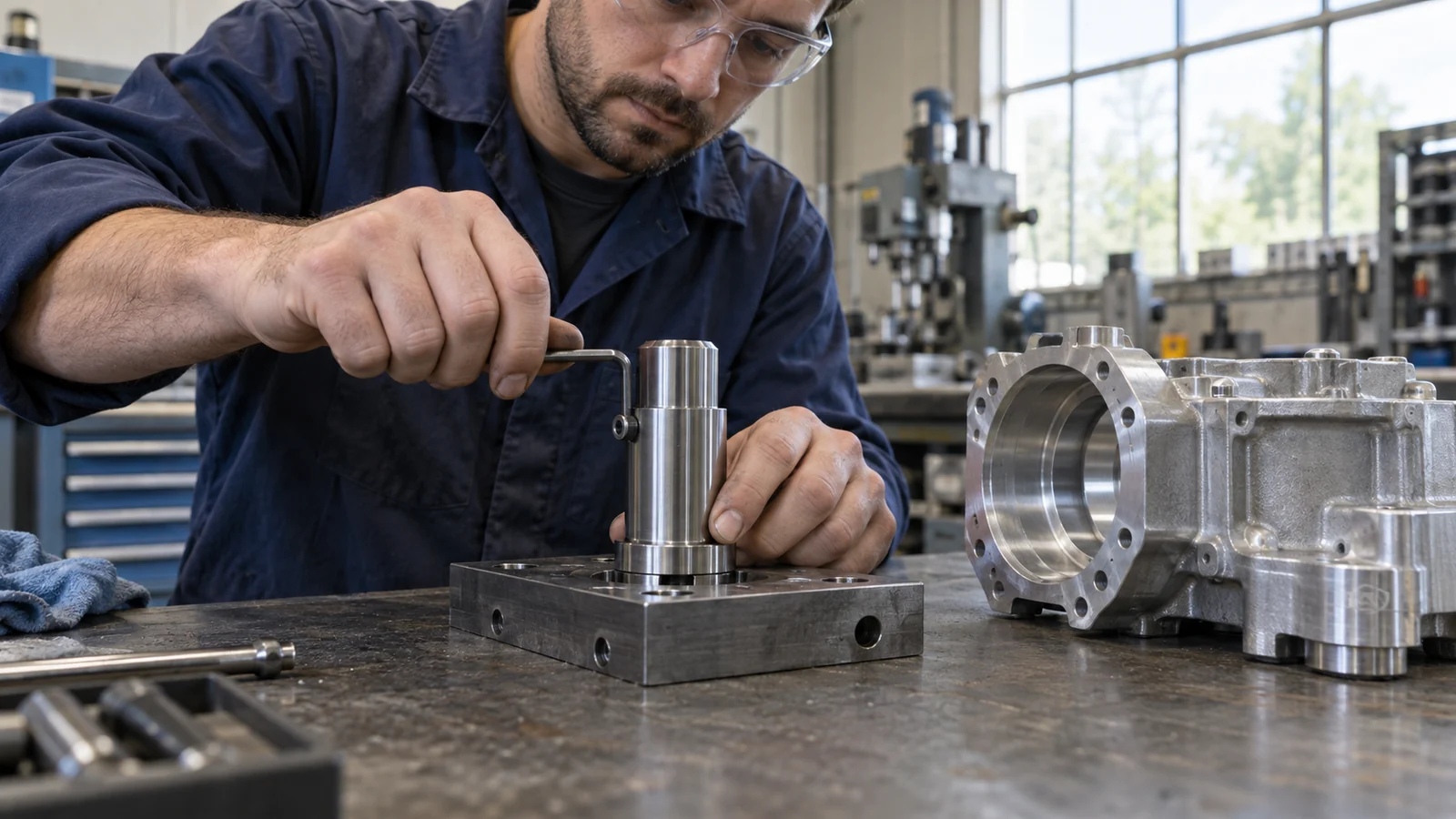
For the hypothetical fixture fault, an action package could include a revised locator design, a setup check against a master feature, controlled maintenance instructions and a defined reaction when the check fails. The exact package depends on what the investigation actually finds. Retraining alone is weak if the fixture can still be assembled in the wrong condition.
Document who approves the change and when it takes effect. If a new CNC program, fixture or inspection method is introduced, route it through appropriate change control. The supplier should identify the first lot built under the corrected configuration and preserve the link between records and shipped parts.
Pour usinage CNC, check how the action affects datum setup, tool access and verification. In molding, the equivalent might involve a tool insert, gate or process window. A generic CAPA form cannot substitute for process-specific engineering judgment.
Effectiveness Is a Planned Test, Not a Closed Checkbox

Before closing the action, define what evidence would show it worked. The team might review multiple subsequent setups, representative lots, the critical bore distribution and whether the same defect reappears. The plan should state the observation period or number of opportunities, the acceptance criterion and who evaluates the result. One good sample immediately after repair may be necessary but insufficient.
Also look for unintended effects. A stronger fixture clamp might stop movement yet deform a thin wall. A modified inspection routine might catch the bore while slowing release and encouraging informal bypasses. Effectiveness means the cause is controlled under representative conditions without introducing a different problem.
The parent medical device manufacturing standards article provides the wider quality-system context. The FDA’s current QMSR overview explains the U.S. framework effective February 2, 2026. This blog example does not interpret the applicable clauses for a particular device or certify that a supplier’s CAPA system meets them.
Close the Loop Between OEM and Supplier

The supplier should report facts, containment, cause evidence, implemented action and effectiveness results. The OEM must evaluate whether the issue affects device design assumptions, risk controls, validation evidence or already distributed product. The two organizations need a common affected-lot definition; otherwise one can close the factory problem while the other still has an unresolved device question.
For a Jucheng quote or supplier review, ask how nonconforming parts are held, how a critical feature is measured and what information can be provided if an issue occurs. Do not demand a promise that defects never happen. A more useful question is whether the manufacturing team can find the parts, explain the process state and demonstrate that a corrective action changed the outcome.
Does every rejected part need a CAPA?
Not necessarily. The organization should define escalation criteria based on significance, recurrence, trend and potential product impact. A local correction and a system-level CAPA are different responses, and the choice should be documented when it matters.
Is retesting the same lot an effectiveness check?
Retesting may help disposition the current lot. Effectiveness asks whether the selected action prevents the underlying problem under later representative operating conditions. The plan should examine new production opportunities, not only the batch that triggered the investigation.