


How to Choose an Aerospace Manufacturer: Sourcing and Audit Checklist
Selecting a production partner for commercial aviation, satellite hardware, or defense systems represents one of the most critical operational decisions an OEM procurement executive will make. When aerospace program managers evaluate supplier options, understanding how to choose an aerospace manufacturer determines whether a project meets strict airworthiness compliance schedules. Sourcing parts from machine shops lacking verified aerospace quality management systems introduces severe counterfeit material risks, structural failure liabilities, and catastrophic flight hazards.
Utilizing a certified contract manufacturing partner ensures that structural AL7075-T6 aluminum spar caps, forged titanium (Ti-6Al-4V Grade 5) fittings, and heat-resistant Inconel 718 brackets are produced under validated quality standards. Let us examine the essential audit criteria, multi-axis machining capabilities, and quality benchmarks that guide successful aerospace supplier selection.
Module 1 – Definition and Working Principles of Supplier Qualification
Aerospace supplier qualification is a comprehensive auditing protocol that evaluates a contract manufacturer’s quality management systems, machine tool capabilities, risk mitigation controls, and raw material traceability. The working principle relies on verifying that the production facility maintains active quality certifications, controls machining thermal drift, and enforces documented process validation protocols. While basic commercial parts are shaped via standard metal cutting, flight-critical hardware demands audited usinage CNC 5 axes and climate-controlled metrology labs.
To execute a structured supplier evaluation on prospective manufacturing facilities, procurement directors could follow these practical steps:
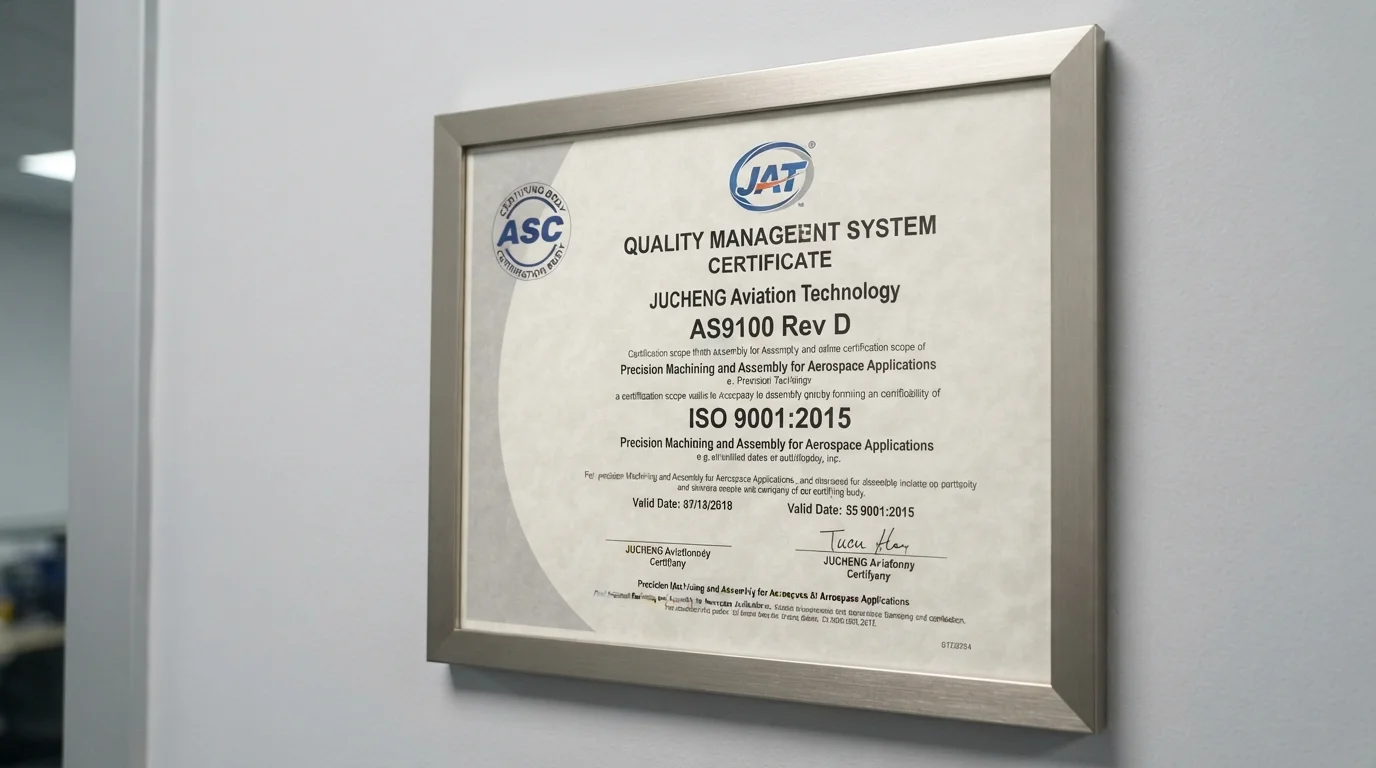
- Quality System Verification: Audit the factory’s quality management manual to confirm compliance with AS9100 standards, risk management procedures, and counterfeit part prevention protocols.
- Equipment Fleet Inspection: Verify on-site machine assets to confirm multi-axis milling, Swiss turning, and sheet metal fabrication can be executed in-house without unauthorized subcontracting.
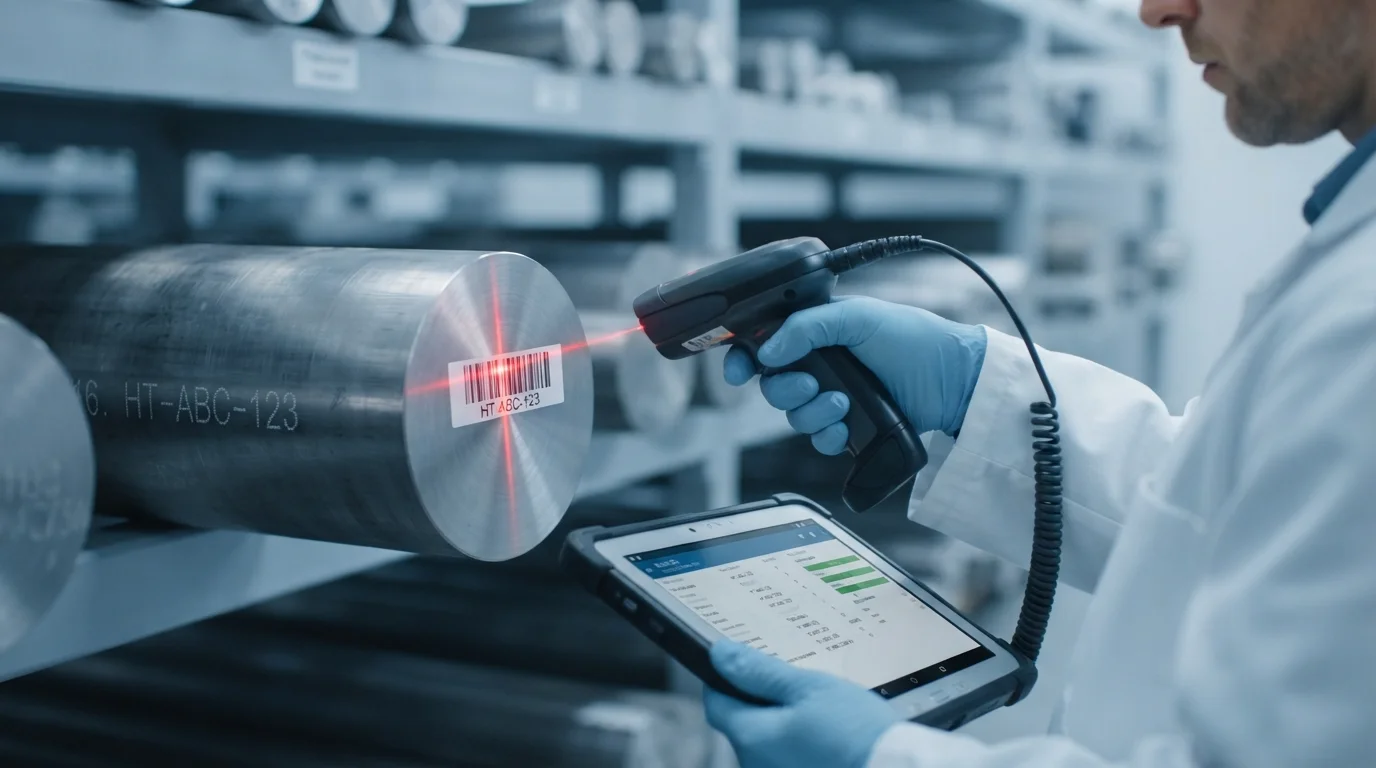
- Traceability Auditing: Inspect raw material storage to ensure 100% heat lot tracking, authentic Material Test Reports (MTR), and ultrasonic flaw inspection documentation for all alloy stock.
Module 2 – Core Application Scenarios Across Flight Subsystems
Rigorous vendor auditing is vital across airframe structural nodes, turbine propulsion sections, and satellite payload interfaces where single-point mechanical failure is prohibited. When aerospace primes evaluate global production options, learning how to choose an aerospace manufacturer with multi-process capabilities eliminates inter-vendor coordination delays and reduces regulatory compliance risks. Discussions across aerospace engineering groups on Reddit and Facebook emphasize that selecting a single-roof supplier for 5-axis milling, sheet metal, and CMM inspection cuts program lead times by up to fifty percent.
Les principaux secteurs d'application comprennent :
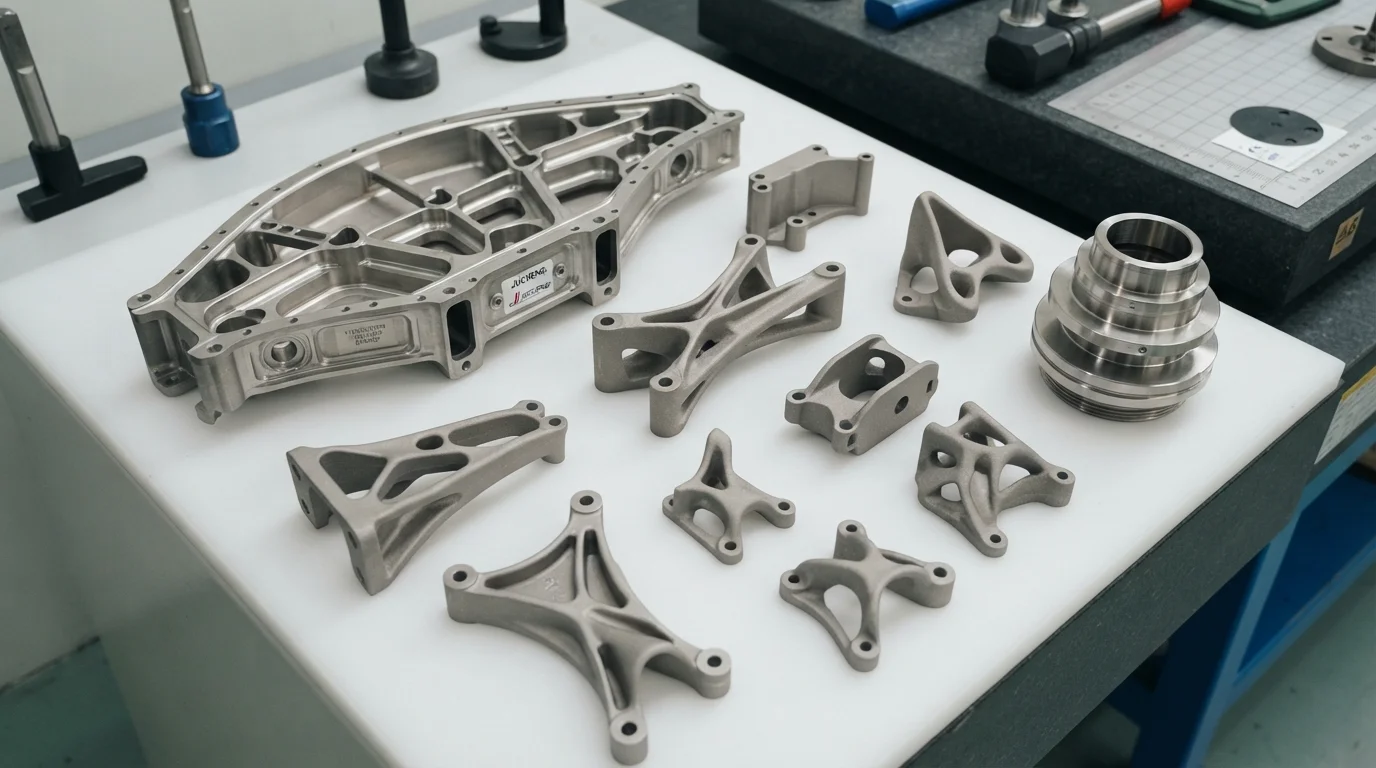
- Airframe Structural Assemblies: Sourcing titanium wing attach fittings, spar caps, and fuselage bulkheads from facilities equipped with high-rigidity multi-axis milling centers.
- Avionics & Radar Housings: Partnering with precision sheet metal fabricators capable of laser cutting, CNC press brake forming, and certified robotic welding.
- Space Propulsion Hardware: Contracting suppliers capable of 5-axis machining Inconel 718 turbine discs, combustion liners, and space-grade PEEK satellite mounting brackets.
Module 3 – Facteurs clés de sélection pour la réussite du projet
When auditing prospective manufacturing partners, engineering teams must evaluate quality certifications, on-site metrology inspection assets, and intellectual property protection protocols. Evaluating these core parameters ensures your flight components are manufactured safely and reliably.
| Audit Criterion | Essential Requirement | Primary Risk Mitigated |
|---|---|---|
| Quality Management System | Active AS9100 / ISO 9001 certification, full lot traceability | Prevents compliance audit failure and guarantees process repeatability |
| In-House Machine Fleet | 5-axis CNC machining, avionics sheet metal, DMLS 3D printing, Zeiss CMMs | Eliminates unauthorized third-party subcontracting and quality variance |
| IP & Material Traceability | Enforceable NDAs, encrypted CAD servers, and 100% MTR verification | Protects proprietary design IP and prevents counterfeit alloy use |
Module 4 – Conseils d'installation et d'entretien
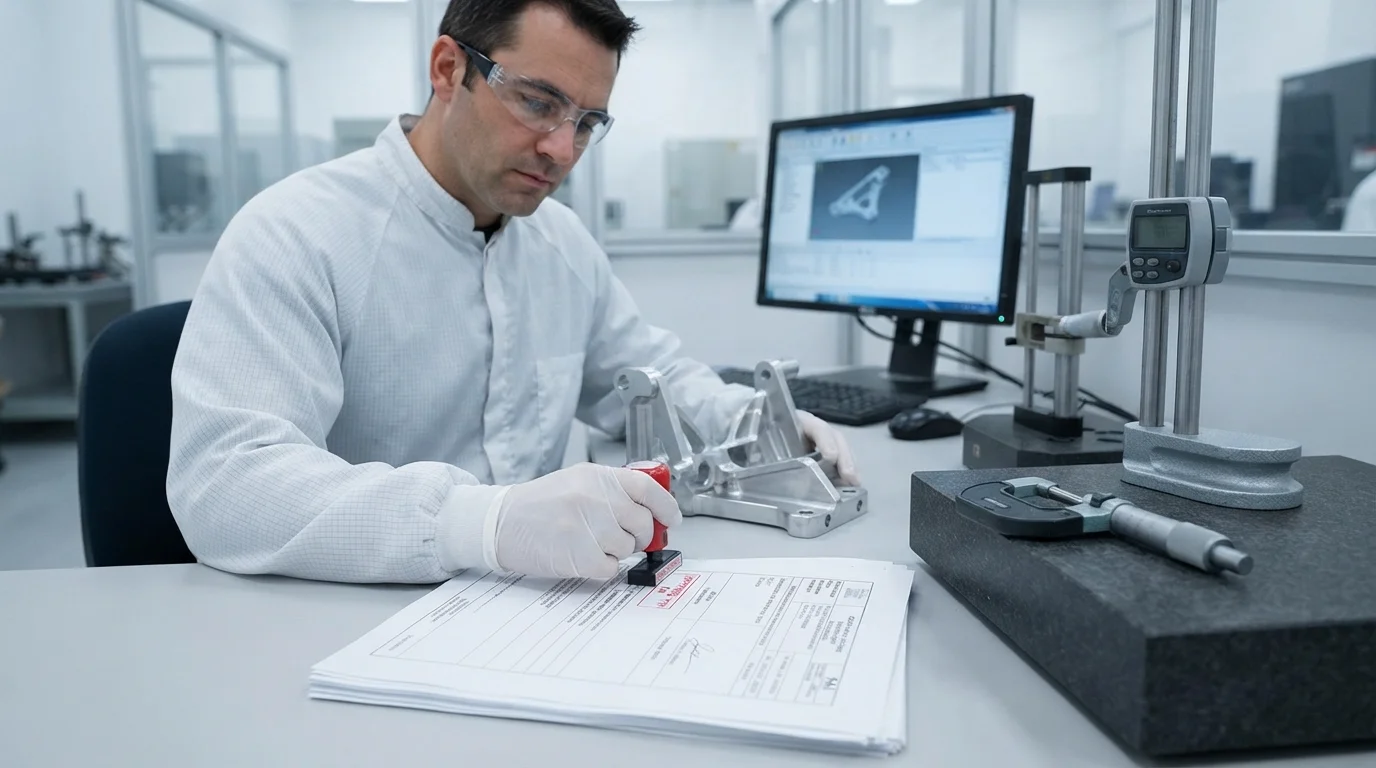
Establishing robust Quality Agreements, defining strict change-control procedures, and conducting periodic on-site facility audits safeguard manufacturing continuity across multi-year aerospace programs. Protecting production lines from unauthorized parameter changes ensures uncompromised flight safety.
Key supplier management and maintenance tips include:
- Strict Change Control Agreements: Mandate in writing that the manufacturer cannot alter raw material suppliers, CNC cutting tools, or CAM programs without formal OEM approval.
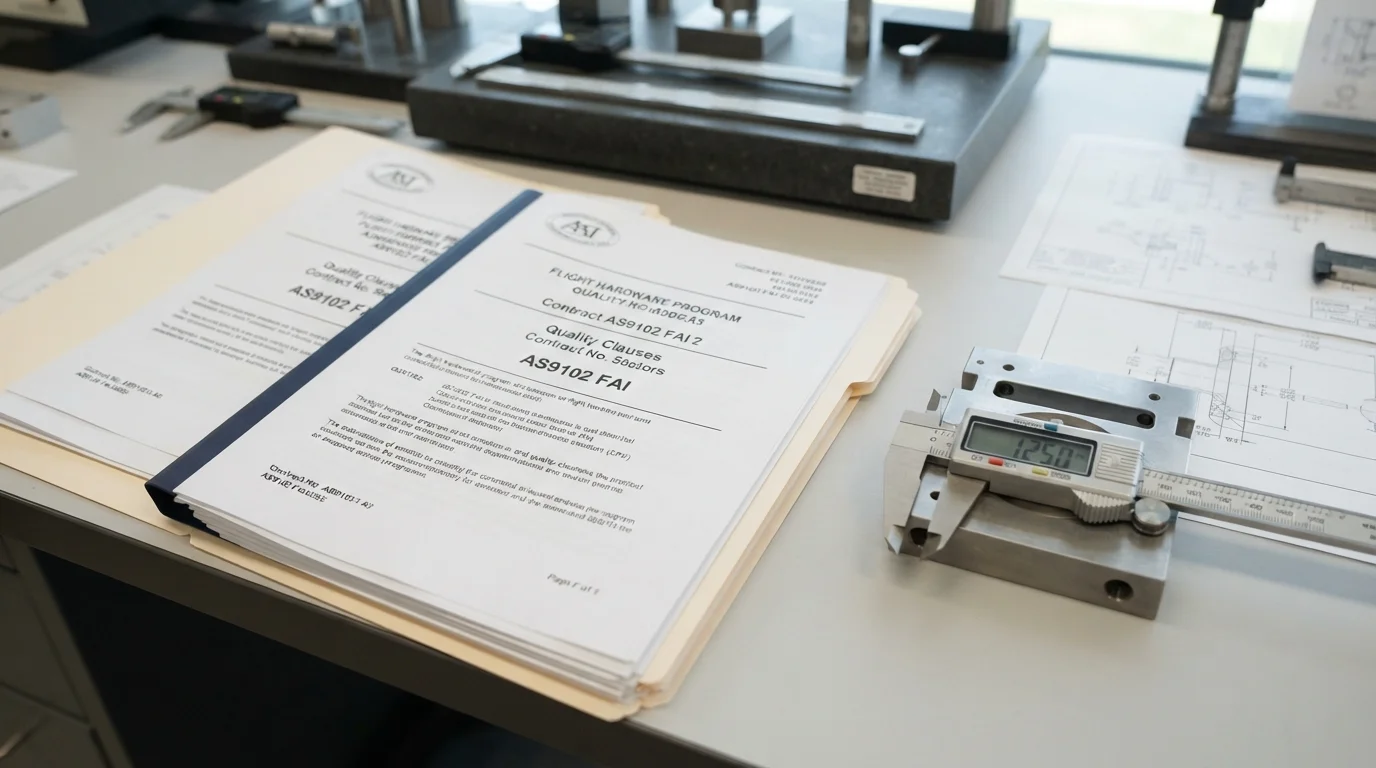
- AS9102 First Article Inspection Sign-Off: Require comprehensive ballooned drawing measurement reports on initial production batches before authorizing full-scale manufacturing.
- Annual Quality Surveillance Audits: Schedule periodic facility inspections to review CMM calibration logs, cutting tool maintenance records, and raw material heat certificates.
Module 5 – Foire aux questions (FAQ)

1. What is the most critical certification to look for in an aerospace manufacturer?
AS9100 certification is the baseline international requirement, demonstrating that the contract manufacturer maintains a validated quality management system specifically for aviation and defense hardware.
2. Why is in-house multi-process capability important when sourcing flight hardware?
Single-roof capabilities eliminate multi-vendor coordination risks, reduce shipping lead times, and guarantee end-to-end quality and traceability across 5-axis machining, sheet metal, and CMM metrology.
3. How do aerospace contract manufacturers protect proprietary design IP?
Reputable manufacturers enforce legally binding non-disclosure agreements (NDAs), utilize encrypted CAD file storage servers, and restrict toolroom access to authorized personnel.
4. What documentation should an aerospace manufacturer supply with each production batch?
The manufacturer should supply certified Material Test Reports (MTR), heat lot traceability records, Zeiss CMM dimensional inspection reports, and an official Certificate of Conformity (CoC).
5. What is the difference between a commercial machine shop and an aerospace manufacturer?
An aerospace manufacturer enforces strict risk mitigation, climate-controlled cleanroom metrology, validated equipment calibration, and comprehensive lot traceability that standard commercial shops lack.
6. How does Jucheng Precision support aerospace OEM sourcing requirements?
Jucheng Precision provides 5-axis CNC machining, avionics sheet metal fabrication, DMLS 3D printing, and full AS9102 First Article Inspection reporting under certified AS9100 quality frameworks.
Module 6 – Pourquoi choisir JUCHENG pour votre projet
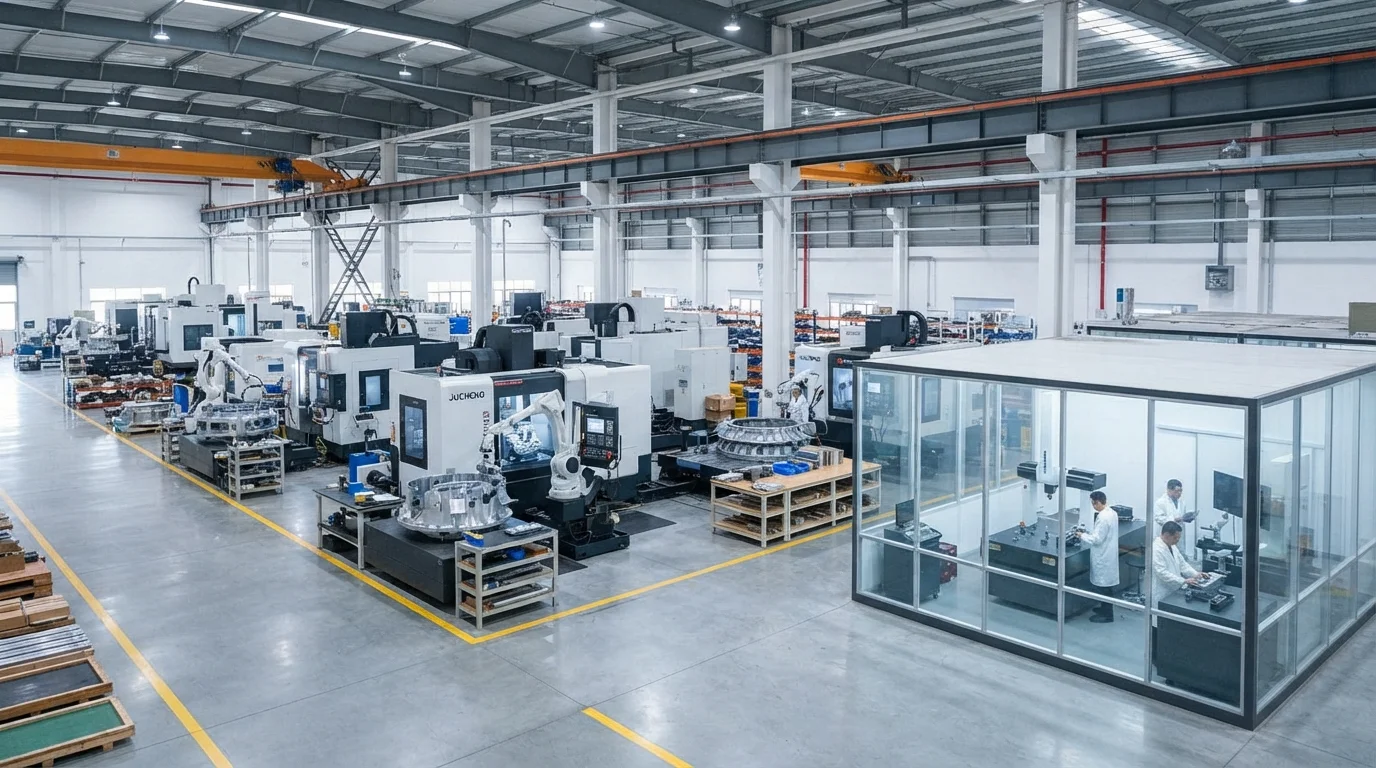
Achieving regulatory airworthiness compliance and uncompromised flight safety requires an experienced contract manufacturing partner with audit-ready production infrastructure. JUCHENG supports aerospace innovators by delivering comprehensive analyses DFM gratuites 24h/24 reviews that analyze toolpath clearances, wall pocketing ratios, and geometric tolerances prior to cutting metal billet. Founded in Shenzhen in 2012 with an 8,000-square-meter facility in Dongguan, our factory houses 150+ advanced machines, including 25+ high-performance 5-axis Haas and Mazak milling centers alongside dedicated metrology labs [9.10].
Backed by ISO 9001, ISO 14001, ISO 13485, and IATF 16949 certifications, our engineering teams ensure that understanding how to choose an aerospace manufacturer leads directly to successful flight validation, complete Material Test Report (MTR) traceability, and absolute batch consistency.
Ready to Audit Your Flight Hardware Manufacturing Partner?
Upload your 3D models today to receive instant feedback, competitive pricing, and professional DFM analysis from our seasoned engineering experts. Let JUCHENG bring your complex designs to life with unmatched speed and reliability!

