


Aerospace Manufacturing Cost: Budgeting for Flight-Critical Parts
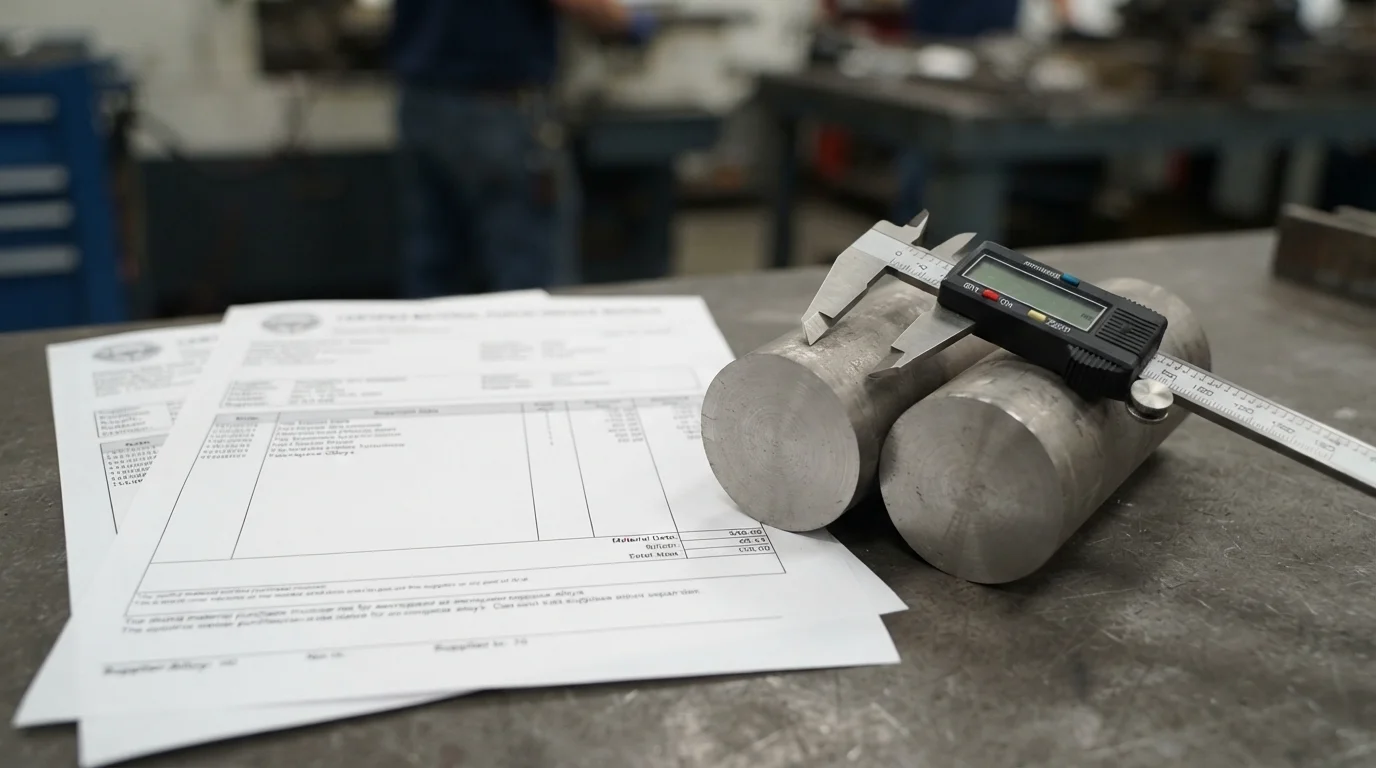
Budgeting for commercial aviation, satellite hardware, and defense systems requires navigating steep cost structures that far exceed conventional commercial manufacturing. When engineering directors and procurement leads evaluate overall aerospace manufacturing cost, understanding the drivers behind high unit pricing is essential for protecting program capital. Unlike consumer goods, flight-critical components carry mandatory expenditures—including certified alloy premiums, exhaustive non-destructive testing (NDT), and high buy-to-fly material scrap ratios—that directly shape commercial bids.
Utilizing an experienced contract manufacturing partner ensures that flight-grade titanium (Ti-6Al-4V Grade 5) bulkheads and AL7075-T6 aluminum airframe brackets transition smoothly from digital 3D models into cost-optimized production batches. Let us examine the economic mechanics, machining hour rates, and DFM optimization strategies that govern aerospace production budgets.
Module 1 – Definition and Financial Mechanics of Aerospace Production Overhead
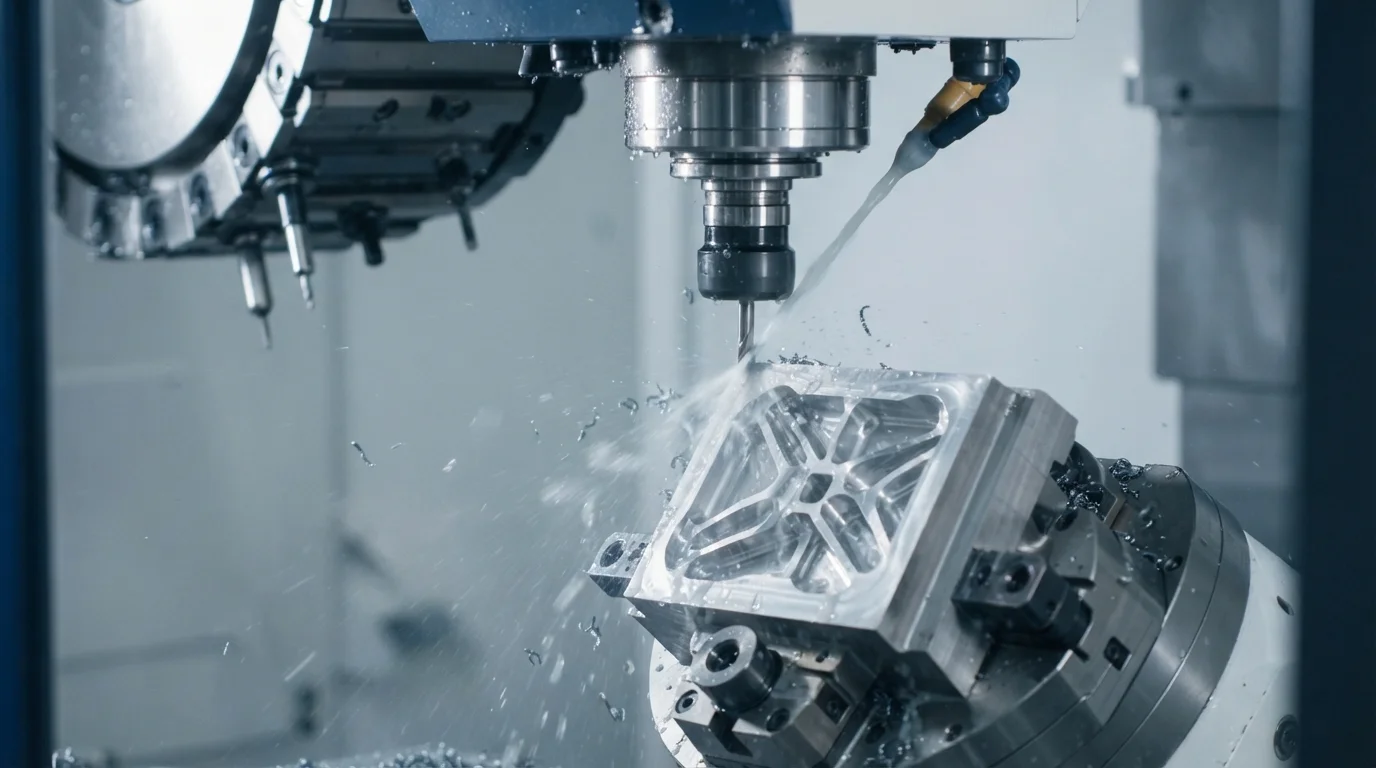
Aerospace manufacturing cost modeling calculates the total financial expenditure required to produce certified flight hardware under international quality management systems. The working principle relies on accounting for raw certified metal billet costs, multi-axis machine spindle hour rates, specialized cutting tool consumption, and mandatory quality assurance documentation. While basic parts are shaped via standard cutting, complex structural airframes require heavy-duty usinage CNC 5 axes and rigorous metrology verification.
To execute a structured cost-control framework on flight-critical hardware, procurement leads could follow these practical steps:
- Buy-to-Fly Ratio Audit: Evaluate whether rough forgings, near-net shapes, or additive manufacturing can reduce raw metal scrap when hollowing out deep structural pockets.
- Spindle Utilization Optimization: Design generous corner radii in CAD to allow larger endmills to cut at higher feed rates, reducing machine hours.
- Quality Documentation Planning: Account for AS9102 First Article Inspection (FAI) reporting, ultrasonic NDT flaw scanning, and raw material Material Test Report (MTR) verification fees.
Module 2 – Core Application Scenarios Across Flight Subsystems
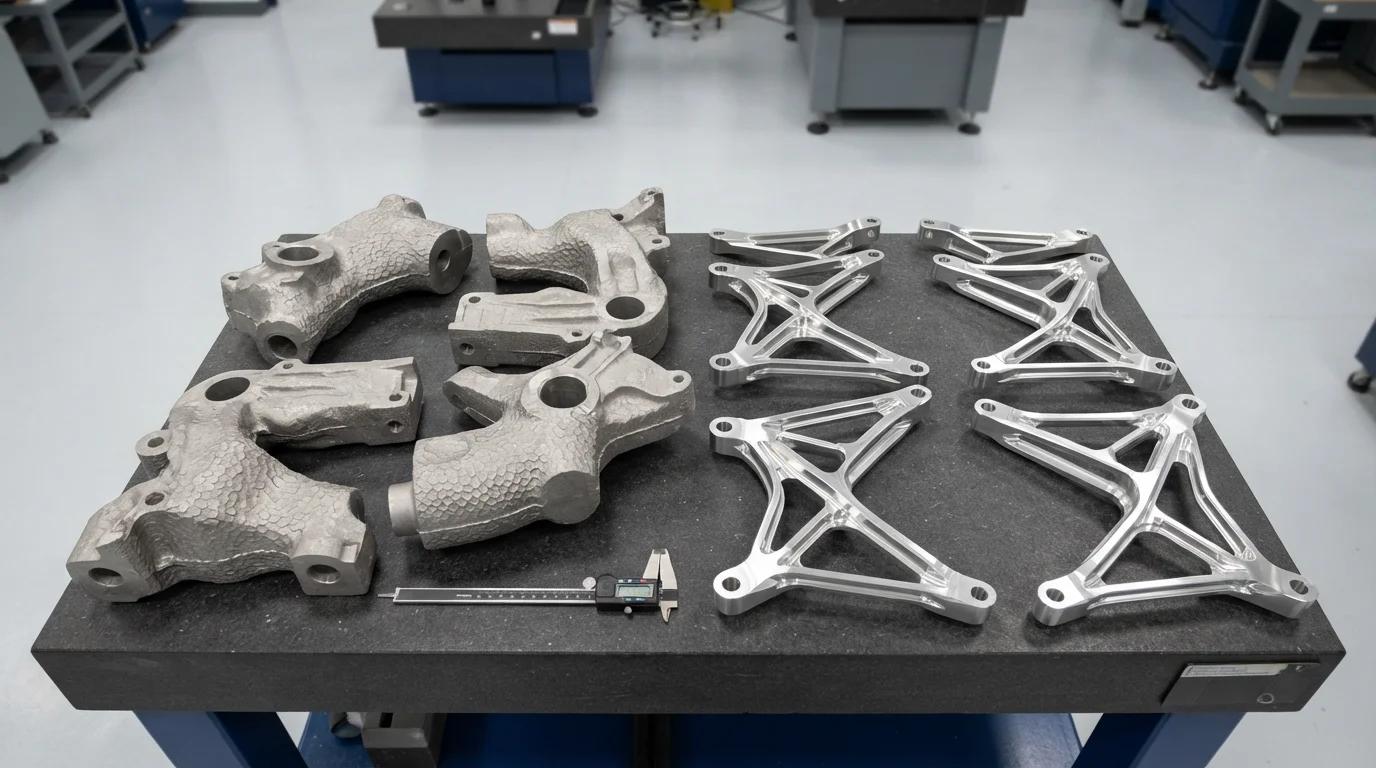
Controlling manufacturing expenses is vital across commercial airliner airframes, orbital satellite launch structures, and high-temperature jet turbine sections where budget overruns threaten commercial viability. When commercial space startups scale new rocket structures, managing total aerospace manufacturing cost eliminates capital waste and accelerates launch schedules. Discussions across aerospace engineering communities on Reddit and Facebook emphasize that early Design for Manufacturability (DFM) reviews slash multi-axis machining hours by up to thirty-five percent.
Les principaux secteurs d'application comprennent :
- Airframe Structural Nodes: Milling solid AL7075-T6 aluminum wing ribs, spar caps, and fuselage bulkheads while optimizing tool access to minimize cycle times.
- Turbine Engine Hot Sections: Turning nickel-based Inconel 718 turbine discs and combustion liners with specialized ceramic inserts to control tool wear expenses.
- Spacecraft Brackets: Utilizing 3D printing or high-speed milling for PEEK and titanium satellite mounting brackets to reduce launch payload mass.
Module 3 – Facteurs clés de sélection pour la réussite du projet
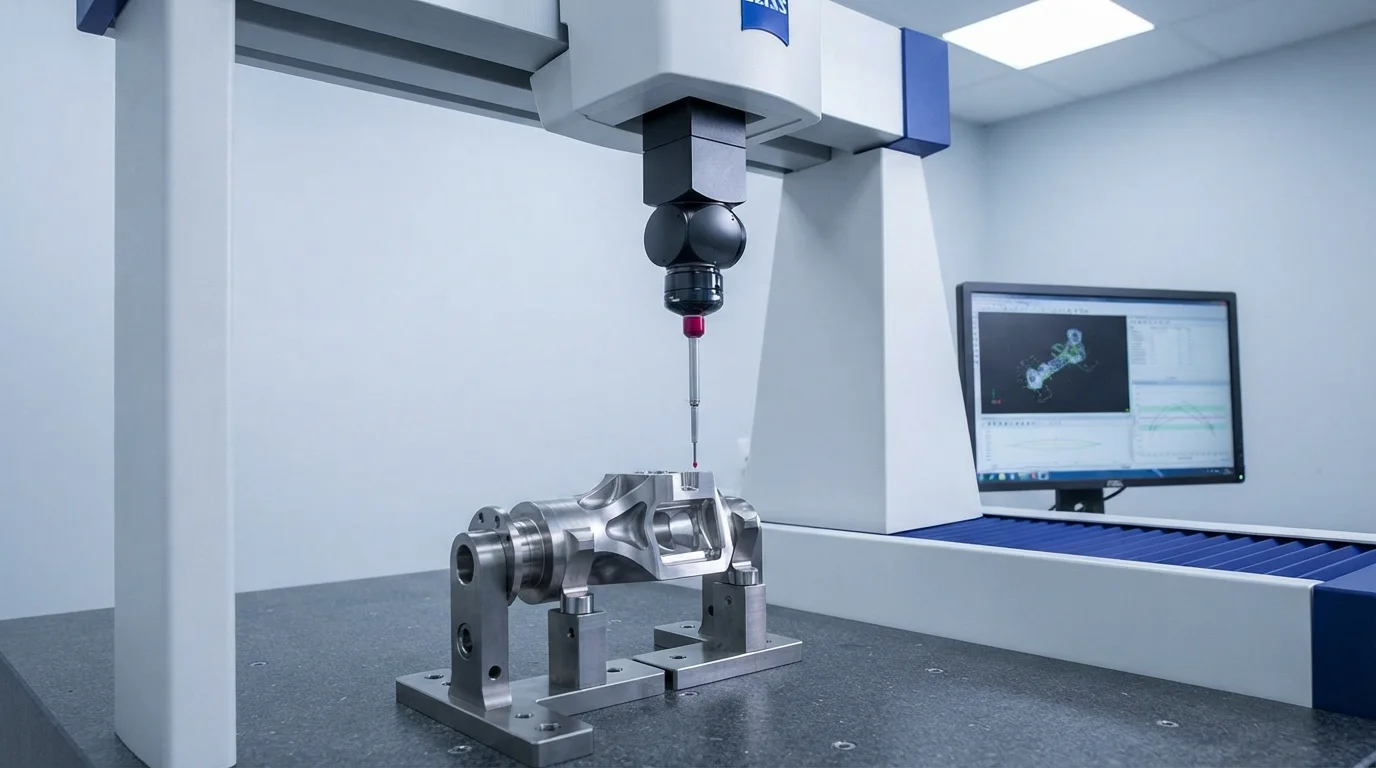
When planning budgets for flight-grade hardware, engineering teams must evaluate raw material scrap rates, machine spindle hour rates, and non-destructive quality testing tiers. Evaluating these core parameters ensures your project achieves optimal cost-to-performance balance.
| Cost Component | Underlying Financial Drivers | Strategic Optimization Method |
|---|---|---|
| Raw Certified Stock | High buy-to-fly ratios (up to 10:1), aerospace mill certifications (MTR) | Deploying near-net shape forgings or additive manufacturing where feasible |
| 5-Axis Machining Hours | Deep thin-wall pocketing, slow feeds for titanium/Inconel, tool wear replacement | Standardizing internal corner radii to allow high-feed roughing tools |
| Quality & Metrology | 100% Zeiss CMM scanning, fluorescent penetrant inspection, AS9102 documentation | Automated on-machine probing and integrated in-house quality inspection |
Module 4 – Conseils d'installation et d'entretien
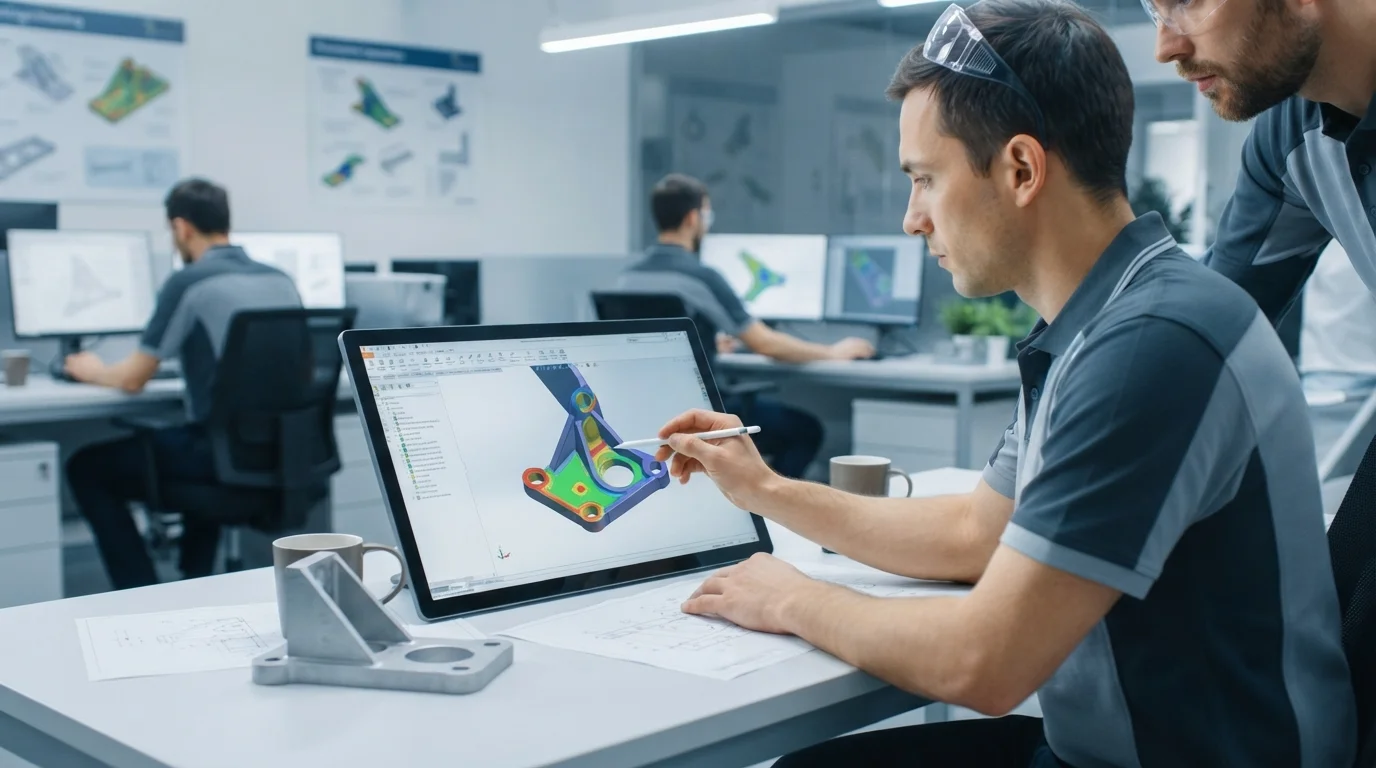
Proper DFM geometry adjustments, toolroom toolpath optimization, and standardized quality auditing safeguard aerospace manufacturing budgets across active flight hardware production. Protecting machined datums from assembly gouging prevents expensive component scrappage.
Conseils clés d'installation et d'entretien :
- Corner Radii Standardization: Design internal pocket fillets to at least 1/3 of the pocket depth to prevent using micro-diameter cutters that slow down cycle times.
- Strategic Tolerance Assignment: Apply fine micrometer tolerances (±0.005 mm) strictly to critical bearing bores and mating interfaces while using standard tolerances elsewhere.
- Toolroom Preventive Maintenance: Calibrate 5-axis machine kinematics and spindle thermal compensation systems regularly to maintain high cutting accuracy without part re-work.
Module 5 – Foire aux questions (FAQ)

1. Why are aerospace machined parts significantly more expensive than commercial parts?
Certified raw material traceability, extended 5-axis machining hours, expensive cutting tool wear on superalloys, and mandatory 100% CMM and NDT inspection drive up total manufacturing costs.
2. What is the buy-to-fly ratio and how does it affect aerospace pricing?
The buy-to-fly ratio is the weight ratio between the raw metal billet purchased and the final finished component; ratios of 5:1 to 10:1 mean up to 90% of costly material is machined away as scrap.
3. How does Design for Manufacturability (DFM) slash aerospace machining expenses?
DFM standardizes corner radii, minimizes deep pocket depths, eliminates machine tool collisions, and relaxes non-critical tolerances, reducing multi-axis CNC machine hours by 30% to 50%.
4. Why do cutting tools wear out quickly when machining Inconel and Titanium?
Inconel and titanium work-harden rapidly, trap extreme heat at the cutting edge due to poor thermal conductivity, and cause severe flank abrasion on carbide cutters.
5. Are First Article Inspection (FAI) reports included in manufacturing costs?
Yes, AS9102 FAI reporting requires comprehensive 100% ballooned drawing dimensional verification, material cert compilation, and process documentation that adds inspection labor.
6. How does Jucheng Precision help optimize aerospace manufacturing budgets?
Jucheng Precision provides 24-hour free DFM reviews, high-efficiency 5-axis CNC machining, and certified AS9100 quality control to help global aerospace OEMs cut CapEx by 30% to 50%.
Module 6 – Pourquoi choisir JUCHENG pour votre projet
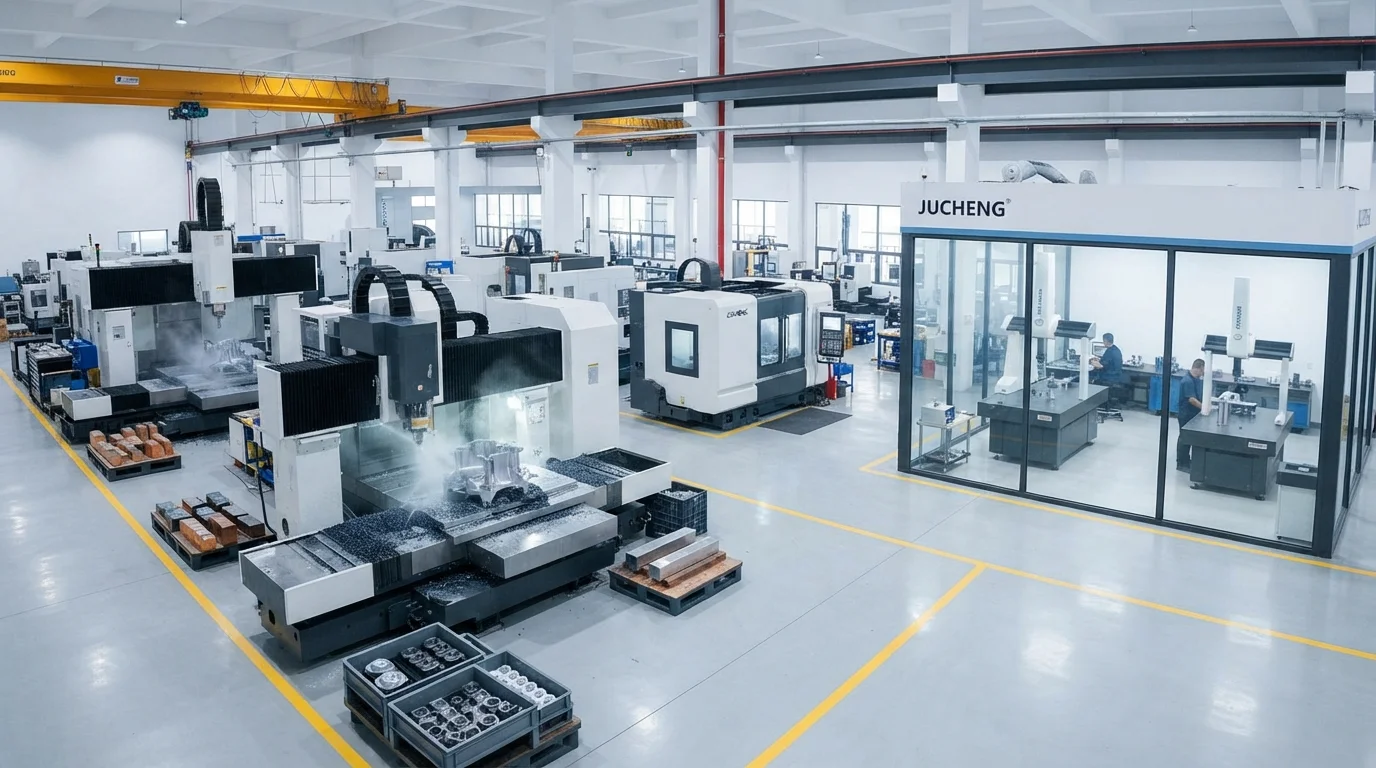
Achieving cost-effective aerospace manufacturing requires an experienced contract partner with advanced multi-axis machining infrastructure and certified quality control. JUCHENG supports aerospace innovators by delivering comprehensive analyses DFM gratuites 24h/24 reviews that analyze toolpath clearances, wall pocketing ratios, and geometric tolerances prior to cutting metal. Founded in Shenzhen in 2012 with an 8,000-square-meter facility in Dongguan, our factory houses 150+ advanced machines, including 25+ high-performance 5-axis Haas and Mazak milling centers [9.10].
Backed by ISO 9001, ISO 14001, ISO 13485, and IATF 16949 certifications, our engineering teams ensure that managing your aerospace manufacturing cost achieves budget predictability, sub-micron precision, full Material Test Report (MTR) traceability, and absolute batch consistency.
Ready to Optimize Your Aerospace Manufacturing Budget?
Upload your 3D models today to receive instant feedback, competitive pricing, and professional DFM analysis from our seasoned engineering experts. Let JUCHENG bring your complex designs to life with unmatched speed and reliability!

