


Expédier du matériel métallique nu à travers la ville vers un atelier de peinture séparé garantit une friction logistique massive. Lorsque des couches cosmétiques coûteuses se décollent du produit, l'atelier de peinture blâme instantanément la fonderie pour avoir utilisé de mauvais agents de démoulage. La fonderie riposte en blâmant l'atelier de peinture pour avoir sauté le décapage acide. Les directeurs des achats absorbent finalement ces dégâts financiers brutaux pendant que leurs chaînes d'assemblage s'arrêtent complètement. Obtenir une finition impeccable finition de surface de moulage sous pression nécessite de verrouiller à la fois la phase d'injection brute et le revêtement esthétique final sous un même toit.
Le métal brut sortant directement de la presse semble incroyablement terne et reste très vulnérable à une oxydation galvanique agressive. Laisser des composants structurels non protégés dans un environnement extérieur salé invite à une décomposition moléculaire rapide. L'application de couches de protection barrière prolonge activement la durée de vie de l'équipement commercial coûteux de plusieurs décennies tout en offrant la sensation tactile premium que les consommateurs de luxe exigent.
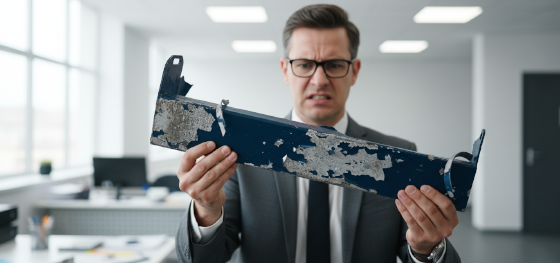
Naviguer avec succès parmi ces options chimiques évite des reconceptions coûteuses. L'évaluation d'un guide complet tableau des finitions de surface en moulage sous pression aide les ingénieurs à équilibrer leurs exigences esthétiques face à de graves menaces environnementales. Disséquons les phases critiques de préparation mécanique, comparons les revêtements polymères haut de gamme et éliminons définitivement les risques de chaîne d'approvisionnement multi-fournisseurs.
contenu :
Défense et esthétique : pourquoi se soucier de revêtir le métal ?
Préparation mécanique : poncer les défauts
Armure protectrice : polymères, bains et électricité
Détails à valeur ajoutée : traçabilité de marque permanente
Règles matérielles : assortir le métal à la peinture
Hub JUCHENG : la solution ultime clé en main de Shenzhen
FAQ : réponses honnêtes sur les cloques et les tolérances
Défense et esthétique : pourquoi se soucier de revêtir le métal ?
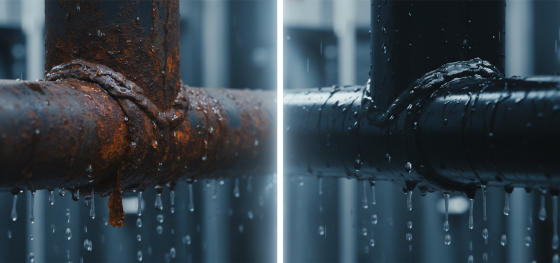
Les startups de matériel considèrent souvent les revêtements externes strictement comme un outil de marketing cosmétique. Laisser des alliages bruts exposés à la rosée du matin et aux fumées d'échappement industrielles déclenche une piqûre microscopique presque immédiatement. Créer un sceau chimique impénétrable arrête cette décomposition et bloque les interférences électromagnétiques qui pourraient ruiner vos circuits imprimés internes sensibles.
Repérer les défauts visuels tôt évite un gaspillage financier massif. Exécuter des inspections rigoureuses die casting surface defects troubleshooting ensures our technicians spot tiny cold shuts before we waste expensive plating chemicals on a defective raw part. You cannot simply paint over a deep structural crack and expect it to disappear.
Medical and food-grade applications absolutely demand sterile, non-porous barriers. Raw metal harbors bacteria in microscopic surface valleys. Wrapping the chassis in a high-density polymer glaze allows hospital workers to scrub the equipment aggressively with bleach without melting the underlying structure.
Préparation mécanique : poncer les défauts
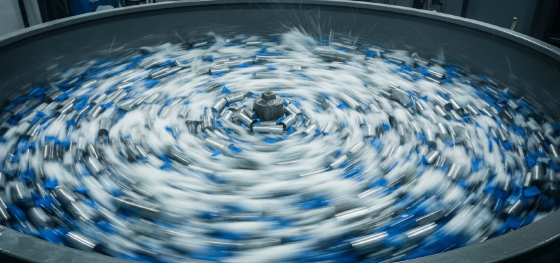
Liquid paint absolutely refuses to stick to microscopic manufacturing oils or sharp, jagged parting lines. You must physically alter the metallic canvas before applying any wet chemicals. Deploying automated vibratory finishing die casting techniques removes dangerous burrs from thousands of components simultaneously without racking up massive manual labor costs.
Smoothing out deep flow marks often requires aggressive human intervention. Utilizing dedicated polissage de moulage sous pression en alliage d'aluminium stations allows technicians to physically erase minor surface irregularities, creating the ultra-smooth foundational layer required for luxury consumer electronics.
When designers demand a stealthy, non-reflective tactical aesthetic, we rely on high-pressure abrasion. Blasting the metal with micro-media creates a perfectly uniform, grippy texture. Specifying bead blasting die casting masks minor cosmetic inconsistencies beautifully while providing an exceptional mechanical grip for subsequent liquid primers.
Armure protectrice : polymères, bains et électricité
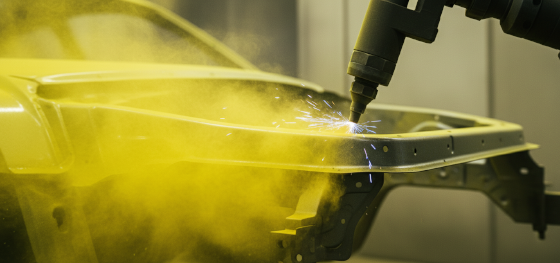
Slapping cheap aerosol color onto an industrial enclosure guarantees it will scratch off during the first field deployment. True commercial armor requires serious chemical bonding. Executing high-grade le revêtement par poudre de l'aluminium moulé sous pression fuses a thick, indestructible polymer shell directly to the substrate using electrostatic charges and heavy baking ovens.
Global automotive manufacturers require massive volume efficiency for their under-hood brackets. Submerging these parts in electrified vats delivers incredible rust defense. Using pièces moulées sous pression avec revêtement par électrophorèse covers the most intricate internal geometries with a perfectly even, micro-thin anti-corrosion layer that traditional spray guns simply cannot reach.
Understanding exactly comment peindre des pièces moulées sous pression requires managing the underlying chemistry to prevent outgassing blisters. We routinely apply a protective revêtement de conversion au chromate pour moulage sous pression layer first, sealing the microscopic pores of the metal before the final cosmetic liquid topcoat is ever sprayed.
Luxury hardware demands entirely different aesthetic properties. Achieving a flawless, mirror-like reflection requires a dense, heavy base material. Relying on electroplating zinc die cast components delivers breathtaking chrome and gold finishes that absolutely refuse to peel. High-silicon alloys struggle immensely with acidic baths, making l'anodisation de l'aluminium moulé sous pression notoriously difficult unless managed by top-tier metallurgical experts.
Détails à valeur ajoutée : traçabilité de marque permanente
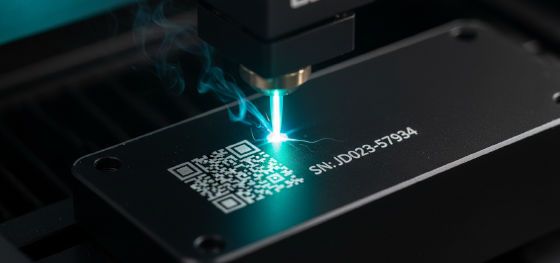
Delivering blank hardware to your assembly line creates a massive tracking liability. Medical device regulations mandate permanent, indestructible serial numbers directly on the chassis. Executing precision composants moulés sous pression marqués au laser burns high-contrast QR codes and safety warnings permanently into the protective coating without piercing the metal seal.
Integrating multi-color brand logos requires a different approach entirely. Applying custom die casting screen printing directly over a cured powder coat delivers vibrant, chemically resistant corporate branding without forcing you to ship the fragile components to a third-party print shop.
Règles matérielles : assortir le métal à la peinture
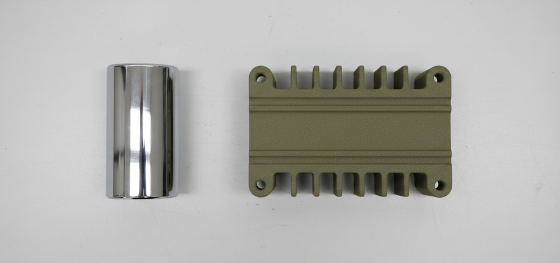
Selecting the wrong coating for your specific ingot grade causes violent chemical rejection. Finding the perfect die cast aluminum surface finish usually involves fighting high internal silicon levels, making heavy powder coats significantly safer and more reliable than attempting bright electroplating.
Heavy zinc alloys provide incredibly dense, non-porous outer skins right out of the mold. Perfecting a zinc die casting surface finish focuses heavily on high-end cosmetic chrome and nickel plating. The matrix below benchmarks how different alloys accept various industrial coatings.
| Coating Technology | Aluminum Compatibility | Zinc Compatibility |
|---|---|---|
| Revêtement par poudre | Excellent (Requires pre-baking) | Excellente |
| Bright Electroplating | Poor (Silicon causes blistering) | Flawless (Industry Standard) |
| Type III Hard Anodizing | Good (Turns dark gray/black) | Not Applicable |
| E-Coating | Excellente | Excellente |
Hub JUCHENG : la solution ultime clé en main de Shenzhen
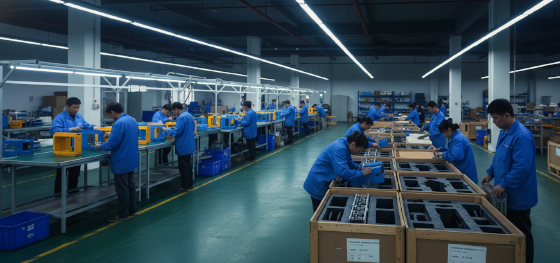
Fragmenting your supply chain between a foundry and a separate paint facility exposes your IP and ruins your production timeline. Operating our massive Shenzhen precision manufacturing hub gives JUCHENG absolute control over every single aesthetic millimeter, eliminating the finger-pointing that plagues hardware startups.
We melt the raw ingots, utilize heavy usinage CNC to tap the microscopic threads, and apply military-grade protective coatings inside the exact same building. Consolidating these processes drastically reduces your total manufacturing lead time and lowers your final unit invoice.
Stop paying for logistical friction and ruined paint jobs. Send your detailed 3D CAD files to our engineering team today. We will conduct a comprehensive aesthetic and structural review, perfectly matching your required corrosion resistance to the optimal factory process.
FAQ : réponses honnêtes sur les cloques et les tolérances

Will applying a heavy powder coat ruin the tight tolerances of my mounting holes?
Yes, thick coatings add measurable material to the surface. Our engineers proactively mask critical threaded holes with custom silicone plugs before baking to ensure your final assembly remains perfectly aligned.
What causes the paint to bubble and blister inside the curing oven?
Trapped internal gas porosity from the injection phase expands violently when exposed to high oven heat. We combat this by utilizing vacuum-assisted casting or carefully pre-baking the parts to release trapped gases safely.
Do I really need a chemical conversion coating if I am already painting the part?
Absolutely. Paint does not naturally bond well to bare metal. The chromate conversion layer acts like microscopic velcro, providing a ferocious chemical anchor that prevents the topcoat from peeling off.
Can vibratory tumbling completely remove deep mold seams and parting lines?
Tumbling softens sharp edges beautifully but cannot erase deep structural steps. Heavy parting lines require dedicated manual grinding or CNC face milling to achieve a perfectly flush exterior contour.

