


Cooling a BESS cabinet is not a matter of choosing the largest fan or air conditioner that fits. The goal is to keep cells and power electronics inside their permitted temperature range while limiting temperature differences, condensation, parasitic energy, maintenance, noise, and contamination.
The right BESS cabinet cooling method depends on heat load, climate, enclosure sealing, internal pressure drop, redundancy, service strategy, and lifecycle cost. This article explains how passive cooling, forced air, air conditioning, liquid cooling, and hybrid systems change the enclosure and its manufactured parts.
Begin With Heat Sources, Not Cooling Hardware
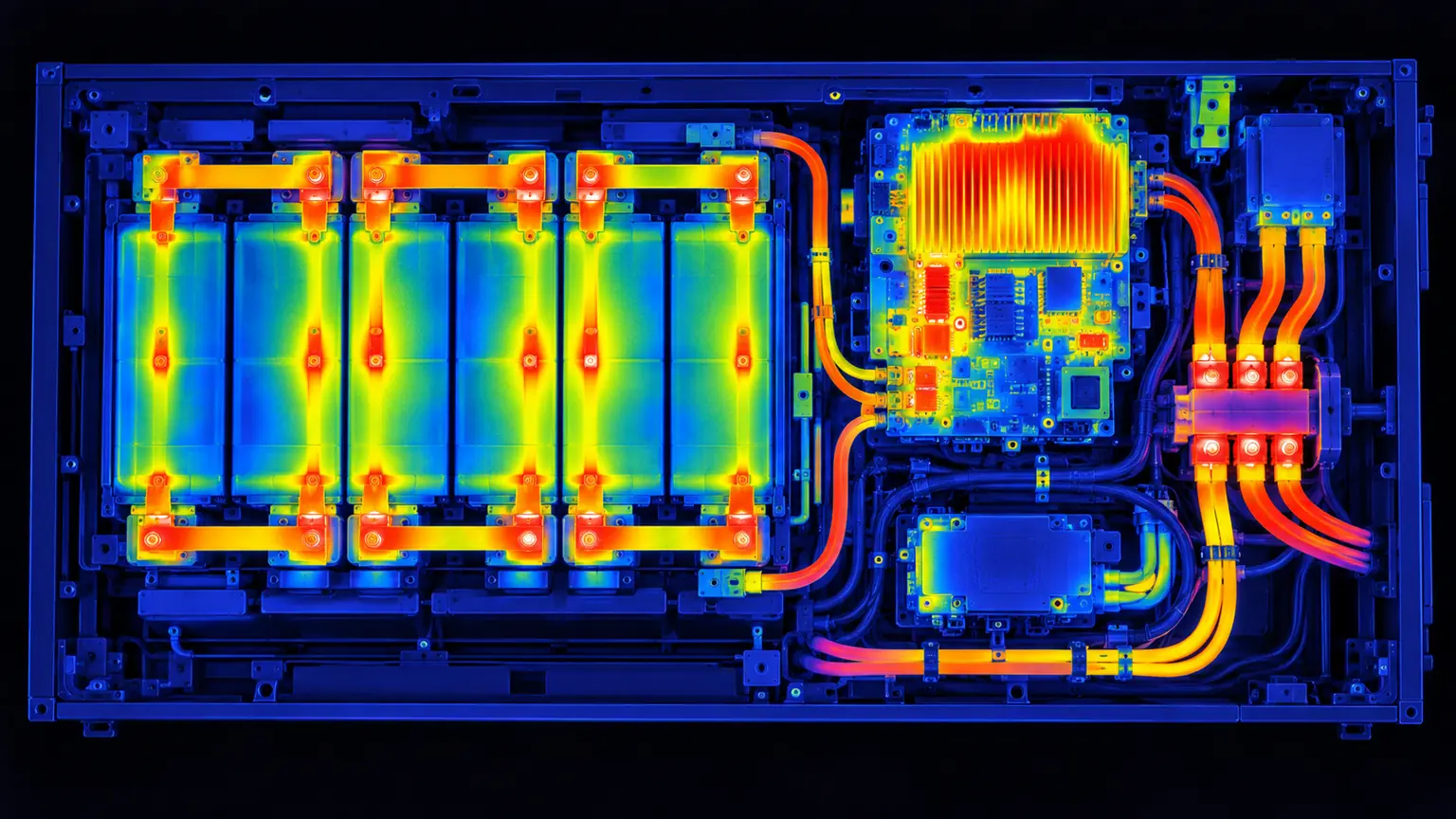
List each heat source and its operating condition: cells, busbars, contactors, inverters, power supplies, control electronics, and auxiliary equipment. Separate continuous losses from short peaks. Then map where heat enters the enclosure from solar exposure and ambient air.
A single cabinet heat-load number is not enough. Two layouts with the same total heat can have very different hot spots. Record allowable component temperatures, target cell-to-cell variation, inlet conditions, altitude, dust level, humidity, acoustic limits, and the consequence of a failed fan or pump.
Five Cooling Routes and Their Trade-Offs
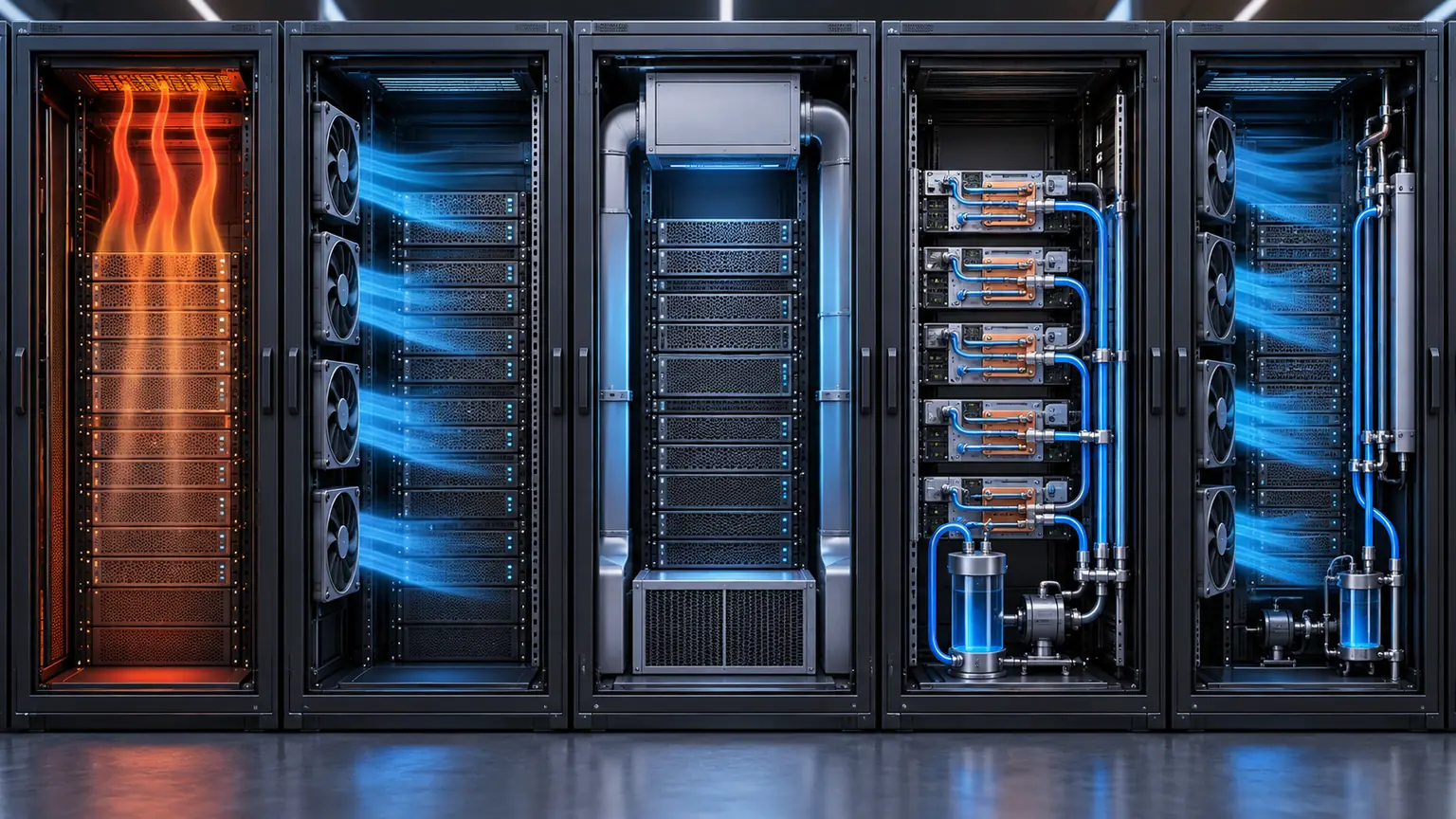
| Méthode | Best fit | Main benefit | Main design risk |
|---|---|---|---|
| Passive natural convection | Low heat load, favorable ambient | Few moving parts | Weak control of hot spots |
| Forced air | Moderate load, serviceable filters | Economical and flexible | Dust, noise, bypass flow |
| Closed-loop air conditioning | Sealed outdoor cabinets | Controlled internal air | Energy use and condensate management |
| Liquid cooling | High heat density and tight uniformity | Direct, compact heat removal | Leaks, manifolds, pump reliability |
| Hybrid | Variable climates or mixed loads | Balances efficiency and peak capacity | Control complexity |
Passive cooling
Passive systems use conduction, natural convection, and radiation. They work best when heat density is low and the ambient temperature leaves sufficient margin. Panel area, orientation, internal conduction paths, sun shields, and color all matter. Passive does not mean “no thermal design.”
Forced-air cooling
Fans increase heat transfer, but air follows the path of least resistance. Without ducts and baffles, much of the flow can bypass the cells that need it. Filters add pressure drop as they load, so fan selection should use the system curve rather than a free-air rating.
Air conditioning
A closed-loop air conditioner supports a sealed cabinet and tighter internal conditions. Size it for the real ambient envelope and internal load, then address condensate, short cycling, maintenance clearance, vibration, and the thermal bridge around its mounting opening.
Small Airflow Details Create Large Temperature Differences
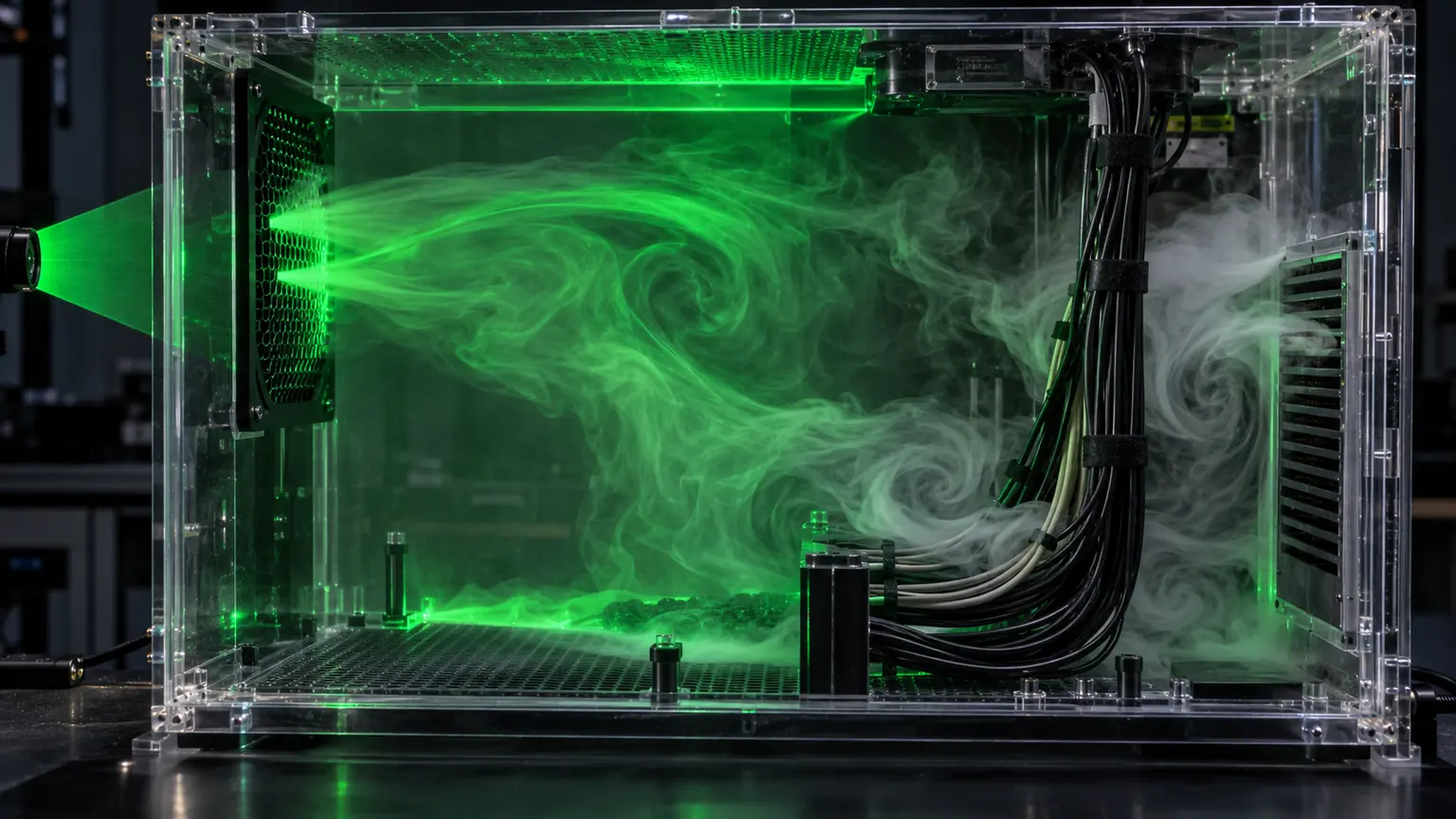
Air must have a defined inlet, useful route, and outlet. Seal gaps that create bypass paths. Provide enough plenum area to distribute flow. Avoid placing a temperature sensor in a locally cool jet that does not represent cell conditions. Components installed downstream of a heat source see warmer air and need separate checking.
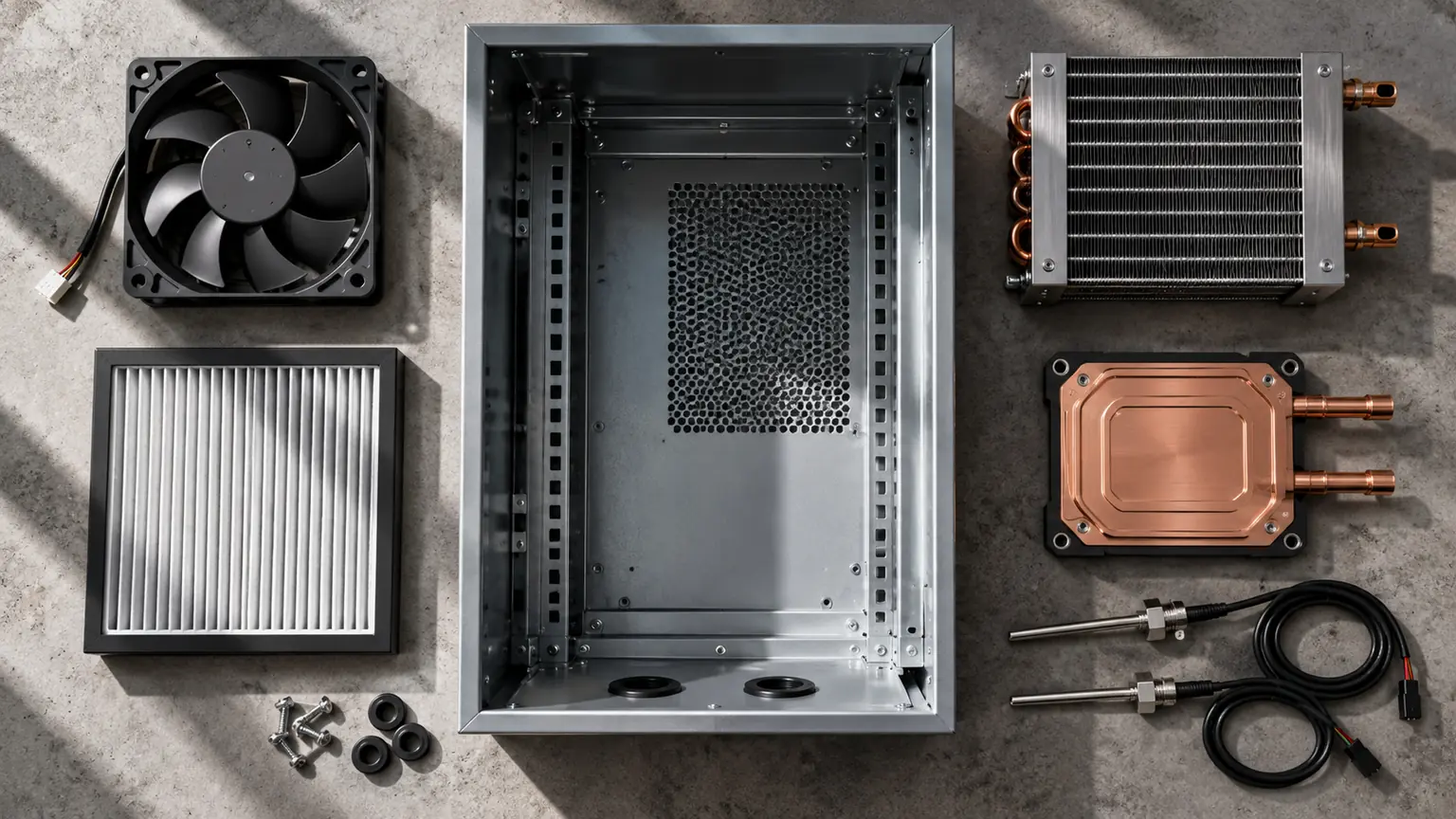
Sheet metal ducts, perforated plates, fan trays, and removable filter frames make airflow controllable and serviceable. Our sheet metal fabrication service can produce these features together with the cabinet, reducing fit-up errors between cooling hardware and enclosure panels.
Pressure drop is a design budget
Filters, louvers, guards, bends, narrow passages, heat exchangers, and packed modules all consume pressure. Track these losses early. An oversized fan cannot correct a short-circuit path that sends air around the battery rack.
Noise also deserves attention. High tip speed, turbulent grilles, rigid fan mounts, and panel resonance can turn a technically adequate system into an unacceptable installation.
Liquid Cooling Moves Precision Into the Hardware
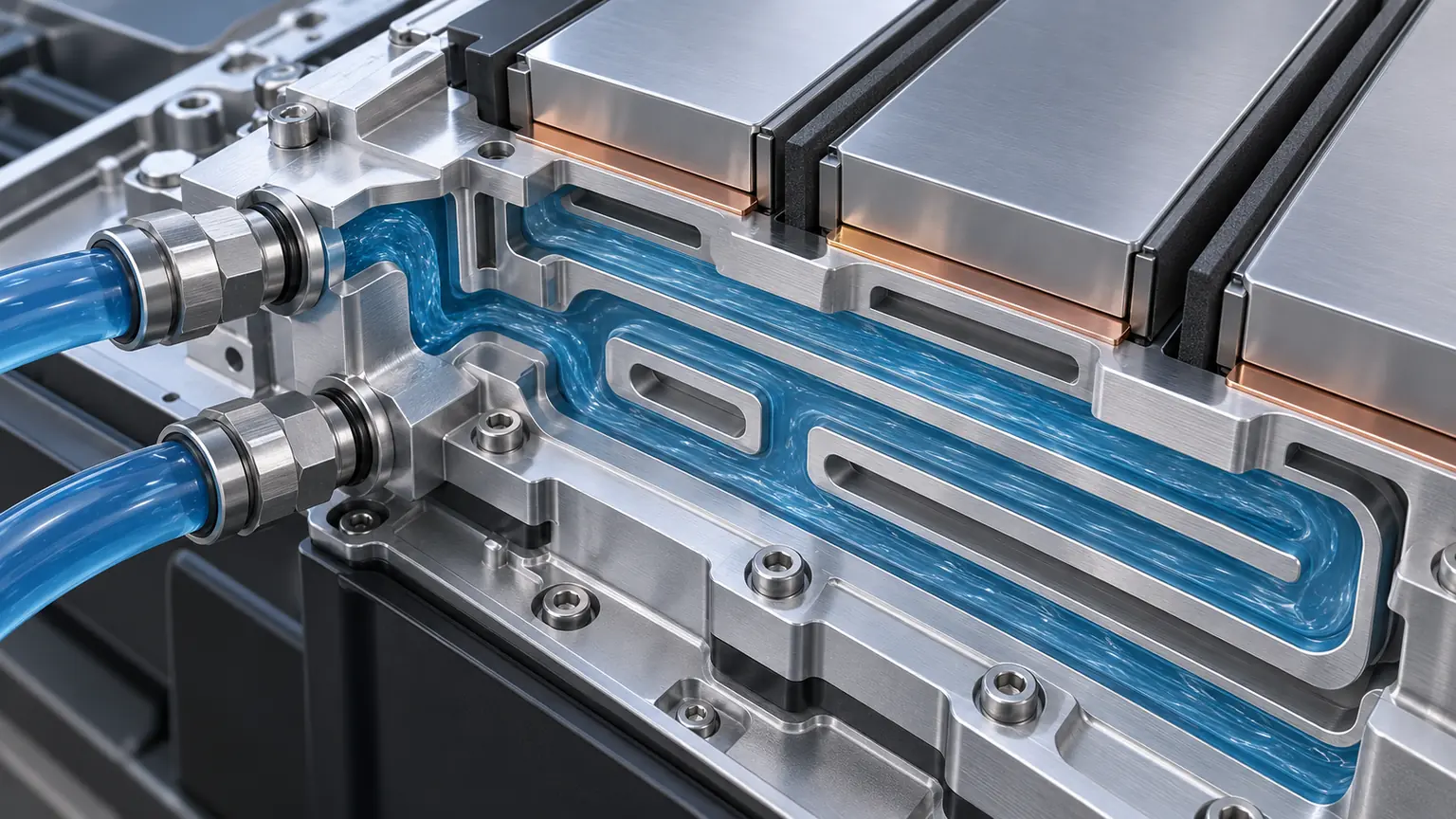
Liquid-cooled systems place cold plates or channels close to the heat source. Their success depends on channel geometry, contact flatness, thermal interface material, manifold balance, sealing grooves, connector access, and leak detection. Flow distribution must remain stable across parallel branches.
Machined aluminum cold plates offer controlled features and design flexibility for prototypes and lower volumes. The same engineering logic used for a CNC-machined heat sink applies to flatness, thermal contact, surface finish, and attachment, but liquid passages introduce pressure integrity and cleanliness requirements.
For a prototype, inspect channel dimensions, sealing lands, port position, and plate flatness before assembly. Pressure and leak testing should use documented limits appropriate to the actual design. If bonded or welded plates are used, the joining process and distortion controls become part of the thermal specification.
A Thermal Validation Plan in Four Runs
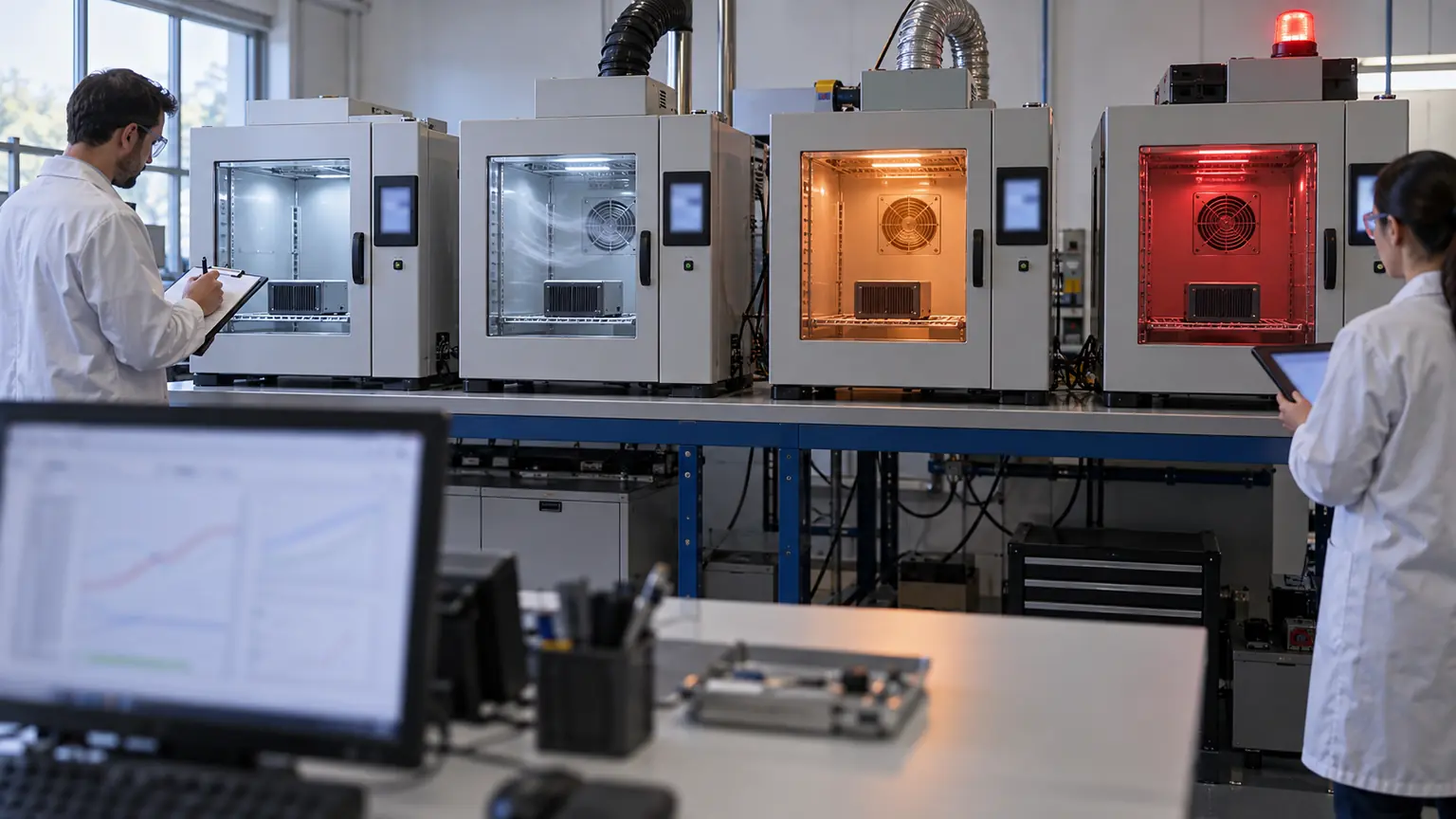
- Baseline run: Characterize ambient conditions and sensor accuracy with the system stable.
- Rated-load run: Measure component temperatures, inlet-to-outlet rise, and cell temperature spread.
- Boundary run: Repeat at the most demanding specified ambient, filter condition, or solar load.
- Fault run: Evaluate a failed fan, blocked filter, pump issue, or other defined single fault without exceeding the approved safety plan.
Instrument the hot spots predicted by analysis, but also place sensors where unexpected recirculation may occur. Record cooling power consumption and stabilization time, not only peak temperature. A design that stays cool by consuming excessive auxiliary power may be poor at system level.
Rapidly changing programs benefit from fabrication de prototypes of ducts, cold plates, brackets, and cabinet sections before production tooling. Physical tests expose leakage, assembly access, fan vibration, and sensor-placement problems that idealized models may miss.
BESS Cooling Questions, Answered
Is liquid cooling always more effective than air cooling?
Liquid cooling can remove high heat density and improve uniformity, but it adds pumps, manifolds, seals, leak risk, and maintenance. Effectiveness must be judged against the project’s heat load and lifecycle requirements.
Why do cabinets have hot spots even with large fans?
Common causes include bypass airflow, blocked passages, uneven resistance, poor sensor location, recirculation, and components heating downstream air.
How should condensation be controlled?
Manage surface temperatures, dew point, air exchange, insulation, drainage, control logic, and operating transitions together. Sealing alone does not eliminate moisture already inside the cabinet.
What should be prototyped first?
Prototype the highest-risk thermal interface: airflow distribution hardware for fan systems, or cold plates, manifolds, seals, and contact flatness for liquid systems.
Cooling Capacity Is Only Half the Design

A robust BESS thermal system removes heat where it is generated, maintains uniformity, survives dirty or extreme conditions, and remains serviceable. Jucheng Precision supports this work with CNC-machined thermal components, sheet metal cabinets and ducts, 3D-printed airflow prototypes, surface finishing, and low-volume assembly.

