


Moulage par injection pour véhicules : plastiques de précision et surmoulage
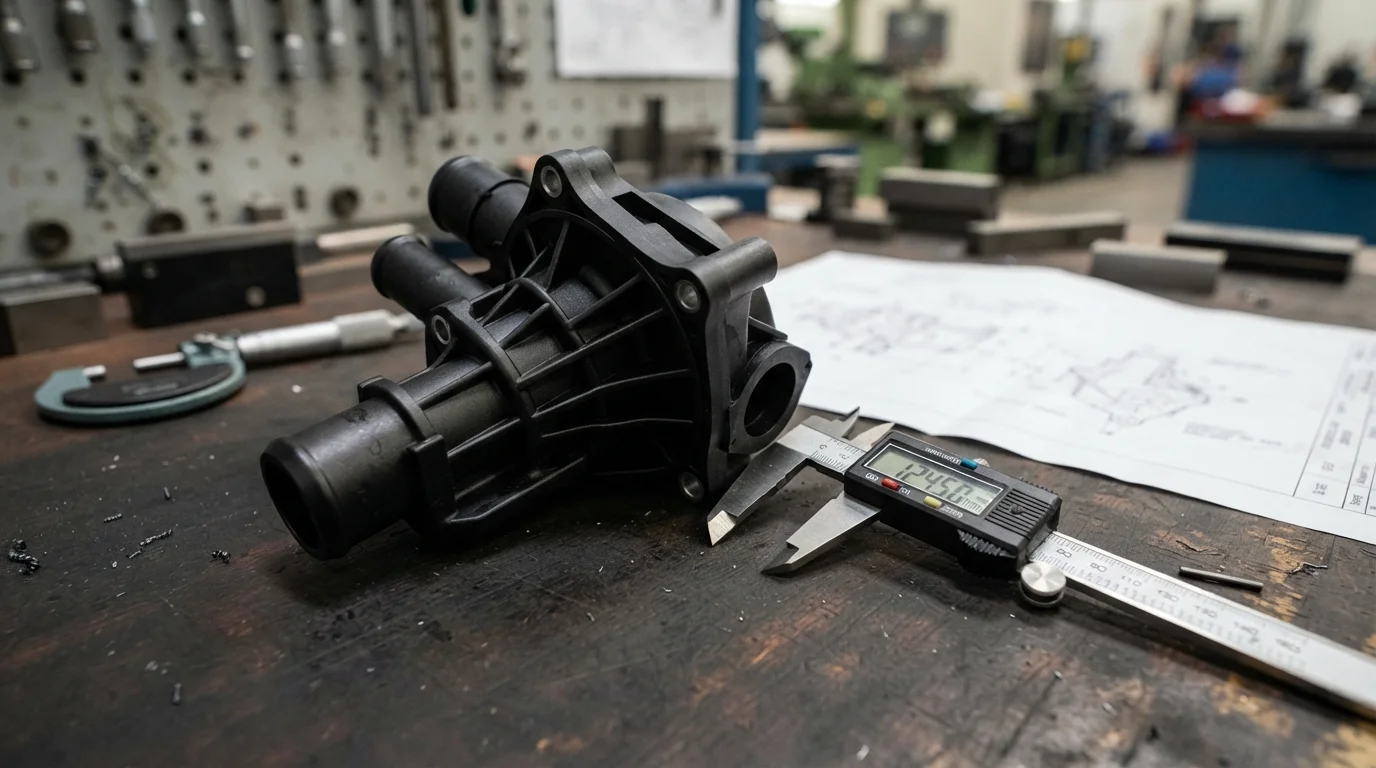
La création d'habitacles durables, de garnitures extérieures résistantes aux intempéries et de réservoirs de fluides fiables sous le capot nécessite des capacités de traitement des polymères haute performance. Lorsque les ingénieurs automobiles spécifient des éléments structurels en plastique qui doivent résister à des cycles thermiques sévères et à une exposition chimique, l'utilisation du moulage par injection automobile devient une étape critique du projet. Sans technologie de presse multi-empreintes avancée et sans surmoulage plateformes spécialisées, la production de composants multi-matériaux complexes avec une ergonomie au toucher doux reste impossible.
L'utilisation d'un partenaire expérimenté en prototypage rapide garantit que les plastiques techniques personnalisés passent en douceur des modèles 3D numériques aux phases de test fonctionnel robustes. Examinons la mécanique de la fonte des polymères et les protocoles de presse en plusieurs étapes qui pilotent la fabrication moderne des intérieurs et extérieurs de véhicules.
Module 1 – Définition et principes de fonctionnement du pressage des polymères
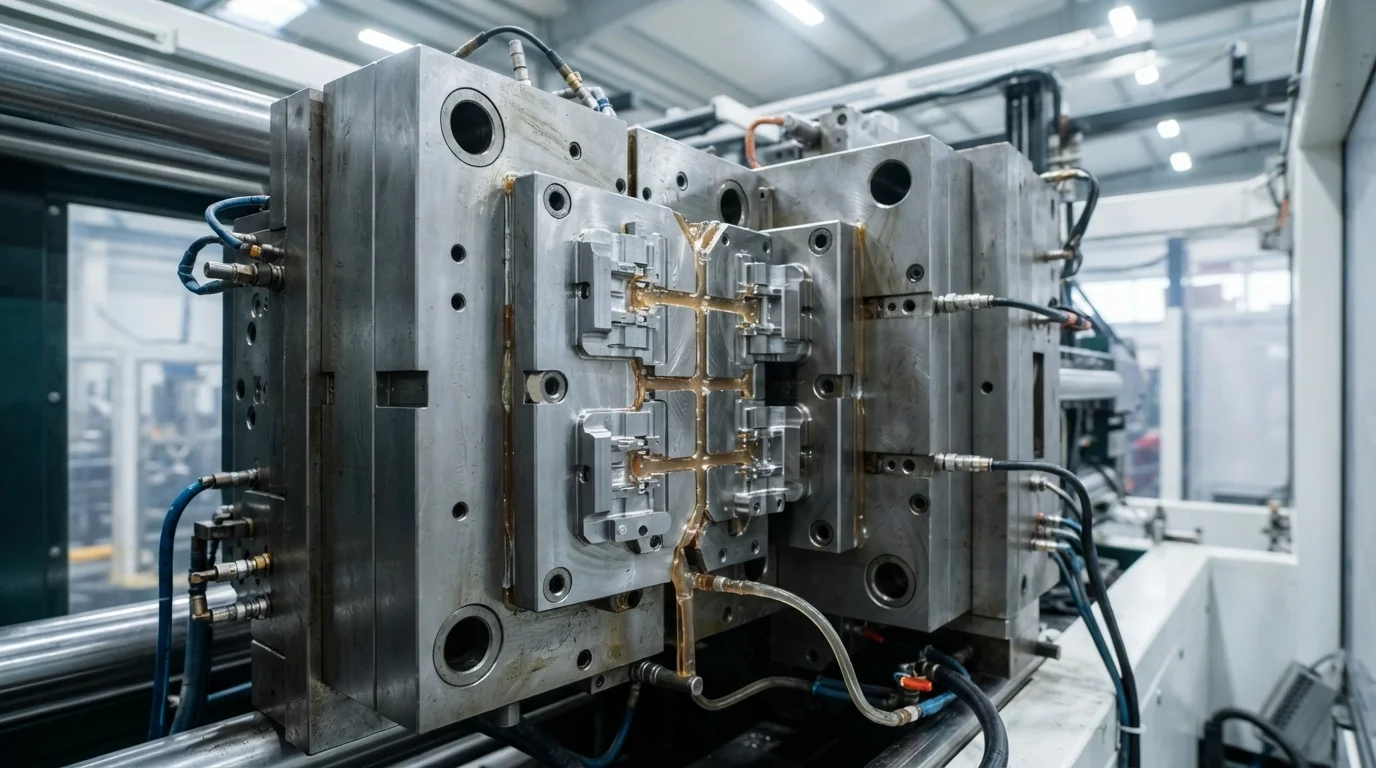
Le moulage par injection de plastique est une méthode de fabrication à grande vitesse qui force des granulés thermoplastiques liquéfiés dans des cavités de moule en acier usinées avec précision sous une pression hydraulique intense. Le principe de fonctionnement repose sur une vis alternative qui fait fondre les granulés de polymère dans un cylindre chauffé, injecte la matière fondue dans les moitiés de moule fermées et la refroidit rapidement en une géométrie solide. Alors que les structures métalliques sont souvent façonnées par usinage CNC, les intérieurs de véhicules complexes et les boîtiers fonctionnels reposent entièrement sur des techniques de moulage efficaces.
Pour exécuter des flux de travail structurés de moulage thermoplastique sur des composants en polymère technique, les techniciens peuvent suivre ces étapes pratiques :
- Déshumidification de la résine : Séchez les granulés de plastique hygroscopiques dans des trémies à dessiccant spécialisées pour éliminer les bulles d'humidité internes.
- Plasticizing and Melting: Rotate the reciprocating screw inside a zoned heating barrel to achieve uniform polymer melt consistency.
- High-Pressure Injection: Clamp the steel tool securely and shoot liquid resin into cavity spaces, followed by controlled holding pressure.
Module 2 – Scénarios d'application principaux
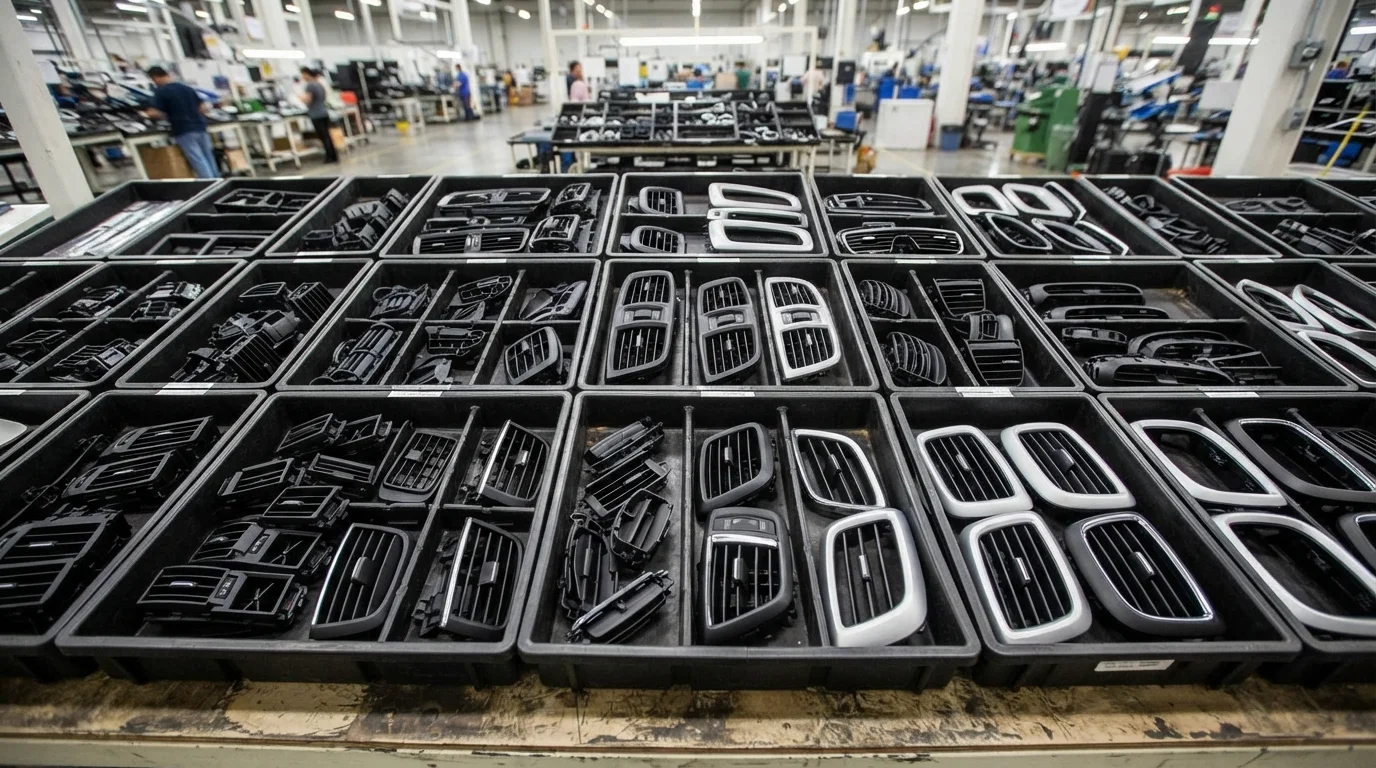
Precision polymer processing is vital across ergonomic cabin controls, intricate ventilation distribution, and secure electrical distribution networks where visual appeal and chemical resistance dictate consumer satisfaction. When engineering teams build dashboard components, deploying specialized moulage par injection automobile cells solves critical multi-material assembly challenges. Feedback from professional prototyping groups on Reddit and Facebook indicates that dual-shot molding eliminates secondary bonding steps.
Les principaux secteurs d'application comprennent :
- Interior Controls: Fabricating dual-material dashboard knobs and soft-touch steering wheel grips via 2-shot overmolding.
- Contrôle climatique : Molding complex dashboard air vent louvers, adjustable grilles, and directional duct connectors.
- Under-the-Hood: Constructing durable coolant pump housings and weather-sealed electrical fuse box covers.
Module 3 – Facteurs clés de sélection pour la réussite du projet
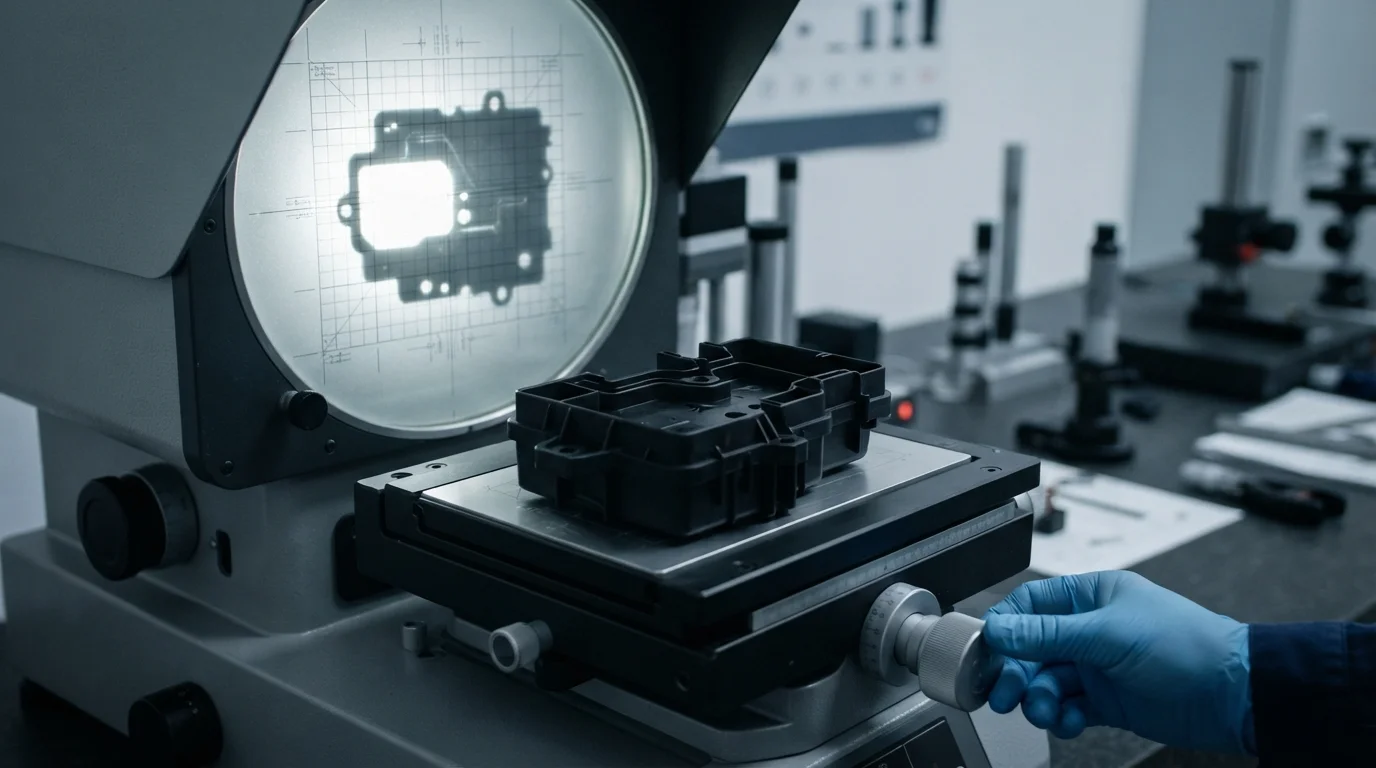
When specifying plastic components for vehicle trials, engineering teams must weigh resin thermal deflection limits, structural shrinkage rates, and multi-cavity tooling consistency. Evaluating these core parameters ensures your parts survive harsh cabin environments.
| Automotive Plastic Grade | Propriété mécanique clé | Primary Vehicle Application |
|---|---|---|
| PA66 + 30% GF | High rigidity, excellent heat and chemical resistance | Under-the-hood coolant pump housings, thermostat covers |
| PC / ABS Blend | Superior impact strength and smooth surface cosmetics | Interior dashboard bezels, center console panels |
| POM (Acétal) | Low friction coefficient and high fatigue endurance | Precision mechanical gears, window regulator clips |
Module 4 – Conseils d'installation et d'entretien
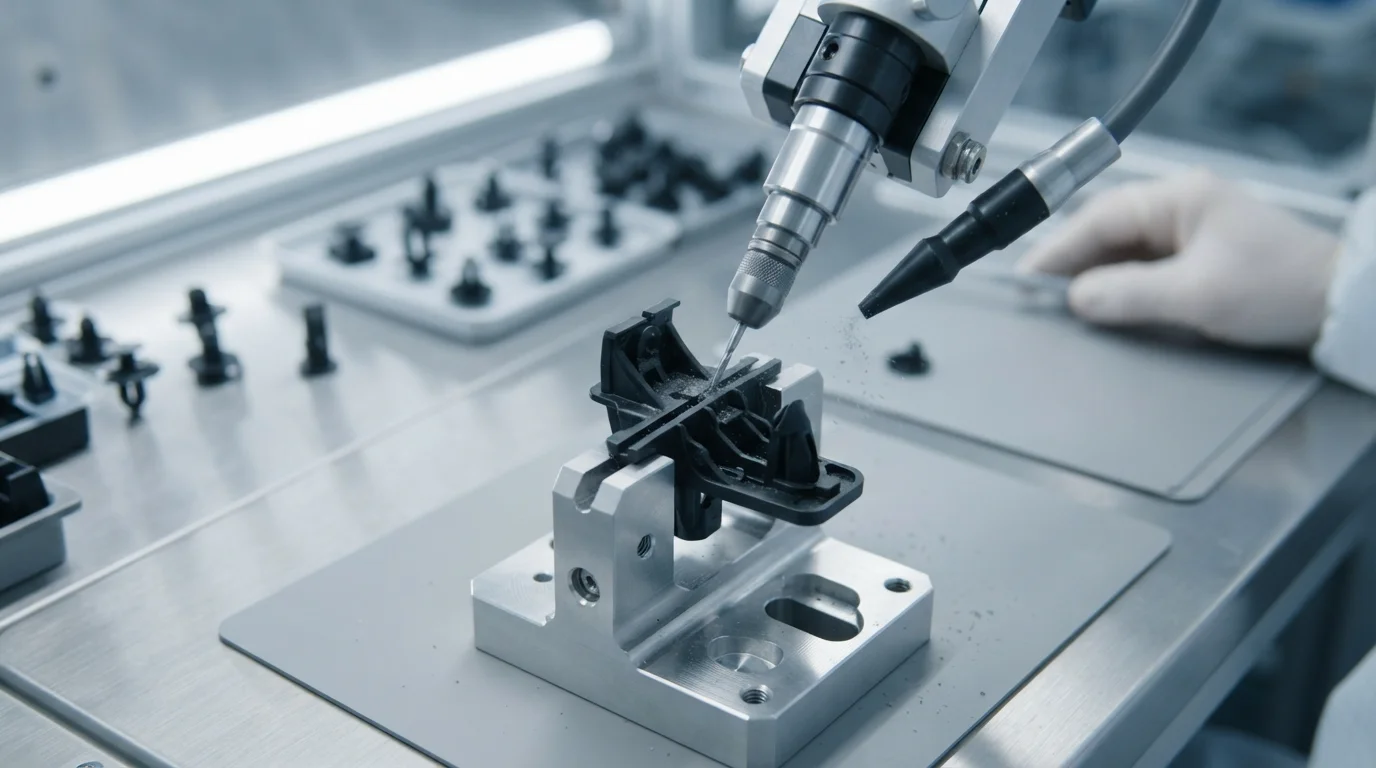
Proper shop-floor handling and routine mold cleaning safeguard precision polymer parts across active vehicle prototyping stages. Protecting molded snap-fits from assembly strain ensures long-term operational alignment.
Conseils clés d'installation et d'entretien :
- Snap-Fit Alignment: Guide plastic clips straight into mating channels to prevent micro-fracturing delicate latch tabs.
- Resin Drying Audits: Verify moisture content levels regularly using hygrometer meters prior to running hygroscopic nylons.
- Vent Cleaning: Clear trapped gas deposits and polymer volatiles out of mold vent lines every few thousand cycles.
Module 5 – Foire aux questions (FAQ)
1. What is 2-shot injection molding and why is it used in vehicles?
2-shot molding injects two different thermoplastic materials in a single automated cycle, creating seamless soft-touch grips on rigid knobs without secondary glue bonding.
2. Which engineering plastics perform best under automotive hoods?
Glass-filled polyamides like PA66+GF30 are heavily favored due to their extreme thermal deflection points and superior chemical resistance against engine oils.
3. How do mold temperature controllers affect plastic part shrinkage?
Precise mold thermal regulation stabilizes polymer crystallization rates, preventing warpage and ensuring consistent linear part dimensions.
4. Can complex dashboard louvers with thin walls be successfully molded?
Yes, high-pressure injection molding combined with optimized gate placement allows intricate louver ribs and thin walls to fill completely.
5. What prevents short shots when molding high-viscosity resins?
Proper barrel temperature profiling, high injection speeds, and generous runner cross-sections prevent premature resin freeze before cavity filling finishes.
6. How does Jucheng Precision support automotive plastic molding programs?
Jucheng Precision operates 35+ specialized injection presses ranging from 50T to 650T under strict IATF 16949 quality management systems.
Module 6 – Pourquoi choisir JUCHENG pour votre projet
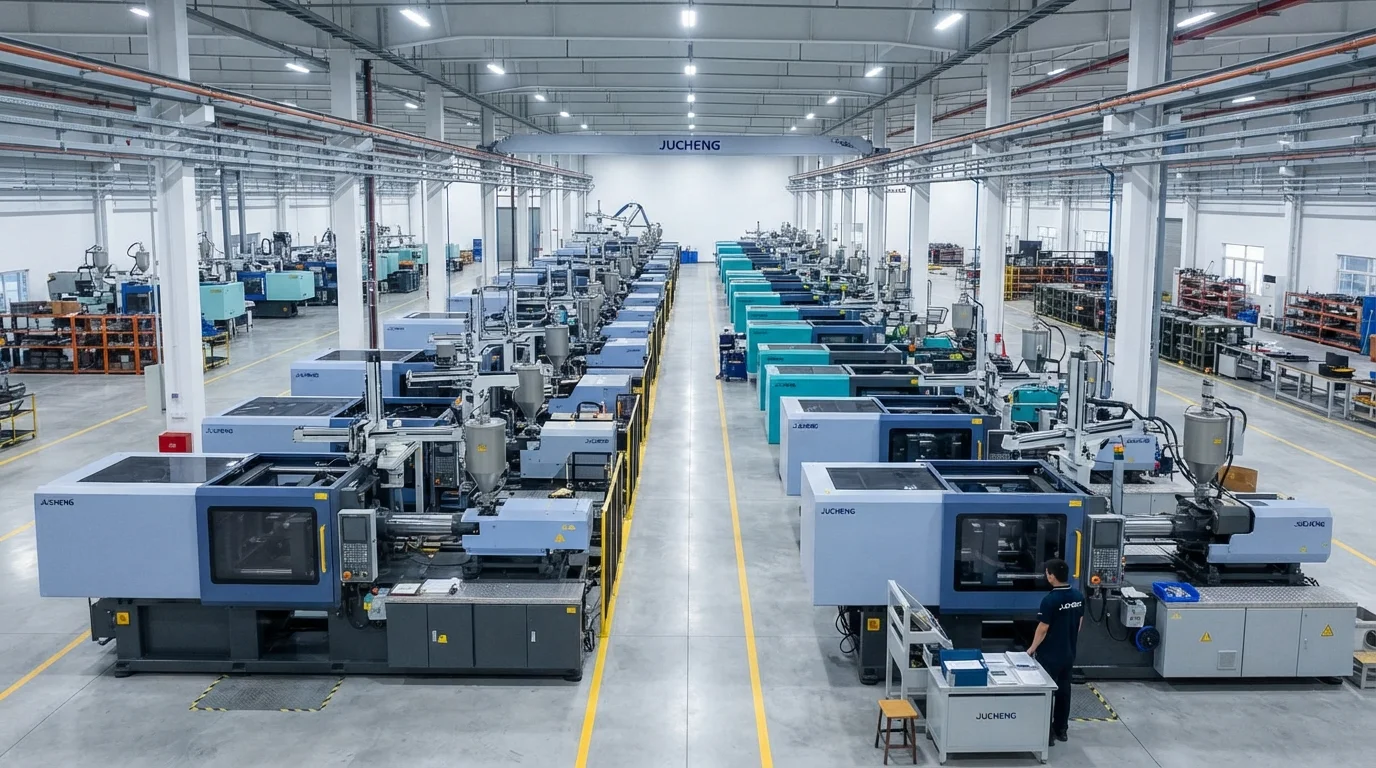
Achieving uncompromising plastic component quality requires an experienced manufacturing partner. JUCHENG supports hardware innovators by delivering comprehensive analyses DFM gratuites 24h/24 reviews that analyze draft angles, wall uniformity, and gating positions prior to tool cutting. Founded in Shenzhen in 2012 with an 8,000-square-meter facility in Dongguan, our factory houses 150+ advanced machines, including a dedicated press fleet of 35+ injection molding machines ranging from 50T to 650T.
Backed by ISO 9001, ISO 14001, ISO 13485, and IATF 16949 certifications, our engineering teams ensure that executing high-performance moulage par injection automobile programs achieves structural precision and absolute batch consistency.
Ready to Mold Your Critical Automotive Plastic Components?
Upload your 3D models today to receive instant feedback, competitive pricing, and professional DFM analysis from our seasoned engineering experts. Let JUCHENG bring your complex designs to life with unmatched speed and reliability!

