


An automotive functional prototype should answer a defined engineering question, not merely resemble the final part. It may prove that a mechanism moves, a sensor sees through its window, a bracket survives installation, a housing protects electronics, or a subassembly can be serviced. The manufacturing process should therefore be selected around the decision the prototype must support.
A useful prototype is explicit about what it represents and what it does not. A CNC-machined aluminum part may be ideal for dimensional and strength checks, while a 3D-printed polymer part may be better for packaging or airflow. When the question is material behavior, a production-representative molding route may be necessary.
Start with the decision, not the part number
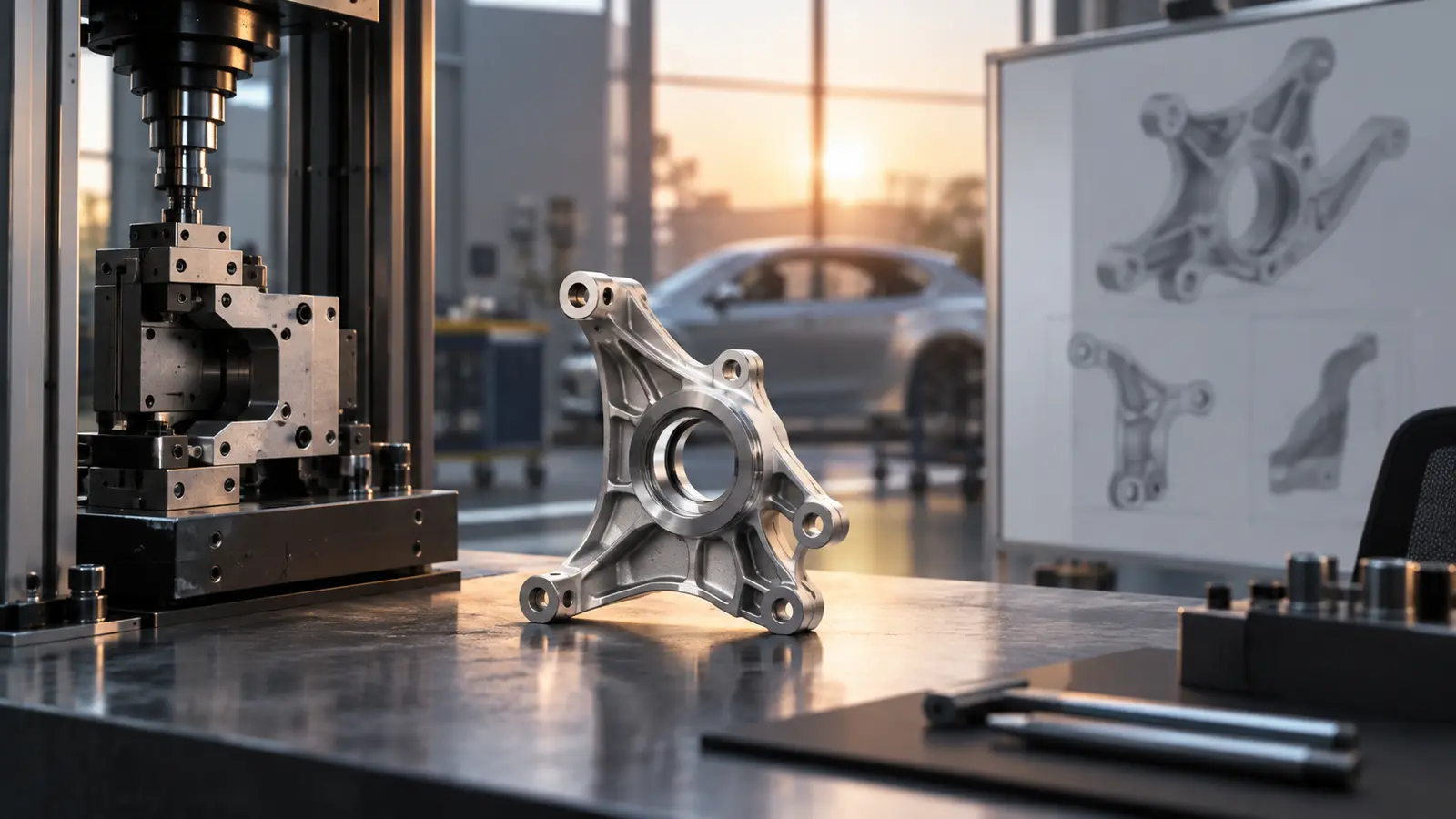
Before requesting a quote, write one sentence that describes the unknown. Examples include: Will the latch survive 500 operating cycles? Does the sensor remain aligned after vibration? Can a technician install the housing with the available tool? Does the enclosure keep the electronics within the intended temperature range? Each question changes the prototype geometry, material, inspection, and test method.
Separate appearance, fit, function, and production-readiness objectives. A visually accurate model can have weak mechanical behavior; a strong machined prototype can have an unrealistic molded surface; a low-cost printed model can prove clearance while saying little about heat or chemical exposure. The automotive rapid prototyping workflow is most useful when the part is reviewed with its mating components.
Make the prototype representative of the risk
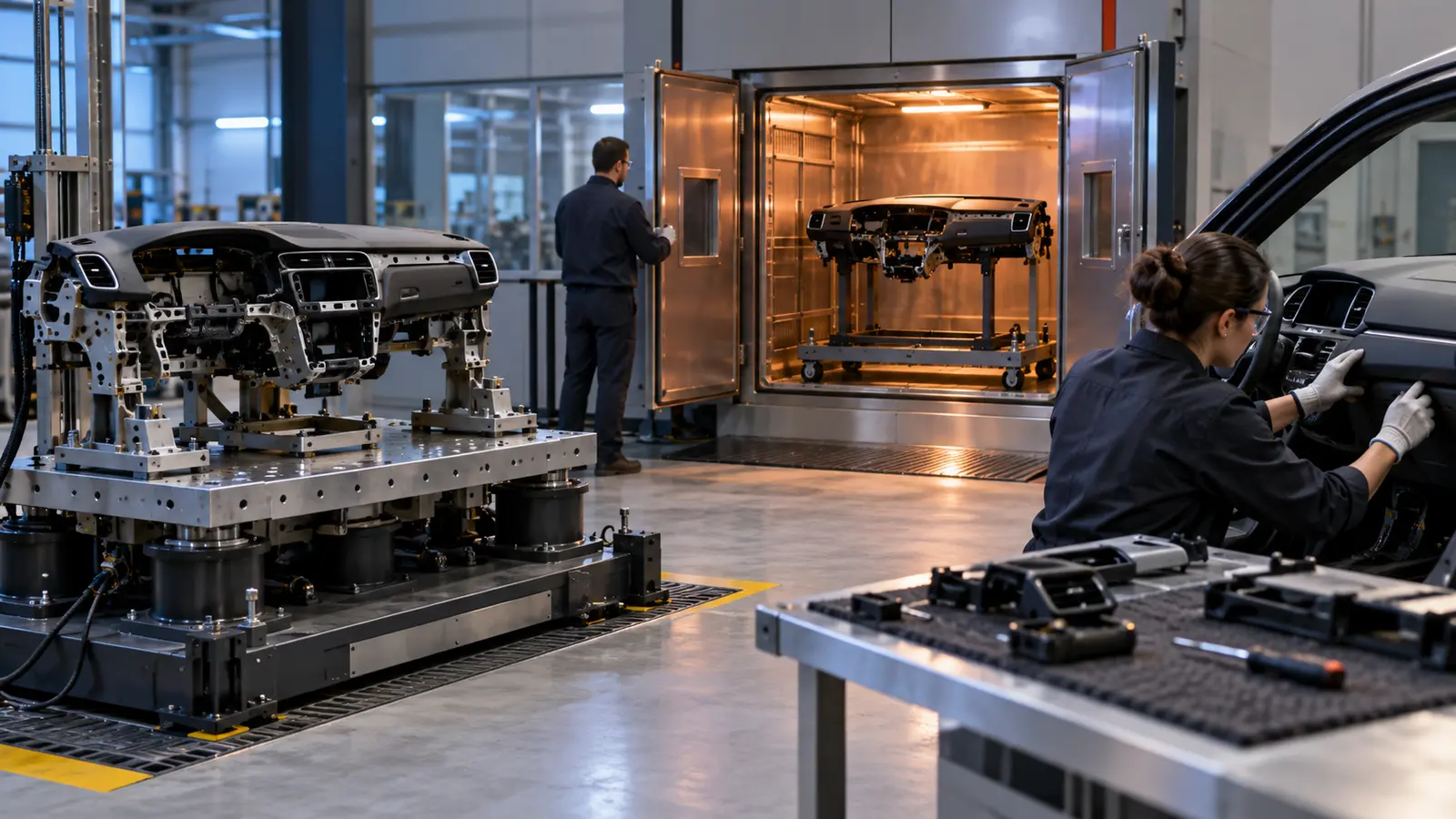
| Validation question | What should be representative? | Typical evidence |
|---|---|---|
| Fit and clearance | Datums, interfaces, and envelope | Assembly measurement |
| Thermal behavior | Material, wall, and heat path | Temperature mapping |
| Résistance | Load path and critical joints | Load or fatigue test |
| Assembly effort | Fasteners, access, and sequence | Build record |
A prototype does not need every production characteristic at once. It does need the characteristics that control the decision. Mark critical datums, load-bearing surfaces, snap features, seals, threaded inserts, and connector interfaces on the drawing. This makes it easier for the manufacturer to propose a process without silently changing the purpose of the part.
Select the manufacturing process around the test
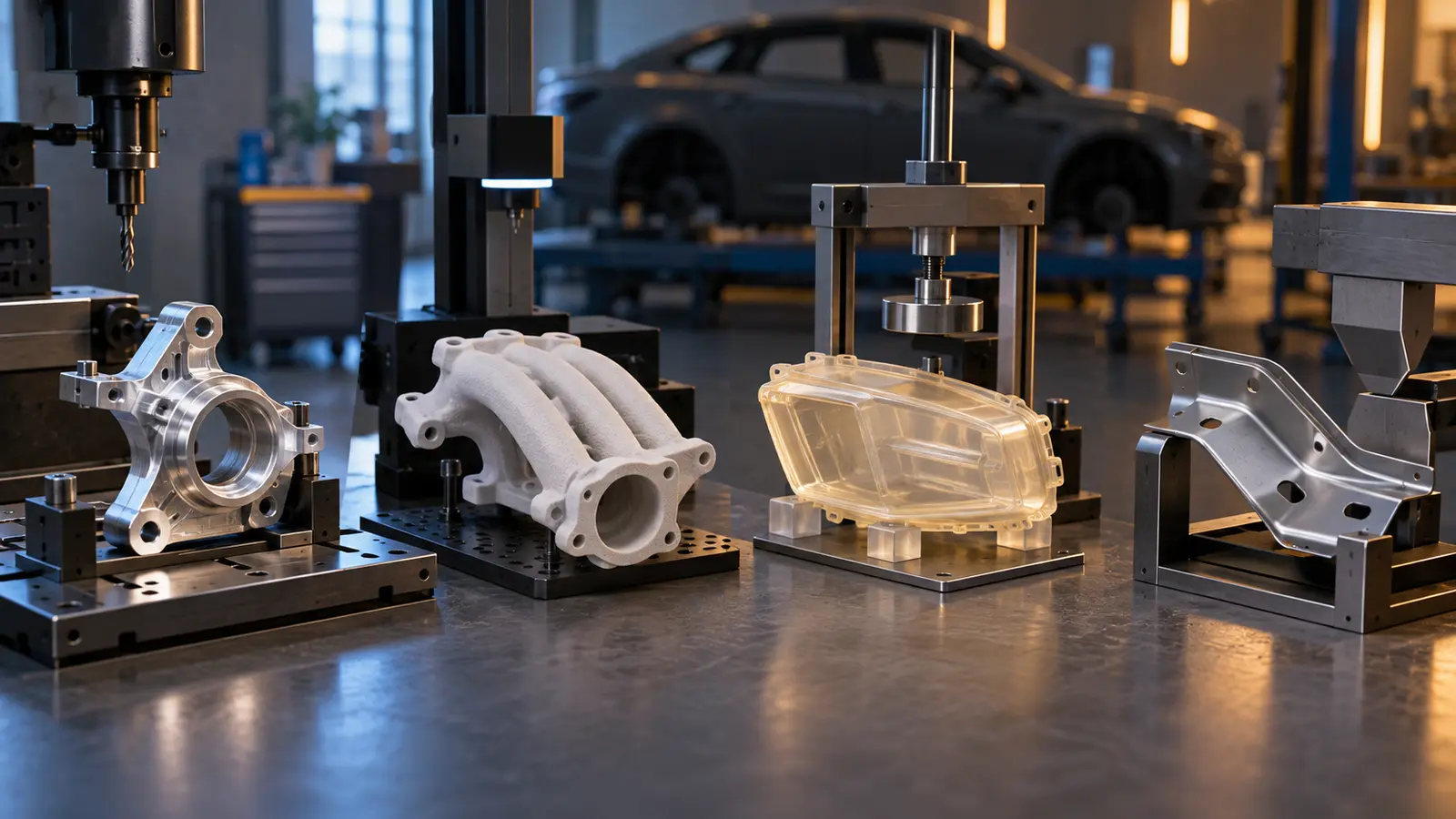
CNC machining is effective for rigid components, accurate bores, mounting surfaces, and parts that need close dimensional control. Additive manufacturing can expose complex geometry quickly and is useful for packaging, ducts, brackets, and ergonomic studies. Sheet metal fabrication is a strong fit for formed enclosures, shields, and brackets. Vacuum casting can supply short runs of polyurethane parts with useful appearance and handling characteristics. Low-volume injection molding becomes more relevant when the polymer behavior, texture, or assembly repeatability must resemble production.
Le 3D printing service can reduce iteration time, but the quotation should state orientation, material, finishing, and the limits of the result. A mixed prototype strategy is often more accurate than forcing every feature into one process: machine a precision interface, print a complex cover, and use a molded or cast component where material behavior matters.
Build the test plan before the parts arrive
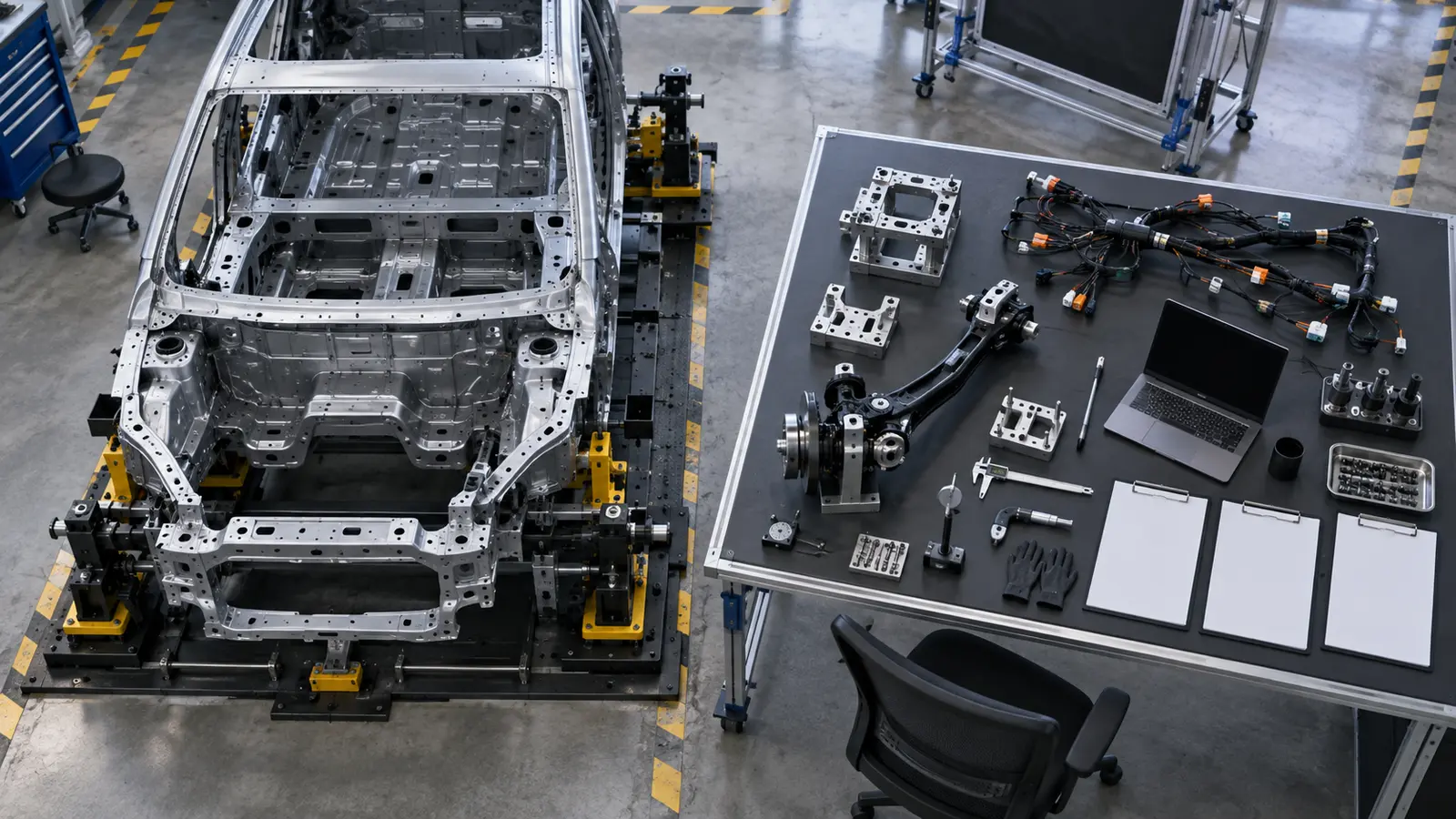
- Define the acceptance condition and measurement method.
- Record the prototype material, process, finish, and critical dimensions.
- Install the part using the intended tools and sequence.
- Expose it to the load, temperature, vibration, moisture, or chemical condition that matters.
- Document failure location, measurement, photographs, and the next design action.
Testing only on a workbench can hide system-level problems. Check cable routing, fastener access, connector engagement, gaps, flushness, movement, noise, and service clearance in the real assembly. If the prototype is not production-representative, write that limitation into the test report instead of treating a pass as final evidence.
Turn findings into the next revision
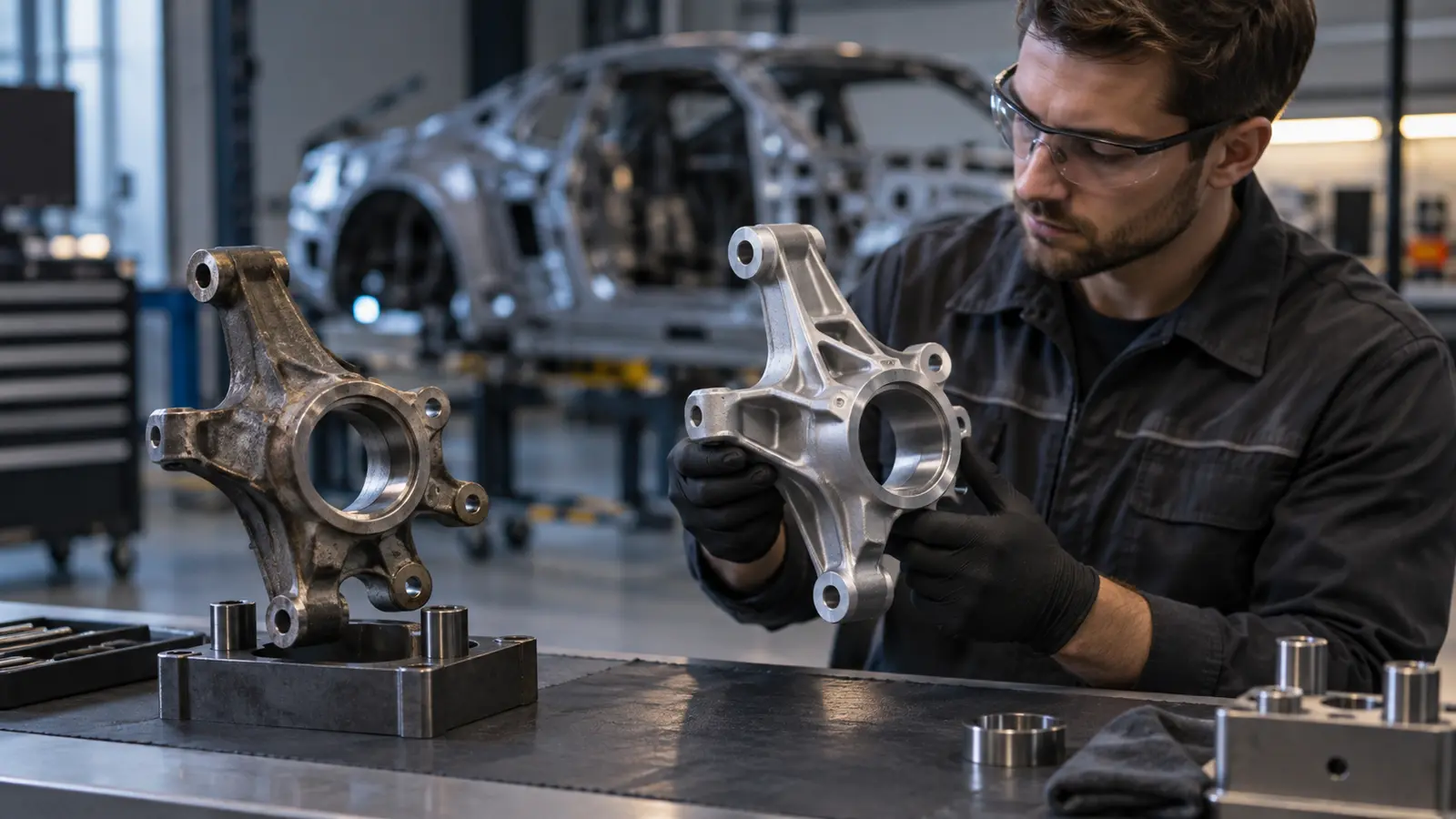
The most valuable output is not simply a pass or fail. It is a traceable connection between the observed result and the feature that caused it. Record whether the issue came from geometry, material, process, tolerance, joining, finishing, or assembly sequence. Then decide whether the next build should change one variable or several.
A complete RFQ should include the CAD model, drawing, mating parts, target quantity, test objective, material preference, finish, inspection requirements, and delivery milestones. Ask the manufacturer to identify process assumptions and any feature that should be redesigned before sampling. This turns functional prototyping into a controlled bridge toward pilot and production manufacturing.
Frequently Asked Questions

What makes a prototype functional?
It uses enough representative geometry, material, interfaces, or processes to answer a defined engineering question under a stated test condition.
Should one prototype use one process?
Not necessarily. Different questions may justify CNC machining, additive manufacturing, sheet metal, molding, casting, or a coordinated combination.
How many prototypes should be ordered?
Order enough to cover assembly learning, destructive or environmental tests, and a controlled revision. The number depends on the risk and test plan rather than a fixed rule.
What should an RFQ include?
Include the model, drawing, interfaces, quantity, material target, tolerance, finish, inspection plan, test conditions, and required delivery stages.

