


Should your material dictate your design? Or should your design command your material? This is a fundamental question every great designer must answer.
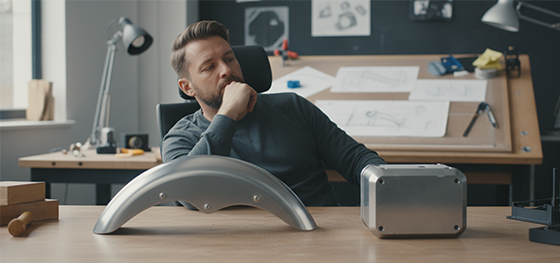
In the world of aluminum alloys, this question is perfectly embodied in a classic showdown. It is a battle between two very different philosophies, two very different personalities.
This is the contest of 5052 aluminum vs 6061. It is a choice between a material that loves to be formed, and a material that loves to hold its form. Choosing the right one is key to your project's success.
contenu :
Meet the Artist: 5052 Aluminum
Meet the Engineer: 6061 Aluminum
Head-to-Head: A Table of Truth
Making the Right Call
Meet the Artist: 5052 Aluminum

5052 aluminum is the artist of the alloy world. Its personality is soft, ductile, and willing to be shaped. Its primary superpower is its excellent formability.
It can be bent into tight radii, stretched, and formed into complex curves without cracking. This is because it is a non-heat-treatable, work-hardening alloy. Its main alloying ingredient is magnesium, which gives it this wonderful ductility.
This makes 5052 the undisputed king of sheet metal fabrication. If your design involves creating a flowing, organic shape from a flat sheet—like a custom motorcycle fuel tank or a marine hardware component—5052 is your go-to material. It also has the best corrosion resistance of all common non-heat-treatable alloys, making it perfect for those marine applications.
Meet the Engineer: 6061 Aluminum
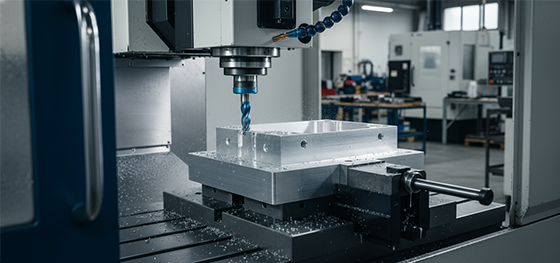
If 5052 is the artist, then 6061 aluminum is the engineer. Its personality is strong, reliable, and structural. Its primary superpower is its excellent strength-to-weight ratio.
6061 is a heat-treatable alloy. This means after it is formed, it can be put through a heating and aging process (creating the T6 temper) that significantly increases its strength. It is much stronger and harder than 5052.
This makes it the champion of machined structural components. When you need to create a rigid, load-bearing part like a robot arm, a machine baseplate, or a bicycle frame, 6061 is the superior choice. It is also one of the most versatile usinage CNC de l'aluminium alloys, offering a great balance of machinability, weldability, and corrosion resistance.
Head-to-Head: A Table of Truth
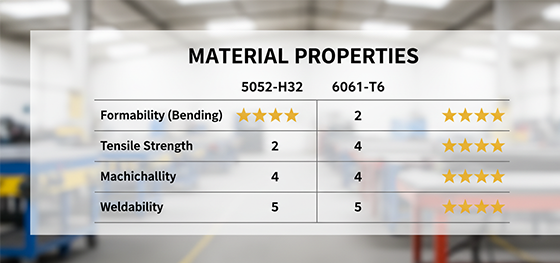
Mettons les deux côte à côte pour voir clairement leurs différences.
| Propriété | Aluminium 5052-H32 ("L'Artiste") | Aluminium 6061-T6 ("L'Ingénieur") |
|---|---|---|
| Superpouvoir | Excellente formabilité | Excellent rapport résistance/poids |
| Résistance à la traction | Moyen (~228 MPa) | Bon (~310 MPa) |
| Utilisation principale | Fabrication de tôlerie | Usinage CNC |
| Soudabilité | Excellente | Excellente |
| Résistance à la corrosion marine | Excellente | Bon |
Making the Right Call

Le choix dans la bataille entre Le débat entre l'aluminium 5052 et 6061 est un choix de priorité.
Vous devez vous demander : quelle est la fonction principale de ma pièce ?
Si la réponse implique le pliage, le formage ou la création d'une forme à partir d'une tôle plate, le 5052 est presque toujours la bonne réponse. Sa capacité à être mis en forme est sa caractéristique déterminante. C'est également le meilleur choix pour les pièces destinées à un environnement d'eau salée.
Si la réponse implique le support d'une charge importante, la résistance à la flexion ou l'usinage en un composant structurel précis à partir d'un bloc solide, alors le 6061 est le choix supérieur. Sa résistance et sa rigidité sont son objectif déterminant.
Un véritable partenaire de fabrication comprend cette distinction. Chez JUCHENG, nous sommes experts à la fois dans la fabrication de tôlerie et l'usinage CNC. Cela nous permet de vous fournir des conseils impartiaux et experts. Nous pouvons examiner votre conception et vous aider à choisir le matériau qui n'est pas seulement un matériau, mais un véritable partenaire pour votre philosophie de conception spécifique.

