


Calculer les prix purs du filament brut trompe complètement les responsables d'approvisionnement matériel inexpérimentés. Acheter une bobine de plastique bon marché d'un kilogramme ne garantit mathématiquement absolument rien si l'usine en jette la moitié directement à la poubelle. Évaluer le véritable coût des matériaux d'impression 3D nécessite d'auditer agressivement les déchets thermodynamiques cachés générés sur le véritable atelier de production.
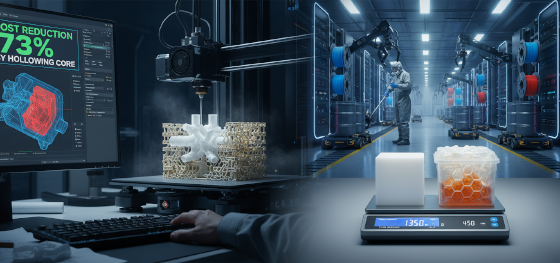
Baser les projections financières d'entreprise sur des résultats de recherche Internet de base détruit fréquemment votre budget de passage à l'échelle rapide. Les amateurs de bureau achètent des plastiques décoratifs bon marché, mais les ingénieurs mécaniciens professionnels doivent acheter des performances chimiques certifiées et hautement stables. L'approvisionnement en polymères haute température spécialisés oblige les dirigeants à naviguer dans des majorations de chaîne d'approvisionnement terrifiantes qui brisent instantanément le financement de capital-risque lean.
Gérer ces dépenses physiques sévères exige une transparence impitoyable de la part de votre partenaire de fabrication désigné. Soumettre un fichier CAO numérique à une plateforme automatisée donne souvent des devis qui cachent délibérément le volume massif de plastique sacrificiel nécessaire pour fabriquer la pièce. Maîtriser la consommation volumétrique exacte sépare les directeurs de chaîne d'approvisionnement mondiaux d'élite des startups matérielles amateurs.
Opérant profondément à l'intérieur du hub de fabrication de précision de Shenzhen, nos estimateurs vétérans sont équipés pour exposer complètement ces mensonges de tarification algorithmique. Nous forçons agressivement les concepteurs matériels à optimiser leur géométrie interne avant d'acheter des résines industrielles coûteuses. Réduire la consommation inutile de plastique protège directement votre résultat net et garantit activement un lancement de produit financièrement réussi.
contenu :
Exposer le gaspillage massif de matériau de support
Calculer les taux réels de renouvellement de poudre
Survivre aux limites de durée de vie des résines industrielles
Hub JUCHENG : Dominer la logistique des consommables
Foire aux questions : Physique des coûts
Exposer le gaspillage massif de matériau de support

Le prix de la matière première cité reflète-t-il uniquement le plastique caché à l'intérieur de votre composant final ?
Jamais. Les géométries complexes en surplomb imposent absolument d'imprimer des échafaudages sacrificiels massifs amovibles qui consomment du filament brut coûteux, que les techniciens arrachent simplement et jettent.
Dealing with aggressive support material waste violently destroys lean hardware budgets instantly. Slicing software actively generates thick vertical plastic pillars to prevent horizontal features from collapsing during the hot extrusion phase. Paying premium industrial chemical rates for this sacrificial scaffolding silently bleeds your corporate treasury entirely dry.
Optimizing CAD files explicitly to reduce severe overhangs remains the absolute best financial defense strategy. Veteran engineers routinely modify sharp ninety-degree ledges into gentle forty-five-degree chamfers to mathematically eliminate the need for underlying support pillars. This ruthless mechanical adjustment drastically slashes both raw ABS polymer consumption and highly billable machine hours.
Transitioning complex organic geometries away from standard FDM extrusion entirely solves this physical waste nightmare. Utilizing advanced powder-bed systems structurally dictates that the un-melted powder naturally supports the overhanging sections. Technicians simply brush the loose dust away, completely eradicating the financial burden of printing useless, solid breakaway plastic blocks.
Calculer les taux réels de renouvellement de poudre
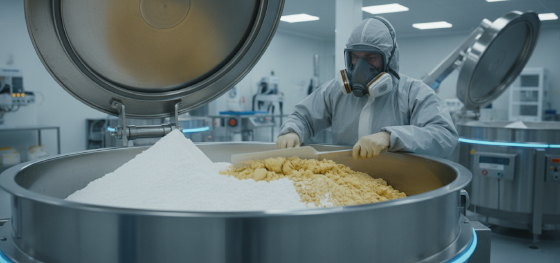
Can factory operators safely reuse 100% of the leftover loose powder for the very next print?
Absolutely not. Baking the surrounding un-melted powder for hours severely degrades its chemical integrity, forcing technicians to inject massive amounts of expensive virgin material to restore physical printability.
Navigating invisible powder refresh rates aggressively dictates the true operational overhead of advanced laser sintering. Blasting a massive build chamber with intense thermal energy chemically alters the unused plastic dust left surrounding your actual parts. Reusing heavily oxidized, yellowed powder chemically guarantees the next batch of mechanical parts will violently shatter under minimal physical stress.
Maintaining true aerospace-grade tolerances forces machine operators to mix roughly fifty percent fresh, highly expensive powder into every single new build cycle. This mandatory virgin injection artificially drives your baseline SLS unit price aggressively upward. Procurement executives must forcefully factor this hidden consumable blending ratio directly into their financial scaling models.
Printing heavy, totally solid blocks of Le nylon inside a powder bed violently wastes immense amounts of capital. Smart designers aggressively hollow out their digital files, actively utilizing internal honeycomb structures to dramatically reduce the amount of powder permanently sintered into a solid state. This geometric hollowing heavily drives down your true 3d printing materials cost by leaving significantly more powder un-melted and potentially recyclable.
| Additive Manufacturing Technology | Primary Hidden Waste Factor | Material Recyclability Rate | Cost Mitigation Strategy |
|---|---|---|---|
| Extrusion thermoplastique | Massive breakaway support structures | Zero (Supports are permanently discarded) | Design 45-degree self-supporting angles |
| Laser Sintering (Powder Bed) | Thermal degradation of surrounding dust | Moderate (Requires 50% virgin powder mix) | Heavily pack the build chamber to maximize yield |
| SLA Liquid Resin Curing | Chemical separation and expiration limits | Very Low (Resin degrades sitting in vat) | Hollow thick parts and add liquid drain holes |
| Direct Metal Laser Melting | Oxidation of highly volatile metal powder | High (Requires aggressive argon sieving) | Strictly utilize advanced simulation software first |
Survivre aux limites de durée de vie des résines industrielles

Does liquid photopolymer resin last forever sitting safely on the factory shelf?
No. Highly reactive liquid chemicals constantly degrade over time, physically forcing facilities to discard expired vats and secretly pass that heavy financial loss directly onto your invoice.
Ignoring strict industrial resin shelf-life constraints creates terrifying financial liabilities for independent service bureaus. Premium aerospace and biocompatible medical liquids boast incredibly short expiration windows before the internal photo-initiators naturally separate and die. Unscrupulous factories must forcefully recover the cost of these spoiled chemicals by heavily marking up the price of your successful prints.
Operating heavy liquid resin machines requires filling massive internal vats with hundreds of liters of highly expensive chemistry. If a specialized high-temperature resin vat sits totally idle for three weeks, the entire batch becomes completely useless. Procuring small, highly customized batches of exotic materials physically forces the client to unfairly subsidize the entire expired vat.
Replacing exotic liquid pours with heavy Usinage CNC frequently proves significantly cheaper for low-volume structural runs. Milling a solid block of medical PEEK generates absolutely zero chemical expiration risk. Savvy hardware engineers routinely bypass unstable liquid chemicals entirely by subtractively carving incredibly stable, extruded plastic billets that sit safely on a warehouse shelf for decades.
Hub JUCHENG : Dominer la logistique des consommables
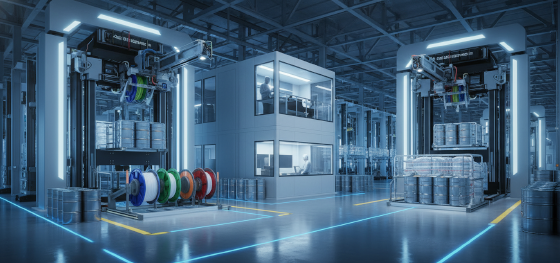
Why do aggressive hardware startups prefer high-volume hybrid factories for accurate cost estimation?
Massive facilities purchase raw filaments, powders, and liquids by the ton, aggressively unlocking extreme wholesale discounts that smaller localized print shops physically cannot access.
Partnering with Jucheng Precision guarantees absolute pricing transparency for your entire global supply chain. Submitting your complex digital CAD file triggers an immediate manual Design for Manufacturing (DFM) audit by our veteran tooling engineers. We ruthlessly strip away unnecessary geometric mass and eliminate wasteful support structures before issuing your final financial quote.
Leveraging our massive 8,000 square-meter Shenzhen facility ensures your project never unfairly subsidizes expired chemicals. Operating highly active, continuous production lines means our premium engineering resins remain perfectly fresh and chemically stable. We seamlessly pivot expensive additive geometries toward our heavy subtractive milling division the absolute second that CNC physics proves mathematically cheaper.
Foire aux questions : Physique des coûts
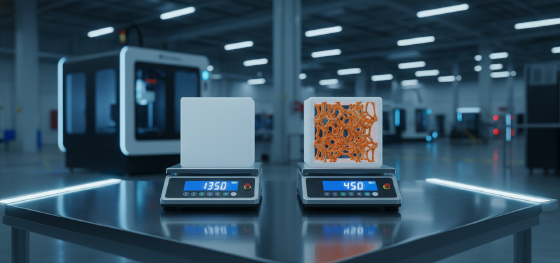
Does hollowing out a solid digital model always guarantee a drastically cheaper final production invoice?
Yes, but specifically for powder and liquid processes. Hollow extrusion prints physically require internal scaffolding to prevent the top roof from violently collapsing inward, meaning the machine still consumes significant filament and billable spindle time to build the hidden internal honeycomb structure.
Why do specialized flexible rubber materials cost significantly more to print than rigid standard plastics?
Extruding soft elastomers requires extremely slow, highly controlled machine speeds to prevent the flexible filament from violently buckling and jamming the drive gears. Running the industrial machine at half speed mathematically doubles your billable hourly rate, heavily inflating the final piece price.
Can failing to properly orient the digital part on the build plate aggressively increase the final factory quote?
Absolutely. Laying a tall component flat on the bed drastically reduces the overall Z-axis height. Minimizing vertical layer transitions slashes total printing time because the heavy mechanical gantry spends significantly less time moving upward, violently driving down your operational machine fees.

